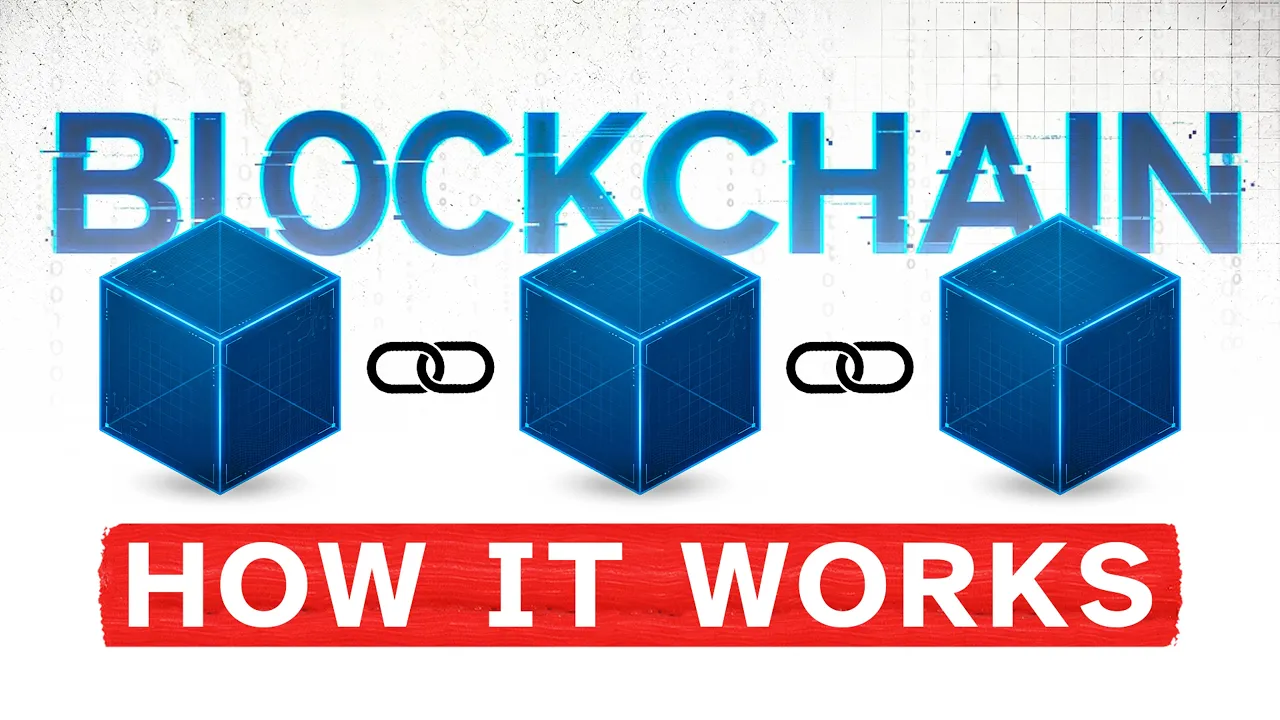
How Blockchain ACTUALLY Works (Zero Jargon)
Coin Bureau
567 views • 21 hours ago Save 12 min 4 min read
Video Summary
Imagine a shared village notebook where every villager has a copy and any transaction is announced and recorded by all. This is the essence of blockchain technology, designed to solve the problem of trust in digital record-keeping. Unlike traditional systems where a single entity like a bank controls and records transactions in a private ledger, a blockchain distributes this responsibility. Each transaction is grouped into a 'block,' which is then cryptographically linked to the previous block using a 'hash' – a unique digital fingerprint. This creates a 'chain' of blocks, making any alteration to past records immediately detectable by all participants.
This decentralized system eliminates the need for a central authority, addressing issues like the "double-spend problem" where digital assets could be duplicated. While Bitcoin pioneered this with its cryptocurrency, platforms like Ethereum have expanded its utility through "smart contracts" – self-executing code that automates agreements. From digital tokens and NFTs to supply chain management, blockchain technology offers transparent, immutable, and distributed record-keeping, fundamentally changing how we manage and trust digital information.
Short Highlights
- A blockchain is a distributed, immutable digital ledger.
- It solves the "double-spend problem" without a central authority.
- Transactions are grouped into blocks and linked cryptographically.
- Consensus mechanisms like Proof of Work and Proof of Stake secure the network.
- Smart contracts enable automated agreements on the blockchain.
- Applications include digital currencies, tokens, NFTs, and supply chains.
- Users interact with blockchains via crypto wallets storing public and private keys.
Key Details
The Problem with Centralized Ledgers [00:00:00]
- Traditional bank transfers rely on a bank's private record.
- This centralized system is vulnerable to errors, downtime, and manipulation.
- A TSB Bank incident illustrates how central system failures impact customers.
"Whoever holds the book controls the book. They can make mistakes. They could go offline. And they could change entries, by accident or on purpose."
The Village Notebook Analogy [00:01:41]
- Imagine a village where every resident keeps an identical notebook.
- Transactions are announced to all, and everyone records them identically.
- If one person tries to alter a record, it's immediately obvious as their copy won't match the others.
"And, notice what's missing from this picture. There's no chief record keeper to bribe. There's no single notebook to steal. And, nobody who can switch the whole thing off."
Blocks and Chains: Digital Fingerprints [00:03:02]
- A blockchain is like a digital version of the village notebook.
- Transactions are collected into "blocks," which are like pages.
- Each block is linked to the previous one using a cryptographic "hash," a unique digital fingerprint.
- Changing any data in a block alters its hash, breaking the chain and alerting all network participants.
"Every new page carries the fingerprint of the page before it, written right at the top."
Consensus: Agreeing on the Truth [00:05:30]
- "Nodes" are computers running the blockchain software and holding copies of the ledger.
- "Consensus" is the process by which nodes agree on new transactions and blocks.
- Proof of Work (PoW) involves computers solving complex puzzles; the winner adds the block and gets rewarded (mining).
- Proof of Stake (PoS) involves participants locking up coins as collateral; they are chosen to add blocks and earn rewards, risking their stake if they cheat.
"Is the village comparing notes, just done automatically around the clock?"
Solving the Double-Spend Problem [00:07:42]
- Digital files can be copied easily, posing a "double-spend problem" for digital money.
- Blockchains solve this by making every transaction public and verifiable on the shared ledger.
- Once a coin is spent, its status is known to all nodes, preventing it from being spent again.
"For a long time, the only real answer was to put a bank in the middle, keeping the one official ledger and deciding which payment counted..."
Evolution: From Bitcoin to Smart Contracts [00:09:38]
- Satoshi Nakamoto's 2008 paper introduced Bitcoin as electronic cash without a bank.
- Bitcoin (2009) was the first working blockchain, using the ledger to record transactions.
- Ethereum (2015) introduced "smart contracts" – code that automatically executes agreements when conditions are met.
- This expanded blockchain use to tokens, stablecoins, NFTs, and supply chain tracking.
"So, blockchains went from a notebook that records payments to a notebook that follows instructions."