Pros Try Fake AI Photoshop
Linus Tech Tips
26,080 views • 21 hours ago Save 7 min 4 min read
Video Summary
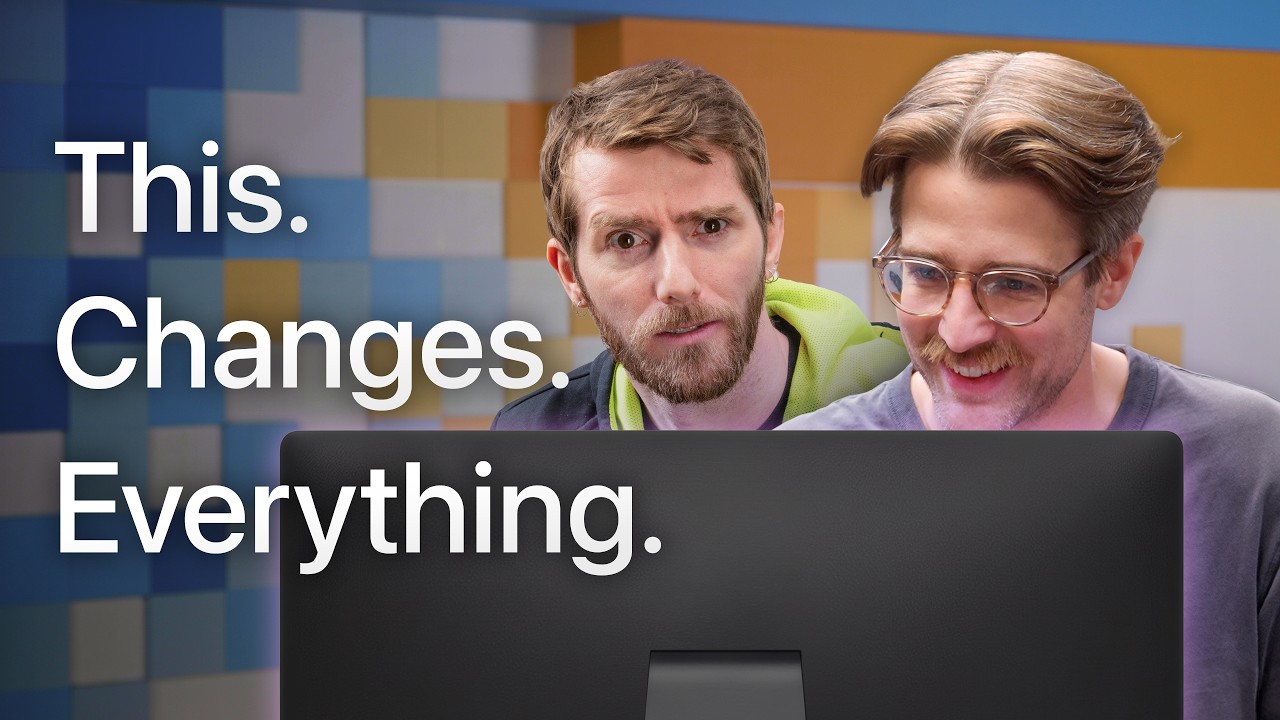
A new AI-powered Photoshop clone, initially priced at $70 and later becoming free, has emerged, sparking debate about piracy versus the evolution of open-source software. Despite its feature set, professional users found the clone plagued by significant performance issues and bugs, rendering it unusable for critical tasks. The technology behind these clones, including decompilation and AI-assisted reconstruction, raises complex legal and ethical questions, drawing parallels to historical cases of software reverse engineering. While the clone offers a tempting alternative to Adobe's expensive subscription model, its current instability suggests it may need a year of development before it can truly compete.
Short Highlights
- A new AI-powered Photoshop clone is available, initially costing $70 and later becoming free.
- The clone aims to replicate Photoshop's features using AI and decompilation.
- Professional users encountered significant bugs and performance issues, deeming it unusable.
- The development method raises legal and ethical questions about software reverse engineering.
- Despite flaws, the clone is seen as a potential alternative to expensive proprietary software.
- The rapid development and availability of such clones signal a shift in the software landscape.
Key Details
The Rise of the AI Photoshop Clone [0:00]
- A new AI clone of Photoshop has surfaced, boasting feature completeness and cross-platform compatibility for a one-time fee of $70.
- Initial skepticism gave way to surprise upon deeper investigation, revealing a project far beyond basic AI image generation.
- This development is part of a broader trend of AI-assisted projects creating clones of various software, including entire Adobe Creative Suite applications and game mashups.
"There's an AI clone of Photoshop that is basically feature complete, costs $70 one time, and works across Windows, Mac, and Linux."
User Testing Reveals Critical Flaws [1:00]
- Professional users were tasked with testing the $70 Photoshop clone to assess its usability.
- The software immediately presented errors and significant performance issues, such as slow import times and unresponsiveness.
- One user stated, "I just... I wouldn't use it," highlighting the impracticality for professional workflows.
"Immediately, I've been using this for five seconds, but immediately, it is good enough for me to not notice an immediate difference."
Decompilation and AI: The Technology Behind Clones [2:30]
- The creation of these clones involves methods like decompilation, where binary code is converted back into human-readable source code.
- AI is revolutionizing decompilation, making it more efficient and effective than traditional manual processes.
- Projects like Wine and Samba are cited as historical examples of successful software reverse engineering.
"You can tell your AI, hey, take this gobbledygook of zero-in-one machine instructions with no comments, and then try and turn it back into the source code that created it."
Legal and Ethical Ambiguities [5:00]
- The legality of these AI clones is uncertain, with arguments for and against their legitimacy based on reverse engineering precedents.
- The Phoenix Software case, involving an IBM-compatible BIOS, is discussed as an example of creating a functional clone without direct code infringement.
- The application of patent and copyright law to software functions and ideas adds further complexity, varying by jurisdiction.
"And, well, the AI has never seen the original source code, at least not that the data aggregators who created it would ever admit."
Performance Benchmarks: Clone vs. Photoshop [7:00]
- Direct comparisons with Photoshop highlighted the clone's shortcomings in areas like automatic selection, shadow recovery, and color mixing.
- The clone's "select subject" feature was less precise than Photoshop's, and it exhibited unexpected behavior by selecting elements from other layers.
- Significant lag and unresponsiveness were observed, particularly during editing tasks, leading professionals to conclude it's not viable for their work.
"Like this, I'm selecting my face layer right now. Um, there we go. I'm moving it around. It is moving the position of the image, but the actual image itself is not updating. It's like lagging behind."