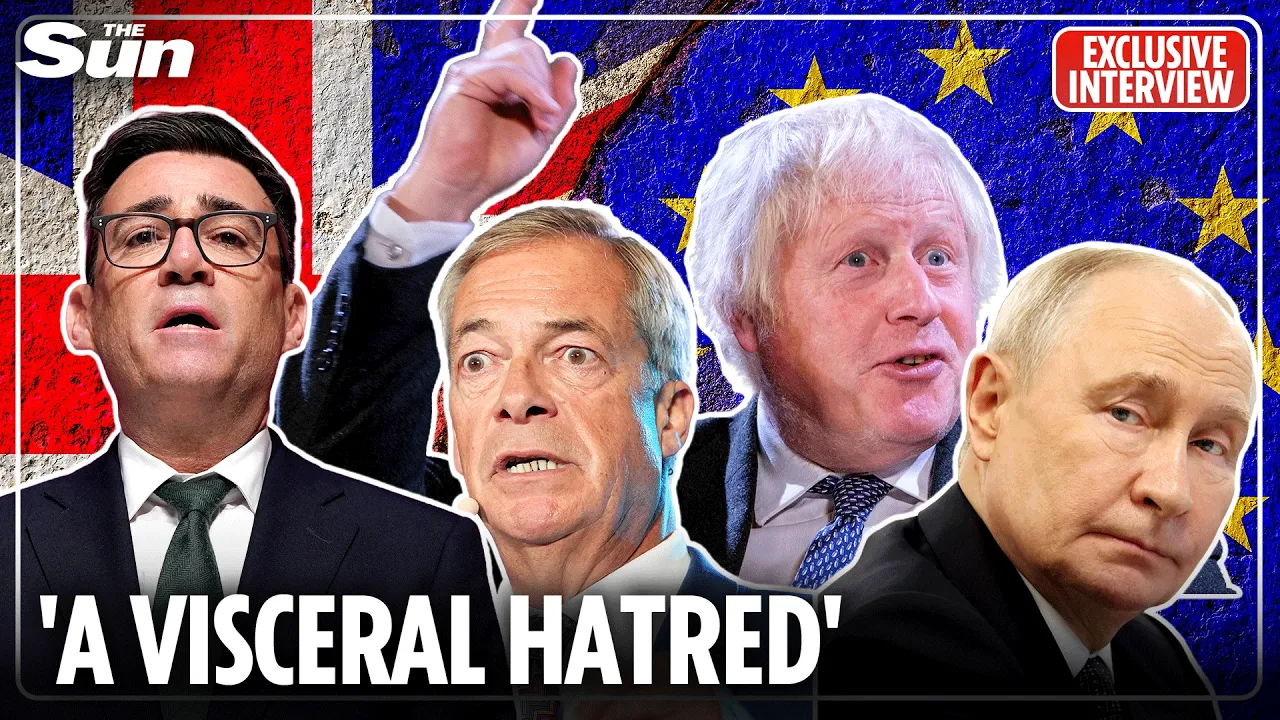
Putin's Brexit meddling was an attack on the UK & the EU, and he didn't even succeed | Anthony Glees
The Sun
3,630 views • 21 hours ago Save 14 min 4 min read
Video Summary
Russia actively attempted to subvert British politics, particularly concerning the 2016 Brexit referendum, though the extent of their success remains a point of contention. While evidence suggests significant Russian efforts, including social media manipulation and potential funding of pro-Brexit groups, academic and governmental bodies disagree on the actual impact on the referendum's outcome. The delay in publishing a key parliamentary report on Russian influence, reportedly by Boris Johnson, further fueled suspicions of a cover-up, leaving the definitive impact of Russian interference on the close 52-48 vote unanswered to this day.
Historically, Russia, both as the Soviet Union and in its current form, has harbored a deep-seated animosity towards the European Union, viewing it as a threat to its geopolitical ambitions. This historical context, coupled with Vladimir Putin's desire to resurrect Soviet-era influence and his actions in Ukraine, provides a backdrop for understanding Russia's motivation to weaken both Britain and the EU through Brexit. Despite these efforts, the crucial question of whether Russian interference swayed the British electorate remains unresolved.
Short Highlights
- Russia demonstrably attempted to subvert British politics, including efforts to influence the 2016 Brexit referendum.
- The actual impact of Russian interference on the Brexit vote is heavily disputed, with conflicting academic research.
- Historical Russian animosity towards the European Union provides context for their motives.
- Social media manipulation was a key tactic, but its effectiveness is debated.
- Concerns exist about a potential cover-up, particularly regarding the delayed publication of a parliamentary report on Russian influence.
- The close referendum result (52% to 48%) makes even marginal influence a significant question.
- The definitive impact of Russian interference on the Brexit outcome remains officially unanswered.
Related Video Summary
- Could Svalbard Spark NATO’s Next Conflict? | Prof. Anthony Glees
- How Zelensky’s new commander is tearing through Russian lines | Battle Plans Exposed
- The Man Warning The West: Trump Is Changing The World Behind The Scenes!
- How Putin's using Kremlin-friendly governments to break Europe's will to defeat Russia
Key Details
Russia's Historical Antagonism Towards the EU [00:00:00]
- Russia, including its Soviet predecessor, has historically harbored a strong dislike for the European Economic Community (EEC), which later became the European Union.
- This animosity stemmed from the EEC's economic success and attractiveness, contrasting with the stagnant living standards in Soviet satellite states.
- The success of Western Europe, particularly Germany, led to issues for Soviet-style regimes, contributing to events like the fall of the Berlin Wall.
"So there is this kind of deep dislike, hatred of the European economic community."
Putin's Motivations and the Ukraine Conflict [00:00:00]
- Vladimir Putin's desire to resurrect the geopolitical entity of the Soviet Union is a primary driver of Russian foreign policy.
- This ambition, carried over from his KGB days, is evident in his actions, including the annexation of Crimea and attempts to influence Ukraine.
- The Brexit referendum was seen from the Russian perspective as an opportunity to weaken both Britain and the European Union economically.
"That is something that Putin has always wanted. He's carried over that belief from his KGB days into his days as president of Russia."
Disputed Impact of Russian Social Media Campaigns [00:00:00]
- Russia utilized social media to influence the Brexit vote, but research on its effectiveness is divided.
- The Oxford Internet Institute found little evidence of social media influence, analyzing a small number of tweets from suspected Russian bots.
- Conversely, researchers from Swansea University claimed Russian bots were used and had influence, analyzing a much larger dataset of posts.
"So, you've got the social media, the academics can't agree, like it happens so often."
Funding and Compromising Material Tactics [00:00:00]
- Beyond social media, Russia reportedly sought to generate compromising material on anti-Brexit opponents.
- More significantly, there are questions about the funding of pro-Brexit parties, with allegations of substantial sums given to the Conservative Party.
- Nigel Farage, a prominent Brexit campaigner, also made pro-Russian speeches, though his long-standing support for Brexit is noted.
"Much more important was the funding of the chief pro-Brexit party, which was the Conservative Party."
The Cover-Up Controversy and Unanswered Questions [00:00:00]
- A parliamentary Intelligence and Security Committee report on Russian influence, completed in 2019, was reportedly delayed in publication by Boris Johnson.
- This delay fueled suspicions that the report's findings, which might have implicated Russian influence in Brexit, were being suppressed.
- Even with the report's eventual publication, the intelligence community, including MI5, provided a non-committal response regarding Russian interference, leaving the question of its impact on the referendum result officially unanswered.
"The referendum result would have been different if MI5 had been capable of stopping Russian subversion of and meddling in British politics."