How Russia could bring Britain to STANDSTILL with wave of sabotage attacks
The Sun
2,341 views • 15 hours ago Save 9 min 4 min read
Video Summary
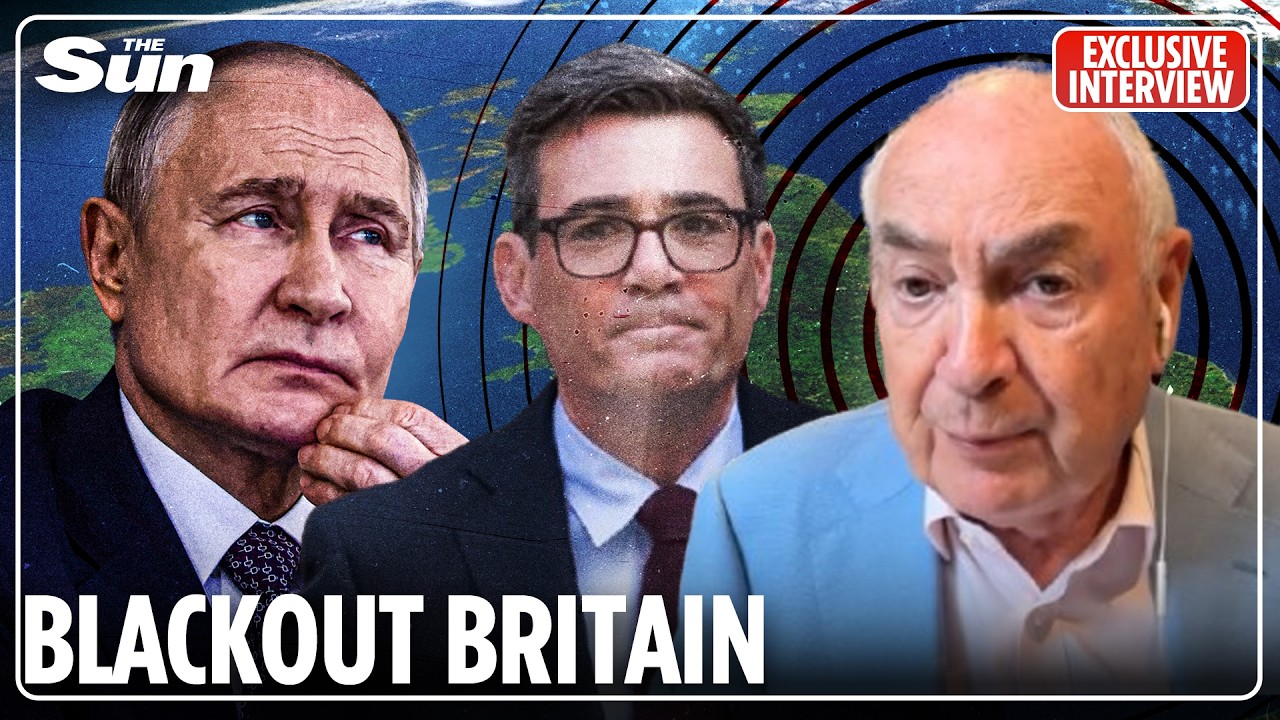
Britain faces significant vulnerability due to a "Russian war of sabotage" targeting critical infrastructure, including undersea cables vital for digital communication. This threat, alongside conventional military posturing, could escalate into full-scale conflict if not met with strength and resolve. The speaker highlights a dangerous imbalance: while the UK plans to increase defense spending to 3.5% of GDP by 2035, it remains "under-defended" and "under-insured" in the interim. This leaves the nation susceptible to both tactical disruptions, like the warehouse fire in East London, and potentially strategic attacks on sensitive sites such as nuclear submarine factories or AI development hubs at universities.
The escalating tensions draw parallels to the lead-up to World War I, where a single incident could ignite a wider conflict among heavily armed, distrustful nations. The speaker emphasizes that Russian President Putin, driven by an obsession with victory and historical mission, may exploit perceived weaknesses. A key concern is Russia potentially probing NATO's resolve, possibly through incursions into Arctic regions or near the Baltic states, before the UK and its allies achieve their planned defense capabilities by 2035. The ultimate danger lies in events spiraling out of control, forcing a reaction that could lead to widespread war.
Short Highlights
- Britain is highly vulnerable to Russian sabotage, including attacks on critical undersea communication cables.
- The UK's defense spending plans leave it "under-defended" until 2035, increasing susceptibility to threats.
- Adversaries like Russia, Iran, and China pose significant threats beyond Islamist terrorism.
- Russia engages in both tactical sabotage, causing damage and disruption, and probes for strategic vulnerabilities.
- The situation carries echoes of the pre-World War I era, where tensions could erupt from a single incident.
- Putin may exploit perceived weaknesses to undermine support for Ukraine before UK defenses are fully bolstered.
- Strength and collective security through NATO are crucial to deterring escalation.
Key Details
Britain's Vulnerability to Sabotage [0:00]
- The UK is currently very vulnerable due to multiple factors, including a "Russian war of sabotage."
- This sabotage targets critical infrastructure like undersea cables that carry digital information globally.
- Cutting these cables would sever communication lines, including those from the United States.
"It would not only cut off the supply of digital information from the United States of America, which comes out of the North Atlantic and enters the UK in North Devon, but it would also cut us off from all the other places in the world."
Defense Spending Shortfalls [0:55]
- A major reason for vulnerability is the ongoing debate about defense spending.
- The new Prime Minister has committed to spending 3.5% of GDP on defense by 2035.
- However, this means the UK will be "under-defended" and "under-insured" until that target is met.
"He was absolutely scathing about the fact that we're talking about, you know, 0.1% more, 0.2% more, whereas the actual figures are truly, you know, horrendous."
Expanding Threats Beyond Terrorism [1:40]
- The Director General of MI5 has identified threats from adversaries like Russia, Iran, China, and North Korea.
- These state-sponsored threats are in addition to the ongoing Islamist terrorist threat.
- The overall security situation is described as "not good."
"It's not just the Islamist terrorist threat that's a problem for us, it is also the Russian threat, the threat from our adversaries like Iran, China and North Korea."
Tactical vs. Strategic Sabotage [2:19]
- Russian sabotage can be categorized into tactical (probing and testing reactions) and strategic (disabling essential functions).
- Tactical examples include a warehouse fire destroying humanitarian aid and Starlink equipment for Ukraine, and an alleged attempt to spy on a drone factory.
- Strategic sabotage could involve attacks on nuclear submarine factories or facilities developing AI-steered drones.
"So tactical sabotage is what the Russians are doing at the moment. In all kinds of sort of isolated incidents, all of them either causing us millions of pounds worth of damage, for example, the warehouse fire in East London, which destroyed humanitarian aid and Starlink stuff for Ukraine."
Risk of Escalation and World War I Parallels [7:10]
- The current geopolitical climate, with armed powers in a state of enmity, resembles the lead-up to World War I.
- A minor incident, like the assassination of Archduke Ferdinand, could trigger a major conflict.
- If Putin, driven by an obsession with victory, "goes too far," it could lead to events spiraling out of control.
"And then, kind of out of nowhere, a Serbian nationalist assassinates the heir to the Austro-Hungarian Empire. And that assassination then leads to actions being taken by the various players."