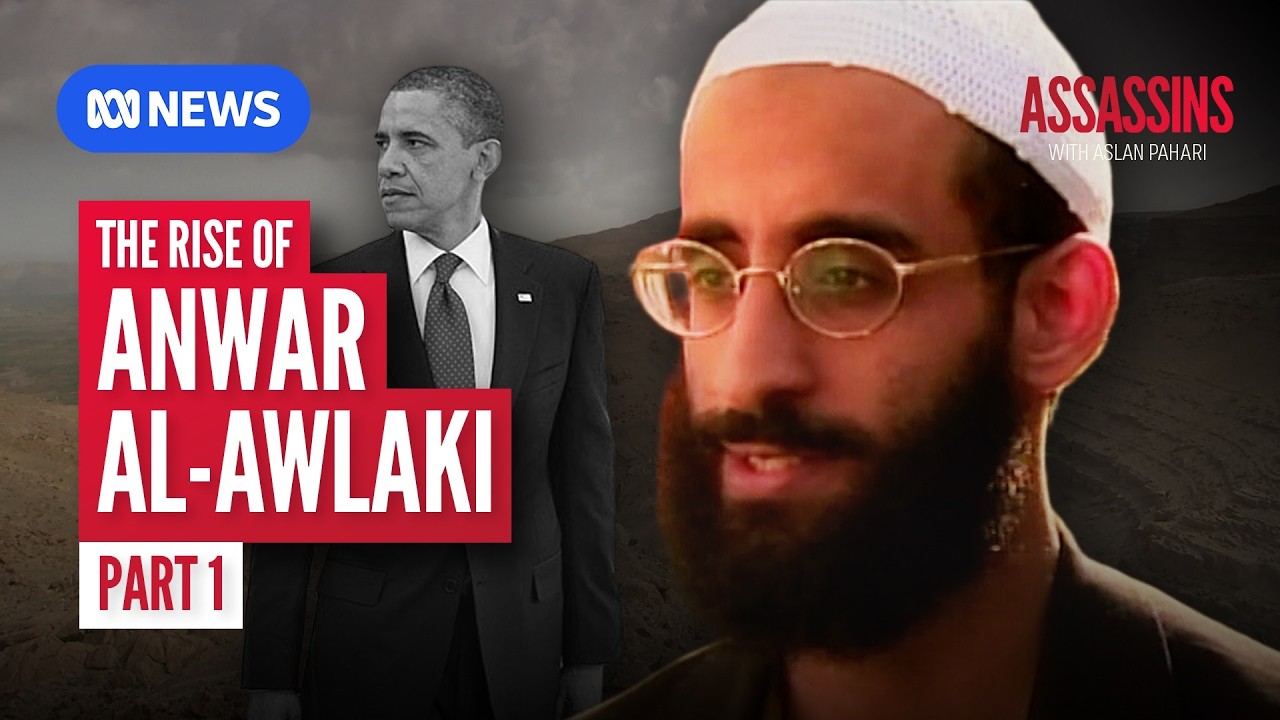
Anwar al-Awlaki: a US citizen assassinated on foreign soil | ASSASSINS
ABC News In-depth
132,484 views • 1 month ago Save 13 min 4 min read
Video Summary
Anwar al-Awlaki, a U.S. citizen and influential promoter of global jihad, became the first American assassinated by order of a U.S. president. His journey from a university student in the U.S. to a radicalized figurehead of Al-Qaeda in the Arabian Peninsula is chronicled, highlighting his sophisticated use of media to radicalize Western Muslims.
Al-Awlaki's ability to connect with a Western audience through English-language lectures and the "Inspire" magazine, which provided "DIY terrorism" instructions, made him a significant threat. The magazine notably published an article on making bombs at home, which was later linked to the Boston Marathon bombing. Despite early attempts to engage with him by U.S. authorities, his increasing radicalization, including alleged encouragement of violent jihad and a controversial "execution list" targeting a cartoonist, ultimately led to his death by a U.S. drone strike in Yemen.
Short Highlights
- Anwar al-Awlaki was the first U.S. citizen assassinated by order of a U.S. president.
- He was a key figure in Al-Qaeda in the Arabian Peninsula and co-founded "Inspire" magazine.
- "Inspire" magazine published instructions for making bombs at home, linked to the Boston Marathon bombing.
- Al-Awlaki used English-language media and a modern tone to appeal to Western Muslims.
- His assassination occurred via a U.S. drone strike in Yemen.
- Authorities linked him to the 9/11 hijackers, though evidence was inconclusive at the time.
- He was imprisoned in Yemen for 18 months before joining Al-Qaeda.
Related Video Summary
- 'He's a TERRORIST!' Mohammed Hijab vs Jonathan Conricus | Migrant Protests, Iran War, Israel & Islam
- The assassination of the Viceroy of India | ASSASSINS
- John Kiriakou Discusses BOGUS Israeli Intel & Civilian Slaughter COVERUP
- Iran OBLITERATES US Army Barracks, War Enters Deadliest Phase | Seyed M. Marandi
Key Details
The Drone Strike [0:00]
- A U.S. drone strike targets two individuals in the Yemeni desert.
- The strike incinerates eight people, including 40-year-old Yemeni American Anwar al-Awlaki.
- Al-Awlaki is identified as the first American citizen assassinated by order of a U.S. president, greenlit by Barack Obama.
"Eight people have been incinerated. Inside one of the wreckages, a 40-year-old Yemeni American, Anwar al-Awlaki."
Inspire Magazine and the Boston Bombing [0:59]
- Anwar al-Awlaki was a co-founder of "Inspire" magazine, published by Al-Qaeda in the Arabian Peninsula.
- The magazine's first issue featured an article titled "Make a Bomb in the Kitchen of Your Mom," detailing how to create homemade explosives.
- This article was linked to the 2013 Boston Marathon bombing, carried out by the Tsarnaev brothers who reportedly learned bomb-making from "Inspire."
"Make a bomb in the kitchen of your mum. That's the title of an article from the very first issue of Inspire magazine, published three years before the Boston Marathon bombing in 2010."
Early Life and Radicalization [4:11]
- Born in New Mexico, al-Awlaki studied at Colorado State University, where he ran for president of the Muslim Students Association.
- He began giving talks about Islam and took a trip to Afghanistan to learn from the Mujahideen, which reportedly made him angry.
- In California, he recorded English-language lectures that gained him a large following among Western Muslims.
"He's running against an ultra-conservative Saudi Arabian student. Now, Anwar himself isn't ultra-conservative. But he's also not as liberal as many of the other Muslim students."
Post-9/11 Scrutiny and Departure [8:57]
- Following 9/11, authorities noted that two hijackers had frequently visited mosques where al-Awlaki was an imam.
- Despite FBI investigations, no concrete evidence linked him to the attacks at the time.
- Al-Awlaki's public statements condemned the 9/11 attacks but also criticized the U.S. military actions in Afghanistan.
"One FBI investigator said, do I think he played a role in helping the hijackers here, knowing they were up to something? Yes."
Radicalization in Yemen [14:51]
- After fleeing the U.S. due to an FBI investigation into his association with sex workers, al-Awlaki moved to London and then Yemen.
- In Yemen, he was arrested and jailed for 18 months for planning to kidnap a Shiite teenager and a U.S. military attaché.
- Upon release, he joined Al-Qaeda in the Arabian Peninsula, where he became a prominent figure and helped launch "Inspire" magazine.
"Some who knew him say this is really where he becomes truly radicalised, to the point of promoting terror."