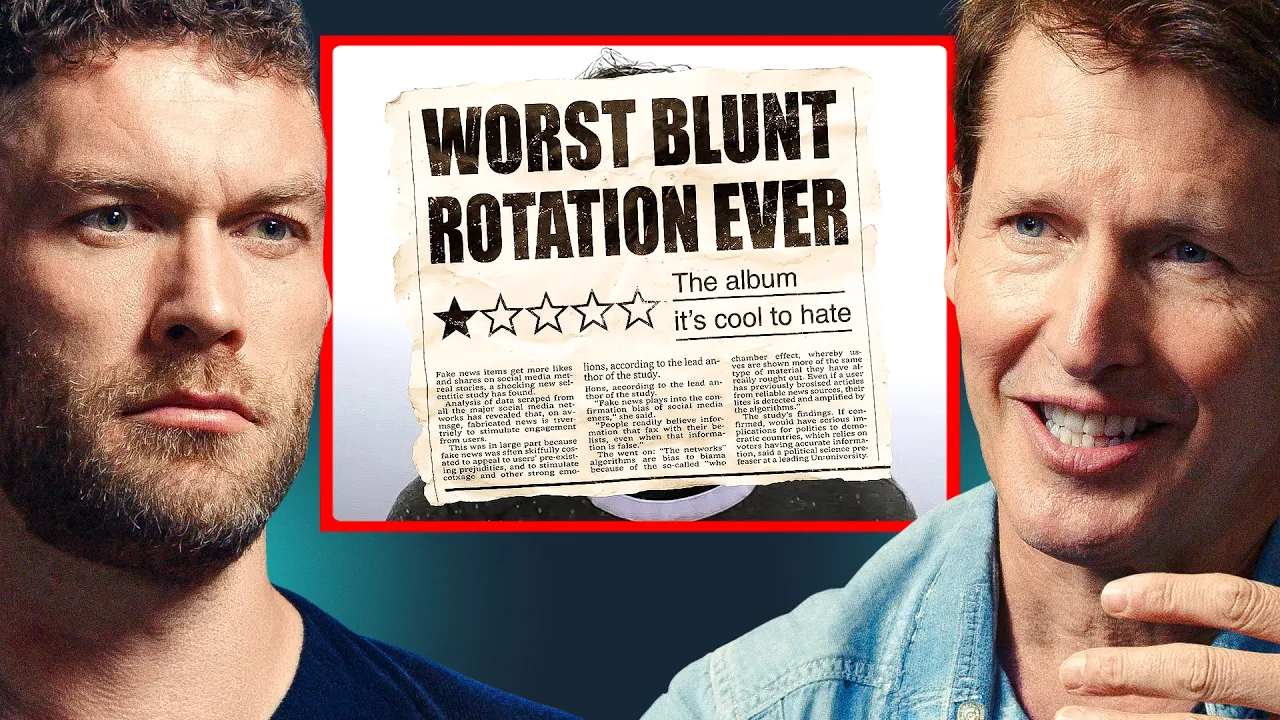
How James Blunt Got The Nickelback Treatment
Chris Williamson
365 views • 20 hours ago Save 8 min 4 min read
Video Summary
After a meteoric rise, James Blunt faced a brutal media backlash, with critics labeling his hit song "You're Beautiful" as annoying and him as unlikeable. This intense criticism, amplified by misquoted interviews and a lack of direct communication channels, left him feeling betrayed and questioning his career.
Blunt recounts the profound loneliness and self-doubt he experienced while writing his second album, feeling disconnected from his music and the public. He found solace and a path forward through the advent of social media, particularly Twitter, which allowed him to engage directly with fans, showcase his self-deprecating humor, and reclaim his artistic identity. This journey, spanning over a decade, allowed him to move from a place of feeling defined by negativity to one where he could genuinely re-engage with his music on his own terms.
Short Highlights
- Media Betrayal: Blunt felt deeply betrayed by journalists who misrepresented his lighthearted comments and amplified negative public sentiment.
- Existential Crisis: The intense criticism led to profound loneliness and self-doubt, making him question his career and the authenticity of his music.
- Social Media Salvation: Twitter provided a direct channel to fans, allowing him to bypass journalists and showcase his humor, ultimately saving his career.
- Reclaiming Identity: He developed a persona as an "online joker" to balance his serious musical endeavors and reconnect with his audience.
- Finding Authenticity: After a decade, he feels he has finally returned to making music for himself, free from external pressures.
Key Details
The Rise and Fall of "You're Beautiful" [0:00]
- James Blunt describes the immense personal and existential investment in his early career, including leaving the army.
- He faced an unexpected and harsh public reaction, leading to a moment of crisis where he feared it would derail his career.
-
"And then there's this moment where you have to realize, fuck, maybe through some curse of bad luck after a bunch of good luck, maybe this is going to derail the career and move forward."
The Pain of Public Scrutiny [1:10]
- Blunt explains how the media misrepresented his earnestness and self-deprecating humor, leading to a feeling of betrayal.
- He recounts being asked about public hatred on the red carpet and how his words were twisted into a headline calling critics "bastards."
-
"And the newspaper article then said, you know, James Brunk calls all his critics bastards."
Loneliness and Doubt in Ibiza [3:40]
- Writing his second album in Ibiza, Blunt experienced deep loneliness and questioned if his dream had been spoiled.
- Despite the financial success of his first album, he felt lost and unsure if anyone would want his new music in the UK.
-
"And I, on my own, on my own, with fingerless gloves, because someone has stolen my boiler at the time, in the, in that lonely moments thinking, you know, I was in an, you know, sweet house that, that, that, that song and that album had bought me, but I was thinking, yeah, I better have this because, because, you know, it feels the dream has really been spoiled and I felt very, very lonely in those times."
The Transformative Power of Twitter [5:15]
- The invention of Twitter offered Blunt a direct line to his audience, allowing him to control his narrative and jokes.
- He developed a new persona as an "online joker" which helped him to be forgiven for his earlier songs and to take himself less seriously.
-
"And so I found every joke I said in every interview wasn't relayed against a joke. They never put James jokes. They put everything in and I felt really betrayed, which is why when they invented Twitter, I was saved."
Rediscovering Musical Authenticity [7:00]
- Blunt reflects on how his third album lacked conviction and honesty, as he was writing with external opinions in mind.
- He contrasts his early naive belief with his later inability to sell his songs with conviction, feeling lost.
-
"By my third album, I couldn't sell you anything. You know, I was out of that game and I couldn't sell you a song and I couldn't sing it with conviction."
- He now feels he has finally returned to making music for himself, separate from the business aspects, after a decade-long journey of self-discovery.