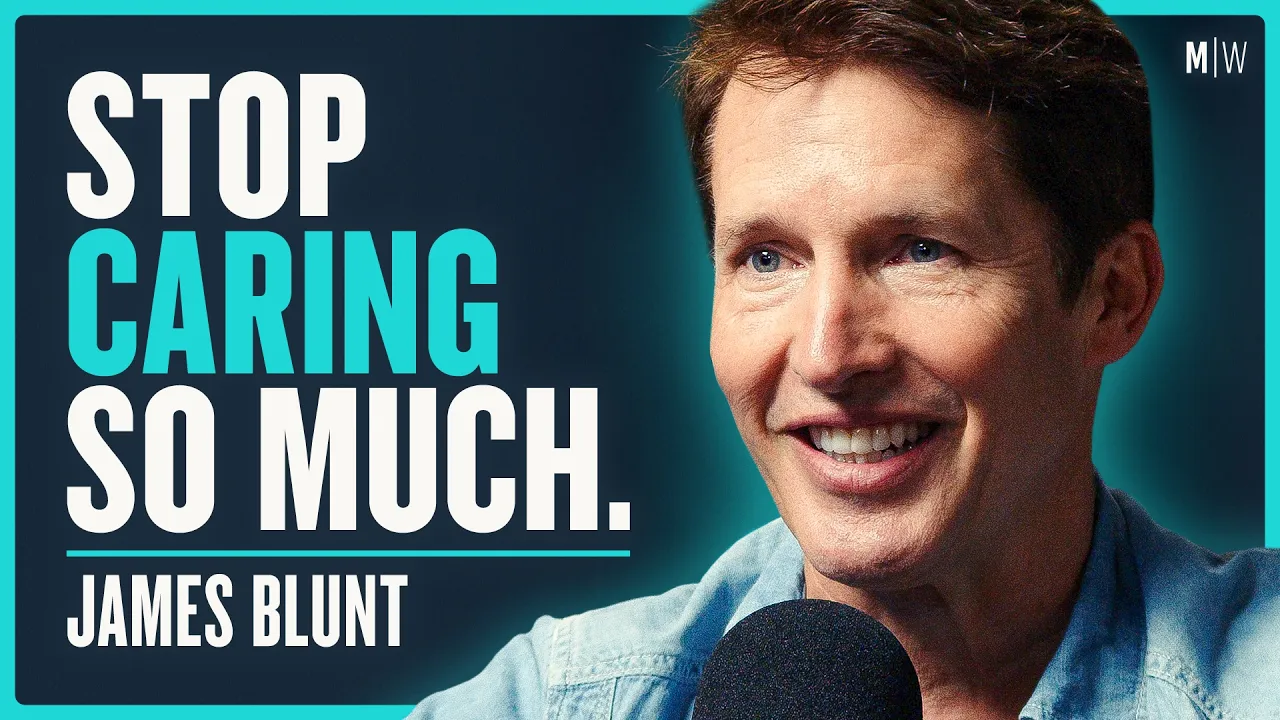
The Strange Freedom To Be Disliked - James Blunt (4K)
Chris Williamson
1,302 views • 23 hours ago Save 87 min 7 min read
Video Summary
James Blunt reveals the jarring reality of his meteoric rise to fame, where a lifelong dream of musical success was almost immediately poisoned by a vicious, media-led backlash in his home country. Despite the massive commercial triumph of his debut album, Back to Bedlam, the British press and public turned on him, branding his earnest, emotionally vulnerable songwriting as an easy target for mockery. This experience of being a national pariah forced Blunt into a period of intense isolation, leading him to realize that his emotional sensitivity—while his greatest creative asset—was also the source of his profound vulnerability in a culture that often demands its successful figures be apologetic or cynical.
Blunt explains that he survived this "media-led takedown" by eventually cultivating a self-deprecating persona on social media, allowing him to reclaim his narrative and separate his public image from his private self. He highlights the stark contrast between the supportive, success-celebrating culture of the United States and the "tall poppy syndrome" prevalent in the UK. Now, two decades into his career, Blunt views his journey with the perspective of a survivor, viewing his ongoing success as "gravy" and focusing his creative energy on writing from the heart rather than chasing the fleeting validation of radio hits.
Short Highlights
- The reality of breakout success and the subsequent "media-led takedown" that made Blunt a national pariah.
- Why the British music industry and public culture are particularly hostile toward earnestness and success.
- The crucial role of perspective in overcoming anonymous, vitriolic online criticism.
- How military service instilled a work ethic and organizational discipline that defines his touring life.
- The serendipitous story of how Linda Perry signed him to her label, Custard Records, after a tiny gig in Texas.
- The psychological toll of "audience capture" and "criticism capture" on an artist's creative process.
- The transition from being a "pop star" chasing hits to an artist creating music from a place of personal catharsis.
Key Details
Boarding School and Emotional Stunting [0:01:21]
- Blunt describes being sent to boarding school at age seven without warning, which he credits for his independence but also his emotional detachment.
- He notes that the experience felt like an "education prison" where he had to serve older students to survive.
that makes you fairly emotionally stunted um and the notion of the that painful word feelings it's not something i've necessarily um deal with on a day-to-day basis
The Transient Lifestyle [0:02:40]
- Growing up in an army family, Blunt moved every two years, living in Cyprus, Germany, Hong Kong, and Yorkshire.
- This constant upheaval forced him to become a "salesperson" for himself to make new friends, a trait he says persists in his adult life.
i've had a best friend every two years and then moved on
Military Discipline [0:04:15]
- Military service helped him shed the "idle" habits he developed during his time at university studying aerospace manufacturing.
- He maintains a "military operation" approach to his tour bus and home life to stay organized and productive.
a tidy bus is a happy bus
Deployment in Kosovo [0:05:25]
- Blunt served as a peace enforcer in Kosovo in 1999, describing it as a "humanitarian exercise" to stop mass violence.
- He views it as the "right war" to be involved in because it focused on protecting people from being murdered.
we were peace enforcers as part of nato but but peace needed to be enforced at that time
The Reality of Breakout Success [0:06:50]
- Blunt spent 16 years working toward his career before his debut album Back to Bedlam achieved massive global success.
- He admits that the immense scale of his first hit made his subsequent career a perpetual chase for that same commercial peak.
my first idea is probably going to be my best idea
The Media-Led Takedown [0:08:15]
- He describes a "media-led backlash" that turned him into a national pariah, making him feel like he had to go into exile in Ibiza.
- He attributes the hostility to a British tendency to demolish success and a disdain for "earnest" or "sensitive" music.
we are a nation that likes to take down um and and demolish success
Managing Criticism [0:10:00]
- Blunt learned to distinguish between the "real world" of playing to 10,000 people and the "irrational" hate found online.
- He emphasizes that critics who write negative comments have invested nothing, unlike his fans who pay for tickets and travel.
i need to look at myself in the mirror immediately and say you're an idiot because you just bypassed over 100 positive things
UK vs. US Culture [0:11:00]
- He contrasts the British "snooty" approach to success with the American dream, which encourages people to celebrate their achievements.
- He argues that in Britain, one is often expected to apologize for ambition or success.
in britain you are allowed to be successful but only if you seem horribly embarrassed that it happened
Songwriting in the Army [0:13:00]
- Blunt used his downtime during military operations to write songs, bringing a guitar with him to war zones.
- He notes that many great poets and artists have historically found inspiration in the intensity of war.
you're going to see things that are inspiring to write songs
Ceremonial Guard Duties [0:14:00]
- He served as the Queen's ceremonial bodyguard, riding horses down the Mall while simultaneously playing small gigs in London by night.
- He describes the surreal experience of protecting the monarch while sneaking out to play music in bars.
by day riding down the mall beside her majesty with a million people either side of the street and flags waving and in armor
The Austin Texas Breakthrough [0:17:30]
- After being rejected by major labels for his "ridiculous" posh speaking voice, he played a small gig in a hotel in Austin, Texas.
- Linda Perry, the lead singer of 4 Non Blondes, saw him perform and signed him to her label, Custard Records, on the spot.
if you sign with me today i'll give you the money to make your album tomorrow
The Power of Earnestness [0:20:00]
- Blunt defines earnestness as the "bravery to take your emotions seriously," a trait he believes is often rejected by British culture.
- He writes songs primarily to have a "conversation with himself" and to process his own fears and life questions.
i write songs for me um to put that down and and explain that to myself
Criticism and Audience Capture [0:24:00]
- Blunt discusses "audience capture" and "criticism capture," where an artist alters their work to please fans or avoid potential critiques.
- He admits that these pressures led to a dip in quality on his third album because he was no longer writing with conviction.
you know that one of them wants it to be a shade of black and the other a shade of white and you just create gray in the middle
The Nashville Songwriting Session [0:28:00]
- He recounts a session in Nashville where he had to take a producer on an "emotional journey" to get to the core of a song.
- He used a dark thought about jumping from a freeway to force himself into a vulnerable space for writing.
i'm not looking for a bridge to jump from i'm just looking for a hand to hold
Everything After is Gravy [0:30:00]
- Blunt views his current career as "gravy" because he has already achieved the highest possible level of success once.
- He is no longer chasing radio hits, choosing instead to focus on music that comes from the darkest, most honest corners of his mind.
everything after that was extra
The Traitors Experience [0:32:00]
- Blunt participated in the reality show The Traitors, which he describes as a miserable but intriguing social experiment.
- He found himself desperately wanting to be "banished" from the game to return to his family.
i was a mouse and trap desperate to get out at that stage