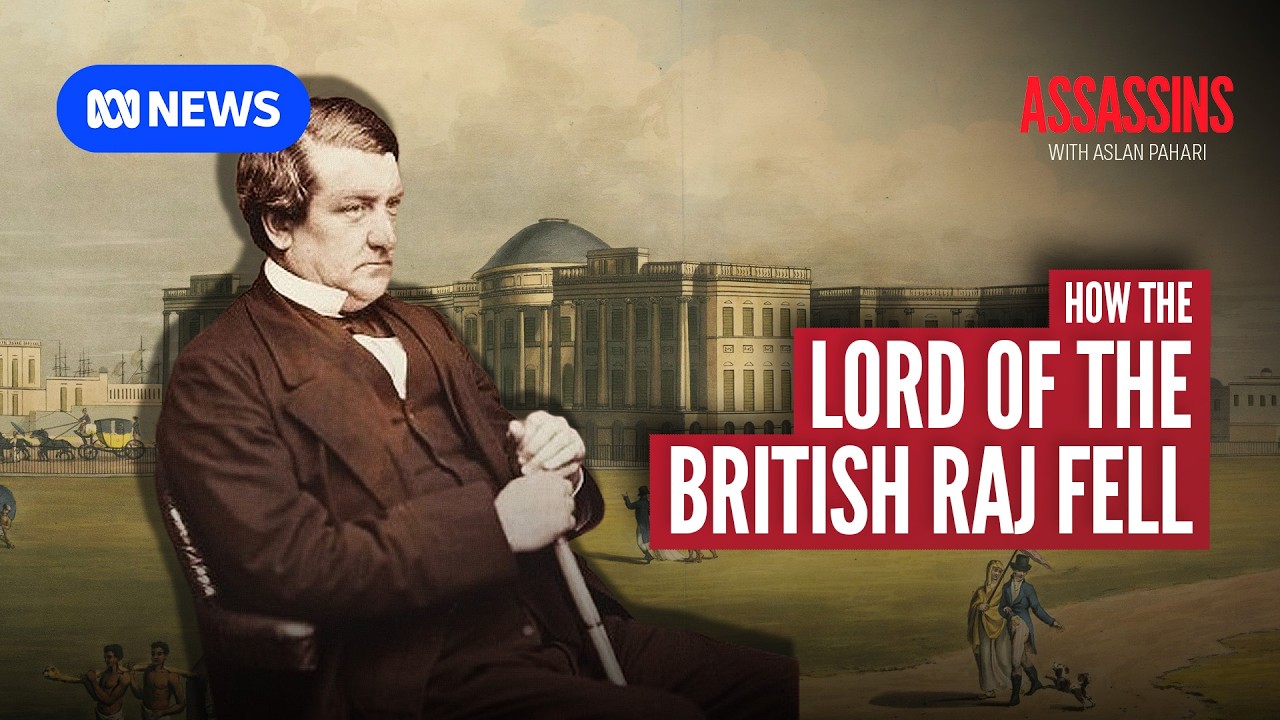
The assassination of the Viceroy of India | ASSASSINS
ABC News In-depth
46,945 views • 1 month ago Save 10 min 4 min read
Video Summary
In 1857, a rumor about greased rifle cartridges ignited a rebellion across India, leading to the British East India Company's direct rule under the Crown and the establishment of the Viceroyalty. Years later, in 1872, the 4th Viceroy, Richard Southwell Burke, the 6th Earl of Mayo, was assassinated by Sher Ali Afridi, a Pashtun prisoner on the Andaman Islands. Afridi, a former British soldier convicted of murder, had been exiled to the remote prison colony. During a prison visit by Viceroy Mayo, Afridi, who had meticulously planned the attack, fatally stabbed the Viceroy twice with a kitchen knife at a pier. Afridi was quickly apprehended and executed, with the official British conclusion being that he acted alone, despite his claims of divine orders and potential connections to broader anti-colonial sentiments.
Short Highlights
- The 1857 Indian Rebellion, sparked by rumors of greased rifle cartridges, led to direct British Crown rule and the appointment of Viceroys.
- Viceroy Richard Southwell Burke, 6th Earl of Mayo, was assassinated in 1872.
- The assassin was Sher Ali Afridi, a prisoner on the Andaman Islands.
- Afridi was a former British soldier convicted of murder and exiled to the Andaman Islands.
- The assassination occurred during Viceroy Mayo's visit to the Andaman Islands prison.
- Afridi stabbed Viceroy Mayo twice at a pier after the Viceroy's security detail was distracted.
- Afridi was executed, and the official conclusion was that he acted alone.
Key Details
The Spark of Rebellion: 1857 [0:00]
- A rumor about new rifle cartridges greased with beef and pig fat caused outrage among Hindu and Muslim soldiers in the Bengal Native Infantry.
- This perceived defilement led to the arrest of 85 soldiers in Meerut, who were soon freed by comrades, sparking a march on Delhi.
- The incident escalated into a widespread civil uprising, known as the First Indian War of Independence or the Indian Rebellion.
The rumour is that those cartridges are greased with beef fat and pig fat.
The Aftermath and Direct Rule [1:04]
- The rebellion resulted in thousands of deaths and forced the British East India Company to cede power.
- Direct rule by the British Crown was introduced, establishing the period known as the British Raj.
- A Viceroy was appointed to rule from Calcutta, wielding the powers of the British monarchy to suppress dissent.
The solution? Strip the company of its power and introduce direct rule by the British Crown.
The Viceroy and the Prisoner [2:14]
- Richard Southwell Burke, the 6th Earl of Mayo, became the 4th Viceroy in 1869.
- He was from Anglo-Irish landed gentry, experienced in managing populations resistant to British rule.
- Meanwhile, Sher Ali Afridi, a Pashtun who fought in the 1857 rebellion, was exiled to the Andaman Islands for murder.
He's being sent to live in the middle of the ocean, on the Andaman Islands.
Life on the Andaman Islands [3:22]
- The Andaman Islands served as a brutal penal colony for dangerous prisoners, including political rebels.
- Conditions were harsh, with malaria, forced labor, floggings, and meager food.
- Sher Ali Afridi, despite his conviction, was given some freedom and worked as a prison barber.
It's a prison. With the prisons in India almost full, the Andaman Islands have become the dumping ground for men considered too dangerous to keep on the mainland.
The Assassination [5:04]
- Viceroy Mayo, interested in prison reform, decided to visit the Andaman Islands in February 1872.
- During his visit, he made a spontaneous decision to inspect Mount Harriet across the harbor.
- As Mayo returned to the pier after sunset, Sher Ali Afridi, who had prepared for months, emerged from hiding and fatally stabbed the Viceroy twice.
Afridi lunges from the shadows. He drives an iron kitchen knife into Mayo's back, pulls it out, and stabs him again.
The Investigation and Conclusion [7:04]
- Sher Ali Afridi was immediately captured and confessed, claiming divine orders and linking the act to anti-colonial movements.
- The British authorities, fearing further rebellion, conducted a swift investigation, seizing communications and examining convict networks.
- Ultimately, the official conclusion was that Sher Ali Afridi acted alone, and he was executed within weeks.
In the official British report, the attack is described as a jihad.