It Started: America’s Bond Market Is Secretly Collapsing
Graham Stephan
759,793 views • 10 days ago Save 10 min 3 min read
Video Summary
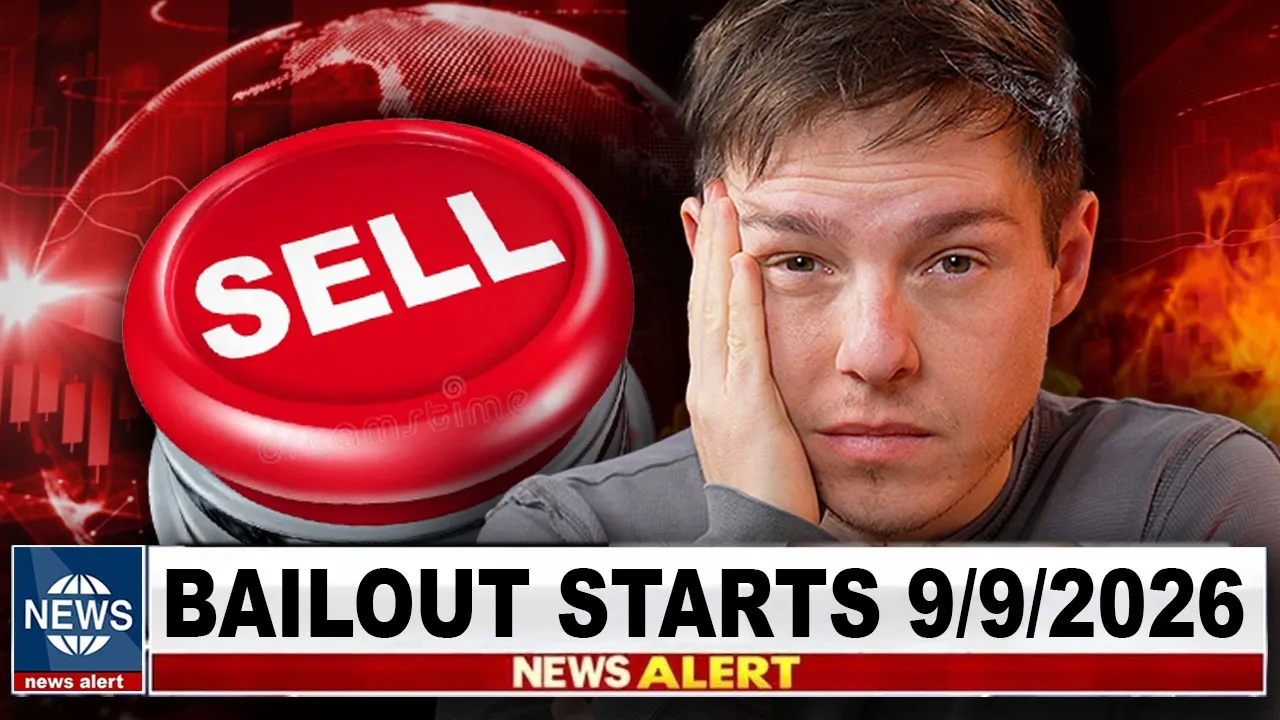
The U.S. government is set to double its debt buyback program starting September 9th, a move critics liken to using one credit card to pay off another. This strategy aims to artificially lower interest rates amidst rising inflation and a dwindling appetite for U.S. debt, as buyers demand higher returns.
Federal Reserve Chair Kevin Warsh outlined a five-part plan signaling a shift towards market-driven interest rates and a tougher stance on inflation, despite a seemingly stable economy. This uncertainty, coupled with geopolitical tensions and the historically weak performance of the stock market in September, suggests a volatile period ahead. The critical threshold to watch is the 10-year Treasury yield hitting 5%, a level not seen since before the 2007 financial crisis.
Short Highlights
- The U.S. government will double its debt buyback program starting September 9th.
- This strategy involves borrowing more money to repurchase existing debt.
- Rising inflation is causing buyers to demand higher interest rates on Treasury bonds.
- Federal Reserve Chair Kevin Warsh announced a new approach focusing on market-driven rates and inflation control.
- September is historically a weak month for the stock market, known as the "September effect."
- A key indicator of financial stress is the 10-year Treasury yield approaching 5%, a level last seen before the 2007 crisis.
- Investors are advised to prepare for market volatility and potential declines.
Key Details
U.S. Debt Buyback Initiative [0:12]
- Starting September 9th, the U.S. will double its debt buyback program.
- This involves borrowing more money to buy back its own debt.
-
"In less than a week, we officially double the amount of new money that gets borrowed just to pay back loans made to the U.S. government."
The Mechanics of Treasury Bonds [1:18]
- The U.S. raises money by issuing Treasury bonds, offering fixed interest rates.
- When debts mature, the government typically issues new debt to pay off old debts.
-
"The United States raises money by issuing what's called Treasury bonds."
Rising Interest Rates and Inflation [1:54]
- Inflation is increasing, leading buyers to demand higher interest rates (e.g., 5% instead of 4%).
- The government is paying off long-term bondholders with higher rates using short-term bondholders at lower rates.
-
"So the government is starting to pay back its long-term bondholders at a higher interest rate with short-term bondholders at a lower interest rate."
The Federal Reserve's New Stance [3:48]
- New Fed Chair Kevin Warsh's five-point plan signals a shift in policy.
- Key points include Fed silence, market watch, lowering inflation, a stable economy, and the potential impact of AI.
-
"Number one, the Federal Reserve will remain silent."
Economic Outlook and Market Volatility [7:54]
- September is historically the worst month for the stock market, with an average decline of 0.6%.
- Factors contributing to the "September effect" include investors raising capital and tax-loss harvesting.
-
"According to his research, September is typically the worst month of the year in the stock market, especially during midterms."
Critical Financial Threshold [11:14]
- The 10-year Treasury yield exceeding or hitting 5% is a critical indicator.
- This level was last seen in 2007, preceding the Great Financial Crisis.
-
"So in terms of my own thoughts and what you could do to prepare, here is what I'm doing going forward."