What Does $50M in Real Estate Actually Look Like? Not What You'd Expect.
BiggerPockets Money
4,663 views • 1 month ago Save 40 min 13 min read
Video Summary
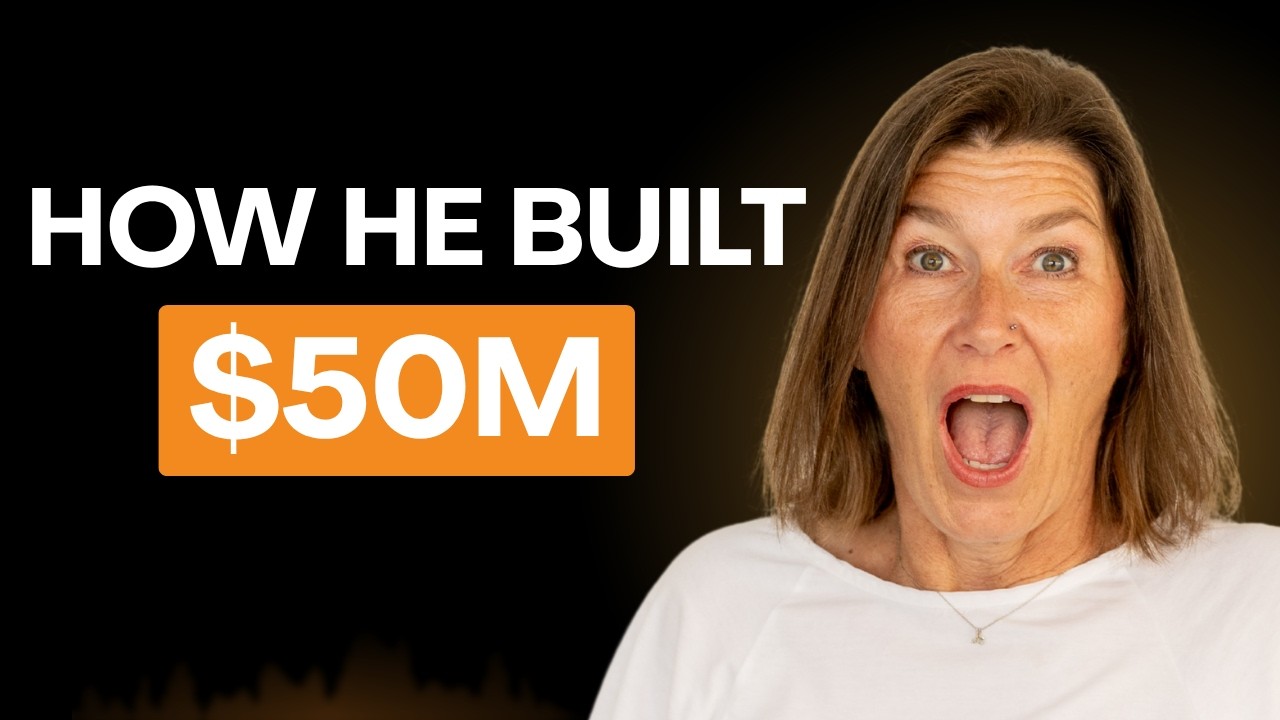
Nick Morales, a 29-year-old real estate investor, has amassed a $50 million portfolio and three businesses, yet his journey has been far from glamorous. Currently living in a manager's unit in South Carolina and sleeping in a bunk bed during the week, Morales detailed the immense personal cost and relentless effort behind his success. He began with no money of his own, leveraging "other people's money" and his own "sweat equity" to flip his first property at age 24. Despite early struggles, including a botched first flip, he learned invaluable lessons about buying low and allowing room for mistakes.
Morales now manages a property management firm and a real estate portfolio, emphasizing that his net worth is tied to illiquid assets, with an estimated equity of $5.5 million. He operates with a "fee-less" platform, splitting proceeds 50-50 with his limited partners, which necessitates his continued involvement in jobs like selling for BiggerPockets to fund his operations and personal salary. His story highlights the stark reality behind impressive financial headlines, revealing the sacrifices and intense dedication required to build significant wealth in real estate.
Short Highlights
- Massive Real Estate Portfolio: Nick Morales built a $50 million real estate portfolio by age 29.
- Multiple Businesses: He operates three businesses in real estate, including a property management firm.
- Personal Sacrifice: Despite headline numbers, Morales lives a non-glamorous life, currently residing in a manager's unit and sleeping in a bunk bed during the week.
- Leveraging OPM: Morales started with no personal capital, using "other people's money" and his own labor.
- First Flip Success: His first flip, despite initial mistakes, yielded an $80,000 profit.
- Current Net Worth: Estimated equity is around $5.5 million, with a significant portion of his cash reinvested into his business operations.
- Fee-less Model: Morales operates on a 50-50 split with partners, requiring him to maintain other income streams like selling for BiggerPockets.
Key Details
The Un glamorous Reality of Wealth [0:00]
- Nick Morales, a team member at BiggerPockets, has built a $50 million real estate portfolio and a property management business by age 29.
- His story is presented as less glamorous than the headline numbers suggest, with significant personal costs and "battle scars."
- The narrative aims to reveal the detailed, often omitted, realities behind large real estate portfolios.
"I think you're going to find the story fascinating. I think you're going to find this very real."
A Mobile Residence [1:30]
- Morales resides in Reno, Nevada, but is currently living in a manager's unit in Sumter, South Carolina, sleeping in a bunk bed Monday through Thursday.
- He travels back to his apartment in Charleston on Thursday evenings through Sunday.
- This arrangement is due to the challenges of remote management and the expectation of presence from staff and investors.
"So I kind of sit here and I'm actually sleeping in a bunk bed that you see back there. That's my residence Monday through Thursday."
Early Beginnings with OPM [2:43]
- Morales began buying property with "no money, with OPM, other people's money," contributing equity and sweat.
- He finds it easier to be present where his assets are located, as remote management is challenging.
- His current situation is a result of his hands-on approach to managing his assets.
"Long story short, I started buying property with no money, with OPM, other people's money. And I brought the equity in the sweat."
The First Flip [4:10]
- At age 24, Morales used a friend's connection to secure a hard money loan at 10% interest and two points for his first flip.
- The loan covered 100% of the purchase price and rehab costs for a property costing around $130,000.
- Despite a difficult seven-month renovation process and a contractor issue, he made an $80,000 profit.
"And so I find it a lot easier just for me on a day to day basis though, to be here where the assets are."
Learning from Mistakes [5:56]
- Morales acknowledges doing a "terrible job" on his first flip, with his father pointing out flaws.
- He emphasizes the importance of buying low to allow room for mistakes, as deals rarely go exactly as planned.
- His first flip occurred in 2019, just before COVID.
"That is like a grand slam home run for your first deal. The whole doing it all wrong thing. That's par for the course for a first deal."
NFL Sales to Real Estate [6:50]
- Before real estate, Morales quit his job in the NFL, where he sold tickets for the Dolphins, Raiders, and Niners.
- Selling premium products led him to start wholesaling and buying property.
- He completed four to five wholesales in four to five months before attempting his first flip.
"I quit my job in the NFL. I moved home. I had a job working in the NFL for a while."
Business Structure and Scale [8:00]
- Morales's firm owns $50 million in real estate, acquired using other people's money and debt.
- He also runs a property management firm that primarily manages his long-term rental assets and some short-term rentals.
- The management company handles asset management, property management, and short-term rental management for his portfolio.
"So the management company predominantly on the long-term rental side only manages my assets and my company's assets on, you know, that allotment of units."
BiggerPockets Sales Role [9:40]
- Morales has been selling advertising inventory for BiggerPockets for about two and a half years, continuing this role while scaling his portfolio.
- This opportunity arose after he quit his full-time NFL job and began wholesaling and scaling his portfolio.
- The role was a "seamless fit" with his existing activities.
"And then the opportunity came to come back to work for BiggerPockets and while still scaling my portfolio."
Net Worth and Equity [10:30]
- Morales estimates his net worth in equity to be around $5.5 million across the $50 million portfolio, with debt at approximately 60-66%.
- He notes that equity is not liquid and has invested heavily in his management arm, employees, and facilities.
- Liquidating the portfolio today might yield only $3 to $4 million after fees and costs.
"Our net worth is roughly around five and a half million in equity and assets based off of my splits across that $50 million portfolio."
Partnership Structure and Fees [11:50]
- Morales's firm is a "fee-less platform," charging only normal property management fees.
- He has a 50-50 split with his Limited Partners (LPs), who typically get their capital back within 12-18 months after stabilization.
- He continues to hold jobs like selling for BiggerPockets to fund his operations and equity growth.
"So I'm a fee-less platform, so I don't charge asset management, acquisitions, any of that stuff."
Property Management Revenue [13:00]
- The property management business is projected to gross close to $1 million in total gross receipts this year.
- The short-term rental side alone generates about $30,000 per month.
- The long-term rental business is scaling, with about 180 units in construction or leasing, expected to generate similar revenue once operational.
"Right now, I think we'll gross close to over a million this year in total gross receipts."
Management Company Profitability [14:15]
- The net profit for the property management business is around $7,000 to $12,000 per month, depending on expenses.
- Morales takes no salary from the management company, reinvesting profits into talent and operations.
- The business ran at a loss for three to four years before recently becoming profitable.
"We're around anywhere between seven to 12,000 a month. It just depends on, you know, if I buy something extra on the asset."
Journey to Current State [15:30]
- Morales's original portfolio of $15-18 million nets about $40,000 per quarter for partners.
- He earns roughly $3,000-$4,000 per month from this original portfolio after years of work.
- He graduated with nearly $90,000 in student loan debt from Arizona State University.
"So, you know, roughly make about $3,000 to $4,000 a month for, you know, years of work, right?"
Early Career and Transition [17:00]
- After graduating with a political science degree and significant debt, Morales took a $13/hour job selling tickets for the Dolphins.
- He quickly learned sales skills, eventually moving to the Raiders and selling premium products, earning $36 million in 18 months and becoming the #1 seller in the NFL.
- He paid off his student loans relatively quickly but felt like a "wheel in the business" without understanding the full scope.
"I sold $36 million in 18 months. I was the number one seller in the NFL at the time."
Wholesaling and Partnership [20:00]
- Morales quit his job in San Francisco and transitioned to wholesaling real estate in 2019, inspired by his aunt's success.
- He acquired a PropStream account and began cold calling and texting, eventually wholesaling his first mobile home for $27,000.
- He met his principal partners in Las Vegas, forming a formal partnership in March 2020, just as COVID began.
"So went back to the office that next Monday, quit my job, packed up my little Z3 BMW and drove back up to the mountains and grabbed my computer and got a CRM and a list and started cold calling and shooting text messages."
Scaling and Pivoting [22:00]
- The partnership focused on flipping properties, doing about 30 wholesales and flips annually for two years.
- Financial strain from payroll led Morales to downsize his staff and move away from the office.
- He shifted focus to BRRRR (Buy, Rehab, Rent, Refinance, Repeat) and began working on job sites himself for 18 months to finish renovations.
"And we started together because they had the background of how to flip the properties and the construction, the other one."
South Carolina Focus and Team Building [24:30]
- Morales was recruited by BiggerPockets around November, coinciding with his search for new markets.
- They identified South Carolina as a promising market due to its potential for rent increases and high opportunity, similar to Reno's gentrification.
- Over the next 2.5-3 years, they acquired approximately 300 more apartments across nine to ten buildings, building a large team with onsite and international staff.
"We really landed on South Carolina and it's been just a really good gold mine for us since then."
Navigating Market Challenges [27:00]
- Morales's firm has grown methodically, balancing scale with velocity to avoid the pitfalls of rapid expansion seen in other syndicators.
- He emphasizes his hands-on approach and presence on properties as key to success, contrasting with fee-driven syndicators.
- He secured fixed-rate debt on many properties during COVID, avoiding issues with recent rate increases.
"I think a lot of syndicators that do it and they go zero to, you know, 5,000 units relatively quickly or 1,000 units relatively quickly have not learned the lessons on how to truly operate the assets that are out there, right?"
Fixed-Rate Debt and HUD Loans [30:30]
- Morales utilizes fixed-rate debt, primarily through HUD loans, which offer 30-year terms with no balloon payment.
- These loans are typically for properties with five or more units and are non-recourse.
- He contrasts this with agency loans (Freddie, Fannie) which often have a five-year balloon.
"So the term with agencies, so like Freddie, Fannie, you're typically looking at like a five-year balloon on those ones. But if you go to HUD, you can have a 35-year AM or a 30-year AM with, you know, the whole time fixed at that 5.75 or 6% rate."
Operator's Edge [33:00]
- Morales believes his physical presence and hands-on decision-making are crucial, especially compared to syndicators operating remotely.
- He contrasts his fee-less, equity-aligned model with fee-driven syndicators who may lack vested interest.
- His advice to investors is to thoroughly vet operators, looking for gradual growth and a history of problem-solving.
"The difference is when I'm buying an asset, I'm buying an asset at a severely discounted rate. Anyway, I'm coming in and I'm buying it, you know, it's underperforming. It's not good."
The Goal: Building a Legacy [36:00]
- Morales's primary motivation is "building" a sustainable company and providing opportunities for his team, rather than just accumulating wealth or retiring early.
- He views real estate as a "get rich slow game" that requires consistency and time.
- His goal is to cultivate a team and a platform that can withstand time and continue to grow.
"For me, it was about creating something that I was my that I created. Right."
No Wrong Path [39:00]
- Morales emphasizes that there is no single right path in real estate investing; personal goals dictate the approach.
- He attributes his success to hard work and consistency rather than inherent intelligence.
- He advises listeners to stay consistent and methodical, as opportunities will arise.
"To answer your question and to the listeners, there's no wrong answer. It's all depending on what you want to do, you know, and like, you can build what I did."
Future Vision and Team [41:00]
- Morales envisions a continuation of his current work, expanding the team and providing opportunities for younger members.
- He aims to build a company that can scale continuously by hiring good people and establishing strong processes.
- His focus is on the team and building a sustainable platform, not just individual deals.
"I think that's the goal for me is that, you know, as my partners will continue to, you know, step out over the next probably five to 10 years, like, how do I ring up the next group of guys or next group of entrepreneurs that want to be a part of it with me?"
LinkedIn and Daily Grind [43:30]
- Morales is most reachable on LinkedIn, preferring it over other social media platforms.
- His typical day involves meetings, problem-solving with staff, and evaluating new acquisitions.
- He strives to improve by "1% better" each day and execute for his partners and team.
"LinkedIn is the best place. You know, I'm an anti-social media guy. I have no social media as I stay here in the swamp, even in the weeds."
Reflections on the Journey [45:00]
- Scott Trench reflects on the high cost of Morales's $3-$5 million net worth, questioning if he would have made the same career choices.
- He acknowledges the brutal gauntlet Morales has endured, from wholesaling to flips and managing assets.
- The conversation highlights the stark reality of building wealth in real estate, contrasting with more passive approaches.
"I think that that $3 to $5 million net worth, net of liquidation value on that portfolio came with a pretty high cost."
The Price of Entrepreneurship [47:00]
- Mindy Jensen appreciates Morales's honesty about the downsides of real estate investing, contrasting with those who only share highs.
- She notes his dedication, working on-site in challenging conditions.
- The discussion frames Morales's path as the "very active end" of real estate investing.
"He showed us the bunk bed that he's sleeping in. He showed us, I believe there was no air conditioning in that unit."
Resources and Support [49:00]
- The BiggerPockets Money podcast promotes its website, biggerpocketsmoney.com, offering free resources like templates and calculators.
- Listeners can sign up for a newsletter at biggerpocketsmoney.com/newsletter.
- Supporting the show involves using fee-only partners found on the website for financial planning, taxes, or community.
"It's free only information at biggerpocketsmoney.com slash resources."