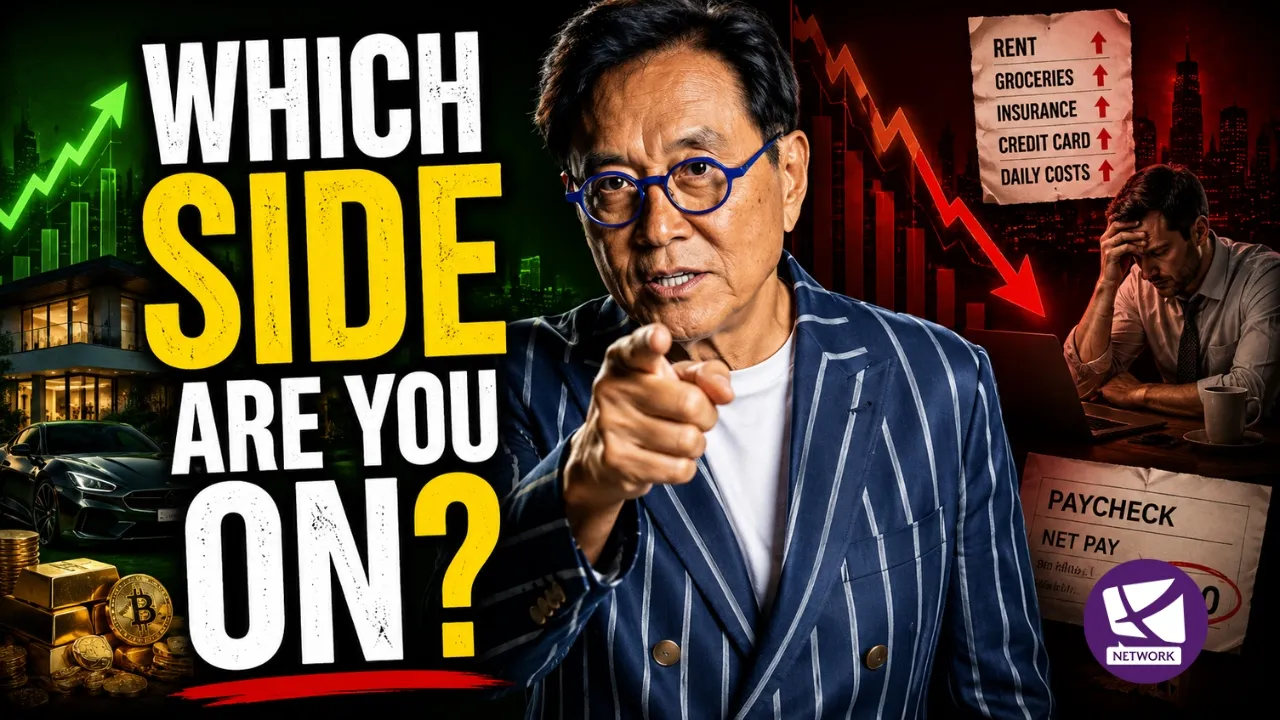
Why Asset Owners Keep Getting Richer While Workers Fall Behind - Robert Kiyosaki
The Rich Dad Channel
61,347 views • 1 month ago Save 21 min 4 min read
Video Summary
The stock market is soaring to new heights, yet your grocery bills are climbing just as fast. This isn't a coincidence, but a symptom of a "K-shaped economy" where two distinct economic realities are diverging.
Robert Kiyosaki explains that this isn't one economy, but two: one ascending, benefiting asset owners, and one descending, leaving wage earners behind. Your position on the K isn't determined by your job or effort, but by what you own. As AI freezes wage growth and the Federal Reserve's policies inflate asset prices while increasing living costs, the gap widens. Kiyosaki urges listeners to recognize that relying solely on a paycheck is a losing strategy in this environment, emphasizing that ownership is the key to navigating the diverging economic paths.
Short Highlights
- The economy is split into two diverging paths: one for asset owners and one for wage earners.
- Ownership, not effort or job title, determines which side of the "K" you are on.
- AI is poised to freeze wage growth, making raises obsolete.
- Federal Reserve policies inflate asset prices while simultaneously increasing the cost of living.
- The traditional plan of education, job, and savings is no longer sufficient for financial security.
- The stock market doesn't crash due to the suffering of the majority but when the wealthy stop spending.
Key Details
The Dual Economy: A New High for Stocks, a New High for Bills [0:00]
- The stock market recently hit a new high, while grocery bills also reached record levels.
- This apparent contradiction highlights the existence of two separate economies, one on the rise and one in decline.
- The gap between these two economies is widening, with most people experiencing the downturn.
"Wages are not going to keep up with inflation. Not this year, not next year, maybe not ever again."
Identifying Your Economic Path: It's About Ownership [2:00]
- The key determinant of your economic standing is not your job title, degree, or hours worked, but what you own.
- The "K-shaped economy" is characterized by two diverging lines: one ascending (asset owners) and one descending (wage earners).
- Expenses like rent, groceries, and insurance are rising, while wages remain stagnant.
"The number is this. What do you own? That's the whole test. That's the only test."
The Descending Line: The Reality for Most [4:00]
- The bottom line of the "K" represents the struggles of most people, with rising costs for essentials.
- Jobs are being automated, and starter homes are out of reach for many.
- The traditional advice to get a good job and save money was designed to supply workers, not to elevate them.
"That's the bottom of the K. That's where most people are standing."
The Ascending Line: The Advantage of Ownership [5:00]
- The top line of the "K" benefits those who own assets like stocks, real estate, and businesses.
- These individuals see their wealth grow through rising asset values and low-interest mortgages.
- Their ability to continue spending and investing is unaffected by the struggles at the bottom.
"They own the thing that's rising. That's why the market doesn't crash when the bottom is in pain."
The Real Reason for Unaffordability: Assets vs. Wages [8:00]
- Housing unaffordability is not primarily due to prices, but the widening gap between asset values and wages.
- Owning assets, like rental properties, has led to financial gains, while renting has caused individuals to fall behind.
- The middle class is no longer defined by a job title but by asset ownership.
"The gap between assets and wages did this to you."
AI's Impact on Wages and the Fed's Role [12:00]
- AI is not necessarily eliminating jobs but is reducing the need for companies to raise wages.
- The Federal Reserve's policies, aimed at managing inflation, inadvertently inflate asset prices while increasing living costs for wage earners.
- The Fed's actions benefit asset owners, causing the "K" to become steeper.
"Wages are not going to keep up with inflation. Not this year, not next year, maybe not ever again."
Why Markets Don't Crash from Suffering [16:00]
- Markets do not crash because the majority is suffering; they crash when the wealthy stop spending.
- The wealthy continue to invest and compound their wealth, preventing market crashes despite widespread economic pain.
- The focus should shift from hoping for a raise or economic turnaround to actively acquiring assets and climbing the top of the "K."
"Markets don't crash when the bottom is hurting. Markets crash when the top stops spending, and the top isn't stopping."