Canada-US Trade Deal Falls Apart
The Plain Bagel
432,181 views • 1 month ago Save 12 min 5 min read
Video Summary
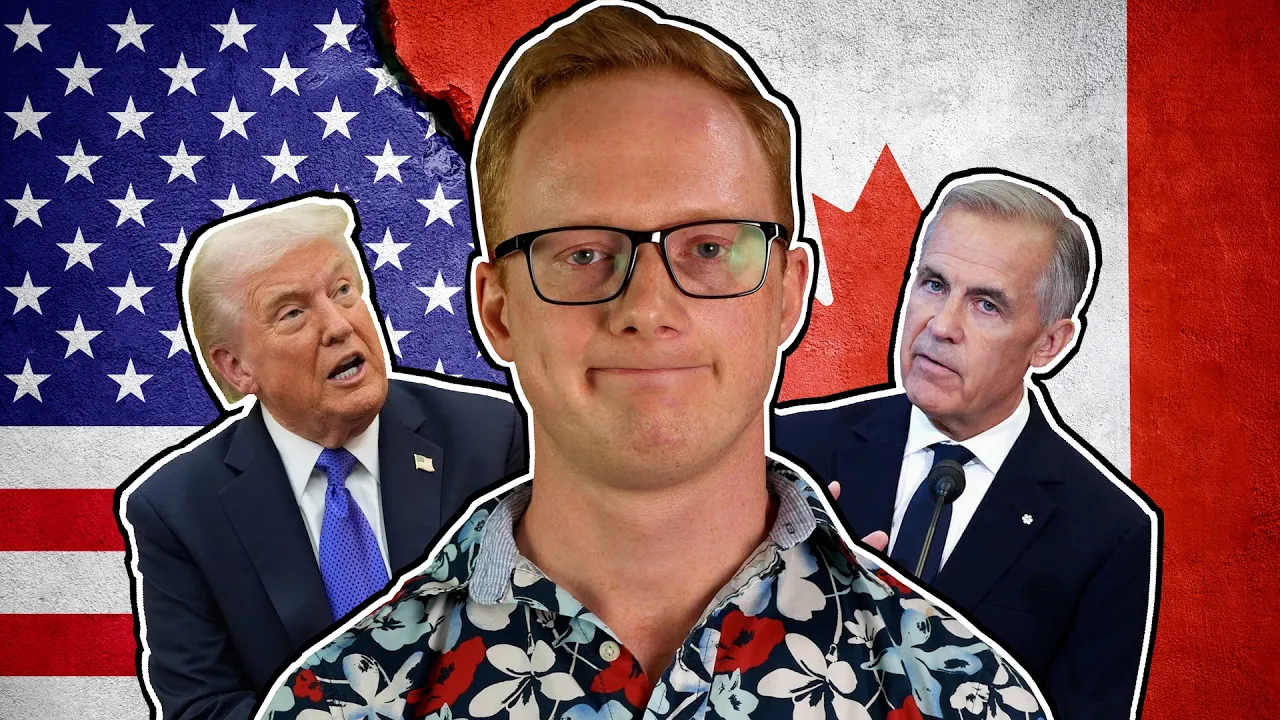
Trade talks between Canada and the US collapsed dramatically last Friday, plunging the two nations into a new trade war. The breakdown, initially attributed to last-minute demands from the US, has revealed deep divisions over issues like auto tariffs, sovereignty, French language laws, and Canadian content requirements for streaming services.
While both sides initially seemed close to a deal, with Canada offering to drop retaliatory tariffs and amend dairy quotas, and the US proposing tariff reductions, the negotiations imploded. The US Secretary of Commerce, Howard Lutnick, reportedly pushed for harsher terms, particularly impacting medium and heavy-duty trucks. Canada viewed US demands to influence its trade deals with other countries and alter French language and Canadian content regulations as threats to its sovereignty and culture. Ultimately, Canada recalled its negotiators, leading to the US imposing a 50% tariff on Canadian goods and Canada retaliating with duties on over 700 American products.
Short Highlights
- Trade talks between Canada and the US collapsed, leading to a new trade war.
- Key sticking points included US demands on auto tariffs, sovereignty, French language laws, and Canadian content regulations.
- The US imposed a 50% tariff on certain Canadian goods.
- Canada retaliated with duties on over 700 American products.
- The Keystone XL pipeline project was a point of contention.
- Concerns existed about the US honoring any trade deal.
Key Details
Trade Talks Collapse Amidst Last-Minute Demands [0:57]
- Trade negotiations between Canada and the US fell apart on a Friday, initiating a new trade war.
- Details emerged regarding the collapse, with accusations of last-minute, unfair, and uneconomic demands from the US side.
"And since then, we've had a lot of details come out about what exactly caused things to collapse seemingly in the 11th hour."
US Tariffs and Keystone XL Framework [2:14]
- In early August, the US threatened 50% tariffs on $20 billion of Canadian exports, prompting trade negotiations.
- A framework for a deal seemed to emerge, with President Trump announcing a pause on tariffs and mentioning Canada's agreement to restart the Keystone XL pipeline.
- The mention of Keystone XL was peculiar, as the US had vetoed it in 2021.
"With the president adding pretty randomly that Canada had agreed to kickstart the Keystone XL pipeline project, which for those unfamiliar was a long existing project to expand the existing Keystone pipeline system and create a more effective route south to the US to the Gulf Coast."
Negotiated Offers and Their Collapse [3:47]
- Canada offered to drop retaliatory tariffs on steel, aluminum, and auto parts, and amend dairy tariff rate quotas.
- The US offered tariff reductions on steel and aluminum (from 50% to 25%), lumber (dropping 232 tariffs), and auto parts (from 25% to 15% or 7%).
- On Friday, Canadian negotiators were recalled to Ottawa, and Prime Minister Mark Carney announced the end of negotiations and intent to retaliate against the impending US tariffs.
"But on Friday, we got the pretty shocking update that Prime Minister Mark Carney had recalled his negotiators back to Ottawa, with the Prime Minister issuing a statement later that day, highlighting that he had cut off negotiations with the United States, and would be retaliating to the now-to-be implemented 50% tariffs coming from the US effective August 22nd, with all the trade talks seemingly falling apart in just a matter of hours."
Conflicting Accounts of Collapse [5:08]
- Canadian officials accused the US of imposing unfair, uneconomic, last-minute demands that questioned the reliability of any deal.
- Quebec's Premier highlighted US demands affecting the country's sovereignty and French-language legislation.
- US negotiators accused Canada of making additional demands and retracting commitments.
"Mark Carney, for his part, has accused the US of implementing some last-minute demands that were unfair, uneconomic, and called into question the reliability of any deal, with Quebec's Premier Christine Frechette, highlighting that the US was going after matters that would affect the country's sovereignty, and even Quebec's French-language legislation."
Key Irritants: Autos, Sovereignty, and Language [7:00]
- US Secretary of Commerce Howard Lutnick reportedly intervened, pushing for harder terms on steel, aluminum, and automobiles, specifically excluding medium and heavy-duty trucks from tariff reductions.
- US negotiators sought influence over Canada's trade deals with other countries and the right to update Canadian tariffs, which Canada viewed as a sovereignty issue.
- Disagreements arose over bilingual labeling requirements and US demands for streaming services to promote Canadian content, impacting French language laws.
"Namely, US negotiators were wanting to have influence over the trade deals Canada struck with other countries. Pushing, for example, for the country to implement similar sectoral tariffs to those implemented in the US on things like steel and aluminum to ensure that they had a sort of united front."
Deal Reliability and Escalation [13:00]
- Canada sought assurance that the US would honor the trade deal, citing past unreliability; US negotiators stated tariffs could change anytime.
- The US raised issues with Canada's "Buy Canadian" program, while Canada reportedly asked for further auto tariff reductions and backed away from restarting Keystone XL.
- The US imposed its 50% tariff, and Canada retaliated with duties on over 700 products, effective September 8th.
- President Trump threatened higher auto tariffs and controversially renamed Lake Ontario "Lake America."
"Mark Carney highlighting that in regards to America's commitment to trade deals. Sometimes its signature was written in pencil."