Secret Service Agent: Your Neutral Face Is Making People Distrust You (Here's How to Fix It)
Lewis Howes
508 views • 21 hours ago Save 74 min 5 min read
Video Summary
The most effective way to uncover the truth is not by asking the 'right' questions, but by creating an environment where the truth does not hurt. By removing judgment and providing an 'off-ramp' for the other person to save face, you can bypass defensive mechanisms and gain deeper disclosures. This approach relies on tactical empathy—understanding without necessarily agreeing—and focusing on the 'why' rather than just the 'what.'
Drawing from 25 years of experience in the Secret Service, Brad Wheeler emphasizes that high-stakes communication requires managing your own emotional affect to prevent shutting down the other party. By maintaining a neutral or positive demeanor and avoiding accusatory language, you can build the psychological safety necessary to elicit information, even from individuals who have committed heinous acts.
Short Highlights
- Create a safe environment where the truth does not hurt to prevent defensive reactions.
- Use tactical empathy to understand the other person's perspective without agreeing with their actions.
- Avoid 'why' questions, which often trigger defensiveness and attack an individual's identity.
- Maintain a neutral or positive facial affect to avoid signaling contempt or judgment.
- Focus on the 'why' and the 'what else' to encourage continued disclosure.
- Use the 'buddy' framework to provide an off-ramp for the other person to save face.
- Prioritize curiosity over being interesting to build rapport and trust.
Key Details
Creating a Safe Environment [0:00]
- The number one secret to getting the truth is creating an environment where the truth does not hurt.
- You must provide an off-ramp for the other person so they can save face.
it's not about asking the right questions it's creating the environment where the truth doesn't hurt
The Problem with 'Why' [0:23]
- Asking 'why' is problematic because it puts people on the defensive.
- It often forces people to defend their identity, which shuts down communication.
why is very problematic it's putting them on the defensive and too many times especially if that's associated with lying you're trying to bring their identity into play
Managing Facial Affect [1:42]
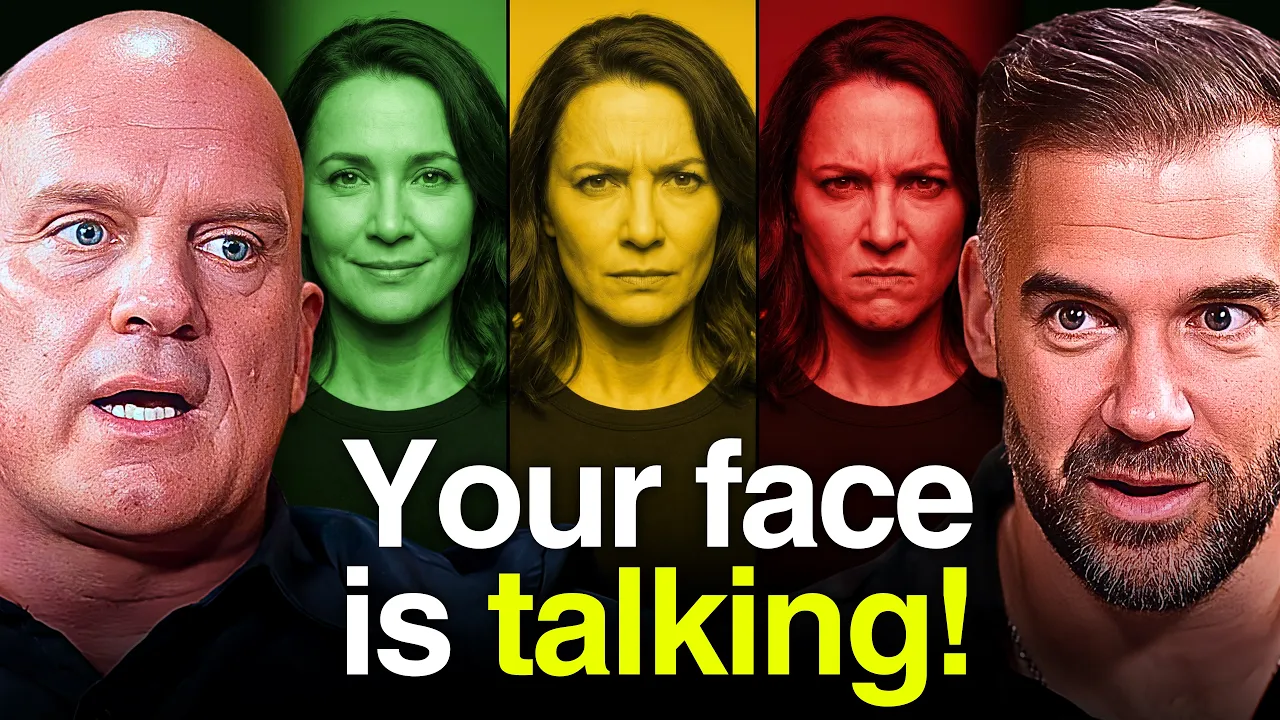
- Any sign of contempt or disapproval, such as a downward eyebrow flash, can immediately shut down a disclosure.
- You must remain neutral or positive to ensure the other person feels safe.
I just gave that little you know just that little a downward eyebrow flash and it was contempt and he immediately shut down after that admission
The Power of 'What Else' [2:28]
- Asking 'what else' is an effective, non-threatening way to invite more information.
- Punishing a disclosure, even unintentionally, discourages further honesty.
hey what else and it's almost said assumptively if it's what else
Non-Verbal Cues and First Impressions [4:24]
- Neutral affect is often coded as negative by our primitive brain.
- We subconsciously scan for threats by looking at hands and body orientation.
if I have a neutral affect our primitive self would code that as this is not good
The Importance of Handshakes [5:15]
- A warm, dry handshake is essential for establishing confidence and trust.
- Avoid 'power' handshakes; instead, show the whites of your hands and connect at the thumb.
I like to show them my the whites of my hands
Right Ear Advantage [6:25]
- Research suggests a right ear advantage for processing sensitive information.
- Positioning yourself to speak into the other person's right ear can improve communication effectiveness.
if I can speak into your right ear you have about a five or ten percent better to process sensitive information
Avoiding Barriers [7:12]
- Avoid sitting directly across from someone or using barriers like tables, which hide body language.
- Feet orientation is a key indicator of comfort and engagement.
if I have barriers I can't see where your feet are
The 'Confessional' Posture [8:30]
- Leaning forward with hands anchored creates a sense of intimacy and safety.
- Mirroring this position encourages the other person to mirror back, fostering rapport.
this is a confession posture louis right here think about this right when you are leaning forward just like this
Priming the Situation [10:45]
- Research the person beforehand to understand their interests and pain points.
- Building rapport through shared interests, such as pets or hobbies, lowers stress levels.
I always like to meet basic necessities bathroom food
The Criminal Equation [14:48]
- Most crime is a result of need, ability, and opportunity, justified by the individual.
- Stress acts as a multiplier, while social bonds and consequences act as deterrents.
you have need plus ability plus opportunity their own internal justifications and all of that is almost squared by stress
Diminishing Impact [18:25]
- To get the truth, you must diminish the impact of the act without condoning the culpability.
- This allows the individual to admit to the deed without feeling like a 'scumbag.'
you blame outside factors you understand without agreement you diminish impact not culpability you demonstrate tactical empathy and you focus on the why
Horns and Halos [21:28]
- 'Horns and halos' refers to assigning negative or positive traits based on first impressions.
- These biases can cloud judgment and lead to confirmation bias in investigations.
I meet you and you have a positive attribute I give you an affinity bias meaning I put a halo on you
Everyone Lies [30:52]
- Everyone lies, often for social cohesion or to protect their ego.
- The key is understanding the motivation behind the lie.
everyone lies it just depends what type of lie you're telling
Detecting Deception [33:30]
- Focus on whether the person actually answered your question.
- Look for delays, equivocation, or verbal/non-verbal disconnects as 'check engine lights.'
it's the check engine light where I'm like I'm going to follow that one up later
Definition of Greatness [38:45]
- Greatness is doing ordinary things at an exceptionally high level over a sustained period.
- It is about impacting others and making them the best version of themselves.
doing ordinary things at an unbelievably high level when nobody's keeping score nobody's giving you an award for it that's greatness