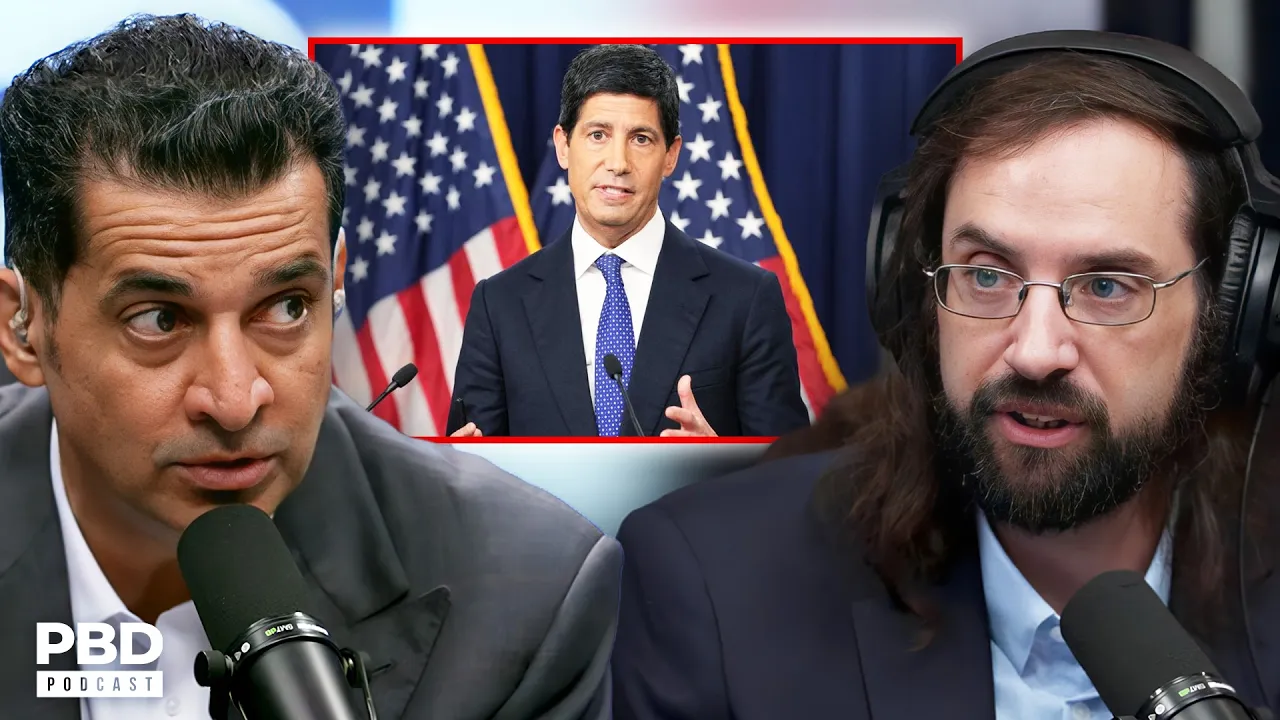
Nick Shirley: Exposing Government Fraud, Suing California & Taking on the Media
All-In Podcast
127,846 views • yesterday Save 26 min 6 min read
Video Summary
California's ambitious high-speed rail project, initiated in 2008 with the promise of connecting Los Angeles to San Francisco, has devolved into a colossal financial drain, having spent $15 billion over 18 years with virtually nothing to show for it. The project's cost has ballooned from an initial $33 billion to an estimated $236 billion, making it one of the most expensive infrastructure projects in history, yet it currently extends from nowhere to nowhere.
Compounding the issue, a significant portion of the funds has been lost to "change order delays," with contractors demanding hundreds of thousands of dollars daily for work not yet commenced due to the project's unclear planning and execution. The state has even failed to purchase the trains themselves, a move interpreted as an acknowledgment that the tracks may never be operational. Meanwhile, alternative solutions like subsidizing flights between major cities for centuries would be cheaper than completing this project, highlighting a profound disconnect between the project's escalating costs and its tangible, or rather intangible, outcomes.
Short Highlights
- California's high-speed rail project has spent $15 billion over 18 years with no operational lines.
- Initial cost estimates have surged from $33 billion to $236 billion.
- A significant portion of funds is attributed to "change order delays" and contractor claims.
- The state has not purchased trains for the project, raising doubts about its completion.
- Subsidizing flights between Los Angeles and San Francisco would be more cost-effective than building the rail line.
- The project's scope has been reduced, now focusing on a Merced to Bakersfield segment instead of Los Angeles to San Francisco.
- Farmers and landowners face disruption and potential displacement due to the rail alignment.
Related Video Summary
Key Details
The Promise and Reality of California's High-Speed Rail [0:00]
- The California High-Speed Rail project, launched in 2008, aimed to connect Los Angeles to San Francisco.
- After 18 years and $15 billion spent, the project has achieved virtually no tangible progress.
- Current estimates project a final cost of $100 to $200 billion to complete.
"This is the California high-speed rail that goes to absolutely nowhere, and when I mean absolutely nowhere, I mean literally nowhere."
Escalating Costs and Global Comparisons [1:05]
- The project is now considered the most expensive infrastructure project globally.
- Original cost estimates were $33 billion, escalating to $126 billion, and now $236 billion.
- It is on track to be the third most expensive infrastructure project in history, behind the Interstate Highway System and the International Space Station.
"This project is on track for one thing, and that is to be the third most expensive infrastructure project in the history of the world."
The "High-Speed Rail to Nowhere" [2:20]
- The current visible infrastructure consists of concrete and rebar, with no actual rail lines laid.
- The existing segment is often referred to as a "modern-day Stonehenge" in the Central Valley.
- Governor Newsom has privately expressed doubts about the project's completion within our lifetime.
"The facts seem overwhelming that this project is not going to materialize in our lifetime."
Funding Mismanagement and Change Order Delays [3:10]
- One-third of the project's cost is attributed to "change order delays."
- Contractors are owed substantial daily sums ($170,000) for work stoppage due to unclear infrastructure plans.
- A recent settlement paid out over half a billion dollars to a contractor for delays.
"One-third of the entire cost of California high-speed rail has gone to this part called change order delays."
The Missing Trains [4:25]
- California has not yet purchased the actual high-speed trains for the project.
- This omission suggests an acknowledgment that trains may never run on the constructed tracks.
"The state didn't buy the trains, my opinion, because they know that there will never be a train on these tracks."
Cost-Benefit Analysis: Flights vs. Trains [5:00]
- Subsidizing one-way tickets between San Francisco and Los Angeles with current ridership figures could fund free tickets for 150 years.
- With the new $236 billion estimate, tickets could be subsidized for 300 years.
- Flying between the two cities is mathematically more sensible than building the train.
"So to me, it would make more sense for all of us to just buy the flights from San Francisco to LA than it would be to build a train or whatever this is and spend more money doing that."
Abandoned Routes and Misplaced Priorities [6:00]
- California has abandoned the original route from San Francisco to Los Angeles.
- The focus has shifted to a segment from Merced to Bakersfield.
- This revised plan means the rail will not serve the originally intended major population centers.
"California actually abandoned the route from San Francisco to Los Angeles. Now they're focusing from Merced to Bakersfield."
Impact on Farmers and Landowners [7:00]
- The rail alignment cuts through farmland, disrupting contiguous ranches and orchards.
- Farmers face inconvenience and increased costs for managing irrigation and power supplies across divided lands.
- Landowners are concerned about their properties being acquired for the project, especially as development continues on the alignment.
"Ranchers that have been contiguous for hundreds of years will now be split."
Political Support and Accountability [8:30]
- Senator Cortese defends the $1 billion annual allocation for the next 20 years as a "good long-term commitment."
- He asserts the project is "happening" despite the lack of visible rail.
- Accountability for cost increases and delays is being addressed, but the project's completion timeline remains uncertain.
"I believe it's a good long-term commitment that we need to make."
The "Nick Shirley Law" and Investigative Journalism [10:00]
- Investigator Nick Shirley discusses a new California law (AB 2624) aimed at restricting his ability to expose alleged fraud.
- The law, co-sponsored by CHURLA (which received $80 million in grants), allows service providers to immigrants to issue demand letters to prevent video uploads, with fines for non-compliance.
- Shirley is suing the state, arguing the law violates First Amendment rights.
"And they only created that after I exposed the fraud."
Origin of Investigations and Funding [13:00]
- Shirley began his investigative work after witnessing issues at the southern border and learning about immigrant journeys.
- He funds his work through his X.com account, earning tens of thousands of dollars monthly.
- His viral video exposing fraud in Minnesota garnered billions of views and led to arrests.
"And, like, I went from 20,000 subscribers, nobody knowing me, to now having created one of the most viewed videos ever in Internet history, exposing the fraudsters in Minnesota."
Broader Fraud and Mismanagement [18:00]
- Shirley highlights widespread fraud in US welfare programs, including SNAP card usage at strip clubs and looted social benefit programs.
- He notes that the California High-Speed Rail project, while not outright fraud, represents "organized leakage" due to its unethical and illogical nature.
- The project's cost and lack of clear benefit are seen as symptomatic of broader issues of complacency, corruption, and unaccountability.
"The big honeypots that you're going to go chase down and uncover? Like welfare fraud here inside the United States is just absolutely insane."