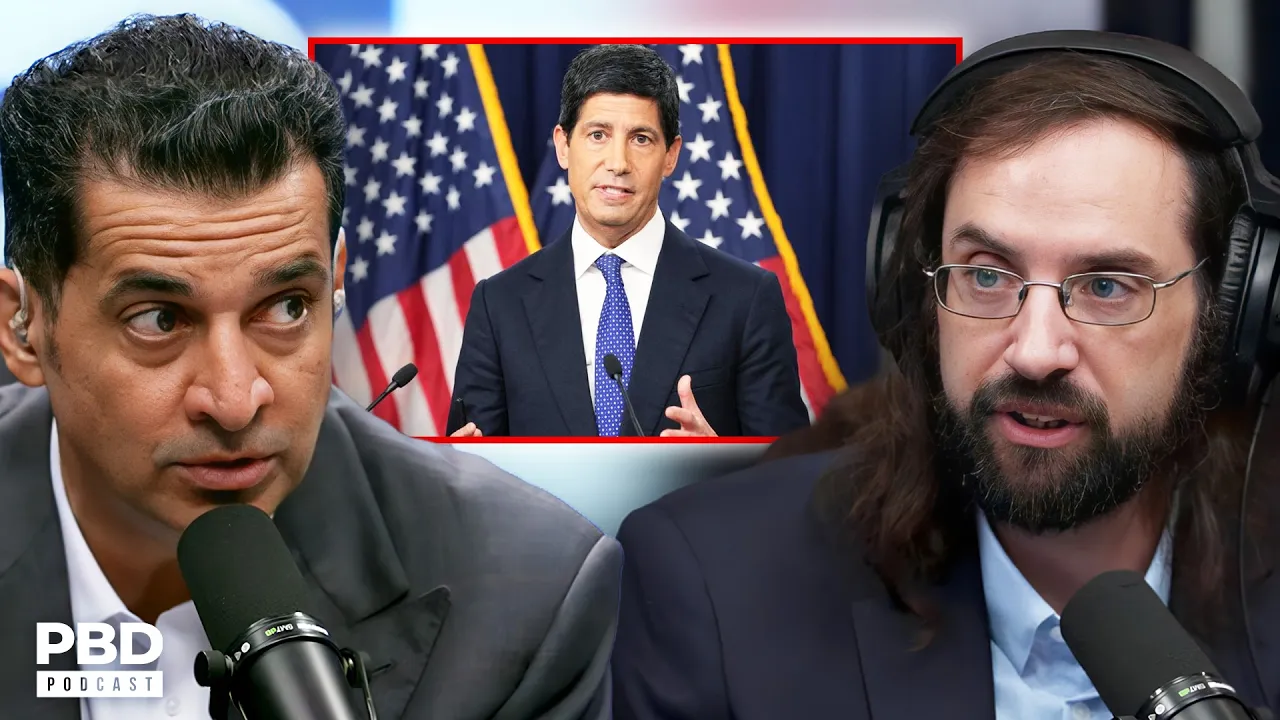
"Inflation Is Still Winning" - The Fed Raises Rates for the First Time Since 2023
Valuetainment
7,413 views • yesterday Save 10 min 4 min read
Video Summary
The Federal Reserve's recent quarter-point rate hike is met with skepticism, with analysts arguing it's a symbolic move to appear proactive against inflation rather than a response to genuine economic data.
Experts suggest the Fed's decision stems from uncertainty and a desire to avoid criticism, particularly given their own projections indicating inflation will decelerate by 2027. This move comes amid a global energy shock, with record-high diesel prices impacting transportation costs and consumer goods. The Fed's action is seen by some as an attempt to deflect political blame, with the chairman's decision to raise rates, even slightly, defying expectations of alignment with former President Trump's preferences.
Short Highlights
- The Federal Reserve raised interest rates by a quarter point, a move questioned by experts.
- Analysts argue the hike is a symbolic "insurance policy" against potential inflation, not a data-driven decision.
- The Fed's own projections anticipate inflation deceleration by 2027, making the current hike seem premature.
- The decision is viewed as a way for the Fed to appear proactive and avoid criticism, regardless of actual inflation drivers.
- Global factors, particularly an energy shock and record diesel prices, are identified as the primary inflation culprits.
- The Fed's action is seen as a political maneuver to deflect blame from administration policies.
- The rate hike was a unanimous decision by the Fed's committee, defying expectations of political influence from former President Trump.
Key Details
Fed Raises Rates Amidst Skepticism [0:00]
- The Federal Reserve announced a quarter-point interest rate increase, a move that immediately caused a significant market valuation loss.
- Analysts like Jeff expressed surprise not at the action itself, but at the rationale behind it, stating it was "not the right move."
"The market within minutes loses a half a trillion dollars of valuation at the time."
Questionable Rationale for Rate Hike [0:49]
- The primary reason cited for the rate hike is the Fed's concern about rising consumer prices, particularly due to energy costs, and the potential for broader inflation.
- However, the Fed's own economic projections indicate consumer prices will decelerate in 2026 and 2027, leading to questions about the necessity of an immediate rate increase.
"So if that's the case, you ask, why the hell would you raise rates?"
"Insurance Policy" Against Uncertainty [1:57]
- The rate hike is characterized as a symbolic "insurance policy" to address potential inflation, particularly a one-time energy price shock.
- This move is seen as a way for Fed Chair Jay Powell to appear proactive and avoid criticism for inaction, even if the underlying inflation problem is not fully understood or is temporary.
"We're going to raise rates because we think this is a one-time increase in energy prices, and once the oil prices go back down lower, we won't have an inflation problem."
Supply Shock vs. Overheated Economy [3:13]
- Experts argue that the current inflation is primarily driven by a supply shock, specifically a 65% increase in oil prices and a 35% increase in the crack spread due to refinery closures.
- This contrasts with an overheated economy, where wage inflation typically drives broad price increases; the current situation is seen as energy-related, impacting essential goods and services like diesel fuel.
"This is absolutely a supply shock, and it is a supply shock to be exact."
Global Context and Fed's Role [4:15]
- The issue of rising consumer prices is global, affecting Europe and Asia, not just the U.S.
- The Fed's response to global factors beyond its control is questioned, with some suggesting the Fed acts as a "lightning rod" to absorb political blame for economic issues.
"If it's a global factor, it's a set of global factors, why is the Fed responding to global factors that are beyond its capabilities to begin with?"
Political Implications and Trump's Stance [6:05]
- The Fed's decision to raise rates, defying former President Trump's preference for lower rates, highlights the Fed's independence.
- Despite Trump's public criticism, he does not appear to be as angered as expected, suggesting an understanding or acceptance of the Fed's actions, possibly due to prior communication.
"The interest rates are too high. They're not appropriate. And I told, I talked to Kevin, and I said, you might as well vote with the board because it's not going to matter."