The State of Startups in 2026
Y Combinator
58,845 views • 2 days ago Save 28 min 8 min read
Video Summary
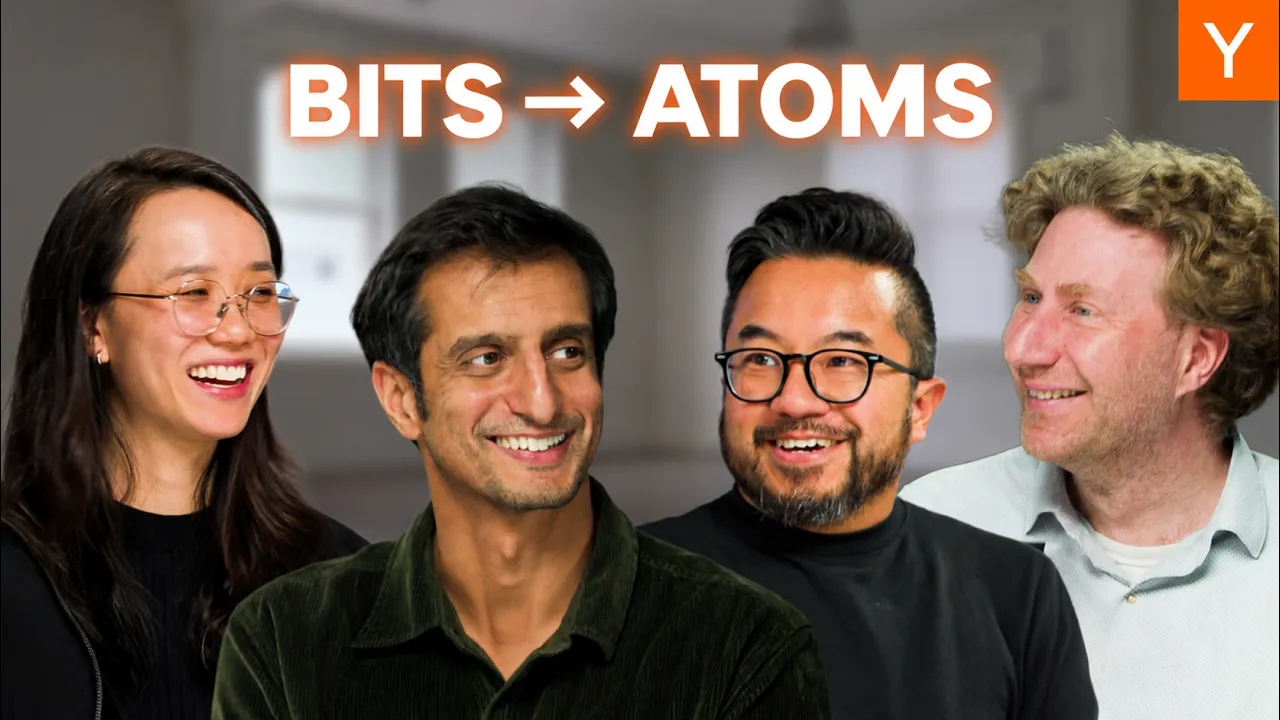
The landscape of startups is rapidly shifting, with a significant surge in "hard tech" companies—those dealing with physical matter rather than just digital bits. This trend sees robotics, industrial manufacturing, defense, and semiconductor development booming, with Y Combinator reporting an increase in hard tech acceptance from 8% to 20%.
This resurgence is fueled by advancements in AI, which accelerate scientific research and development, making complex hardware projects more feasible for startups. Experienced founders, often with PhDs, are leading this charge, tackling challenges like building space infrastructure, developing advanced defense systems, and revolutionizing manufacturing. The growth in revenue for YC companies has also accelerated, with median monthly revenue jumping from $8,000 to $20,000, demonstrating the increasing viability and rapid scaling potential of these atom-focused ventures.
Short Highlights
- Hard Tech Surge: The proportion of hard tech companies accepted into Y Combinator has nearly tripled, rising from 8% to 20%.
- AI as an Accelerator: Advances in AI are making complex hardware development faster and more accessible for startups.
- Experienced Founders: A noticeable trend shows older, more experienced founders (late 30s to 50s) leading successful ventures.
- Robotics Advancements: Robotics now constitutes 6-7% of YC's accepted companies, up from 1%.
- Defense Tech Growth: Defense startups have seen significant growth, increasing from 1.5% to 5% of YC batches.
- Manufacturing Revival: Industrial manufacturing startups have more than doubled, from 4% to 10%.
- Accelerated Revenue Growth: Median YC companies now reach $20,000 in monthly revenue by the end of their batch, up from $8,000.
Related Video Summary
Key Details
The Rise of Hard Tech [00:00:00]
- There's a resurgence of experienced founders in their late 30s, 40s, and 50s.
- YC has seen a significant increase in hard tech companies, growing from 8% to 20% of accepted companies.
- This trend is driven by AI accelerating scientific research and making complex hardware more feasible.
"Frankly, some of the most powerful and badass founders that we've been seeing lately, there might be in their late 30s, 40s, even 50s."
Hard Tech Categories Explode [00:01:15]
- Robotics has grown from 1% to 6-7% of YC batches.
- Industrial manufacturing and building things in the U.S. has jumped from 4% to 10%.
- Defense startups have increased from 1.5% to 5%.
- Semiconductor and photonics companies have grown from 1% to nearly 4%.
- Power infrastructure startups have also seen growth from 1% to nearly 3%.
"So all these numbers across the physical atom stacks have somewhere triple or quintupled."
Technical Founders and AI Synergy [00:03:10]
- YC is funding more technical founders with specialized expertise, with one in six founders in the current summer batch holding a PhD.
- AI, particularly large language models, is accelerating hardware development by speeding up software components that were previously a bottleneck.
- This synergy allows startups to achieve breakthroughs faster and makes hard tech more viable.
"I think Palmer Luckey talked about this a lot when it came to Andrel. It's like having CodeGen means that suddenly even all the things that they do at Andrel can happen much, much faster, right?"
Macro Trends Driving Atom-Based Innovation [00:05:05]
- Space Exploration: Successful IPOs like SpaceX have inspired a generation of founders to build in space, with companies developing satellite solutions and power systems.
- Defense Modernization: A generation of founders is motivated by recent conflicts to build advanced defense technologies, including AI-powered drones and anti-drone systems.
- Reshoring Manufacturing: Companies are bringing manufacturing back to the U.S., rebuilding supply chains for essential materials like metal.
"There's lots of these companies that are building across the whole stack. So there's been companies in the current batch in summer 26. This is a company that we work with called ExoSat that's trying to build basically a sovereign Starlink solution."
Defense Tech and Dual-Use Startups [00:07:50]
- Startups like Icarus are developing solar-powered spy planes, and Nine Mothers offers anti-drone defense systems for special forces.
- These new defense tech companies leverage AI and modern building techniques, outperforming traditional defense contractors.
- Dual-use startups, like Knox Metal, which is rebuilding America's metal manufacturing in Detroit, serve both private and government sectors.
"Icarus is doing like a solar-powered U-2 spy plane that gives overwatch and can also do comms which is actually really important."
Compute Demands and Silicon Innovation [00:11:30]
- The skyrocketing demand for AI has created a compute crunch, with NVIDIA GPUs appreciating in cost due to supply constraints.
- Startups are emerging to build data centers, develop AI-specific silicon (like Lamb Labs and Bot), and create faster interconnects using photonics (like Dipo Labs).
- These companies are exploring lower precision computing and optical switches to overcome bottlenecks.
"There's a very interesting stat where GPUs from NVIDIA, let's say like an A100 GPU per hour is actually appreciating in cost, which is unusual."
The Robotics Revolution [00:14:40]
- A significant moment is approaching for robotics, akin to the ChatGPT moment for language models.
- Companies are building the entire stack around robotics, from industry-specific solutions to deployment infrastructure and data services.
- Recent benchmarks show significant leaps in robot task completion, indicating rapid progress.
"Because there's this moment that everyone in the industry is feeling that we're going to get to the chat GPT moment. It's not quite there yet."
Investor Sentiment Shifts Back to Hard Tech [00:16:30]
- Venture capital, which historically funded hard tech, had drifted towards B2B SaaS for a decade but is now returning to its roots.
- The shift accelerated as SaaS stock performance dipped, making investors more open to hardware and deep tech investments.
- While SaaS stocks have recovered, the underlying value proposition of full-stack, agentic software is driving significant revenue growth.
"It seems like Silicon Valley, which historically like venture was set up to fund hard tech, but it like drifted away from it for a decade or two because they're so profitable to just fund SaaS companies."
The Rise of Agentic Software and Full-Stack Solutions [00:19:00]
- The percentage of YC companies focused on full-stack, end-to-end tasks has increased from 10% to over 25%.
- These agentic software solutions automate entire jobs, offering greater value than traditional point solutions or systems of record.
- This shift is reflected in accelerated revenue growth, with median YC companies reaching $20,000 MRR by batch end.
"The agent does the job, not just like a point solution, which old SAS in five, eight years ago was just like a point solution."
Data and RL Environments for AI Labs [00:24:00]
- Companies selling data or Reinforcement Learning (RL) environments to AI labs have become a massive, often stealthy, category.
- YC has funded over a dozen such companies in the last two years, each making over $10 million annually, with some reaching hundreds of millions.
- These companies provide crucial resources for training AI models, with labs reportedly spending billions on this sector.
"We pulled the data recently. And just in the last two years, YC has funded more than a dozen companies that are each making more than $10 million a year selling data or RL environments to the labs."
The Solo Founder Trend [00:29:00]
- The acceptance rate for solo founders at YC has surged from around 5% to nearly 19%.
- AI tools and agents reduce the need for a co-founder with a specific skill set, making it more feasible for individuals to build and launch companies.
- While co-founders remain valuable, the bar for starting a company as a solo founder has lowered significantly.
"What a weird moment we are in history where you wake up in the morning, you like wire up a new model. And then these things that even a month ago, you're just like, why isn't it working? It just starts working."
Experienced Founders and Agent Management [00:32:00]
- Founders with prior experience, particularly those who have managed teams, are finding success in the current AI-driven landscape.
- Managing coding agents shares similarities with managing human engineers, giving experienced leaders an advantage.
- These individuals can leverage their experience to effectively direct AI agents to build complex products.
"I also wonder if managing coding agents is actually like, in some ways, not that different from managing people."
Advice for Aspiring Builders [00:34:00]
- The core advice for aspiring founders is to start prompting and experimenting with the latest AI models.
- The pace of AI development is rapid, with models becoming significantly more capable in short periods.
- This era of AI presents an unprecedented opportunity for builders to create and innovate.
"I mean, just start prompting. I mean, opening up GPT-6 today was pretty wild."