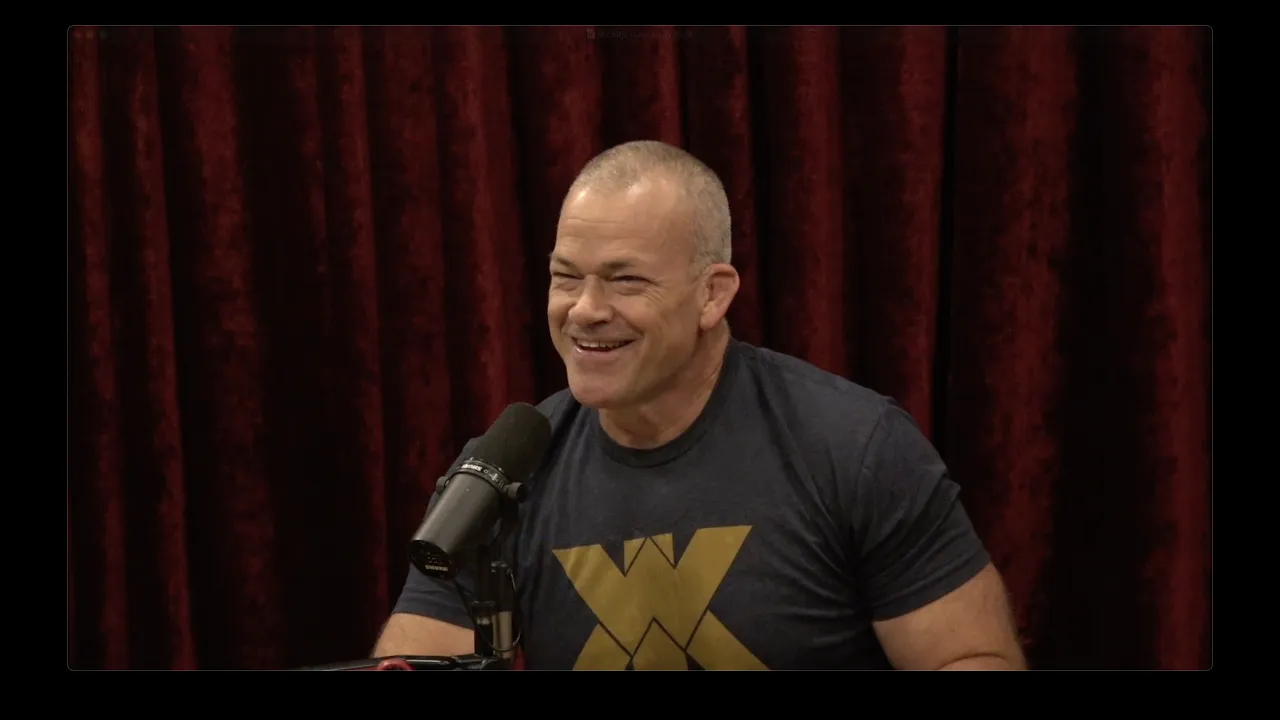
The Secret to Finding Your Purpose (and Real Happiness) | Ed Mylett
Ed Mylett
5,132 views • 5 days ago Save 87 min 10 min read
Video Summary
The speaker challenges the notion that money equates to happiness and fulfillment, arguing instead that purpose, passion, and contribution are the true pathways to a meaningful life. While acknowledging that wealth can provide opportunities and short-term happiness, the speaker emphasizes that lasting fulfillment stems from discovering one's calling and using innate gifts to serve others.
The video explores various avenues for finding this purpose, suggesting it may not always align with one's career. It could manifest as a "side mission," a funded cause, or even unpaid work like volunteering or motherhood. The core idea is to identify natural talents, admire role models, and actively experiment with different pursuits until a sense of "home" and belonging is found. Ultimately, the speaker encourages listeners to move beyond mere happiness and seek fulfillment by contributing to the world, using their unique gifts, and living authentically.
Short Highlights
- Money does not guarantee happiness or fulfillment; many wealthy individuals are unhappy.
- True fulfillment comes from finding your purpose, mission, or calling.
- Material possessions offer short-term happiness but not lasting fulfillment.
- Your calling may not be your career; it can be a side mission or a funded cause.
- Identify your natural gifts and use them to contribute to others.
- Admire role models to understand your own potential strengths.
- Actively experiment and try different things to discover your true path.
Key Details
The Money vs. Happiness Debate [0:35]
- The prevailing belief that wealth leads to happiness is challenged.
- The speaker shares a disagreement with an influencer who claimed poverty prevents happiness.
- Personal experience shows that while happy when poor, happy rich is better for helping others.
"I've been happy when I was poor, and I've been happy rich, and it is clearly my contention, I want to be clear with you, that happy rich is better, because you can do more things for people when you have money, for the people you love, for the causes that you believe in."
Happiness vs. Fulfillment [1:29]
- Happiness and satisfaction are distinct emotions; one can be happy yet dissatisfied.
- Material possessions and wealth can bring temporary happiness but not enduring fulfillment.
- Fulfillment is a deeper, long-lasting state achieved through purpose and mission.
"There's a big difference between happiness and fulfillment. If you want fulfillment in your life that's going to be long-lasting and enduring, it's not going to be things. It's not going to be money."
Finding Your Calling [2:30]
- The pathway to fulfillment is finding your calling, mission, or purpose.
- When you find your calling, there's a sense of knowing, peace, and belonging.
- The path of your calling is not always easy; it involves challenges, similar to relationships.
"When you do find it, you will know. There'll be a peace about you. There'll be an intuition you'll have that it's just a knowing. This is where I belong. This is what I was born to do."
Myth: Career Must Be Your Calling [3:41]
- It's a myth that your career must be your calling or mission.
- While ideal, not everyone's vocation aligns with their deepest purpose.
- Your career might be a means to fund your true calling.
"For many of you, you're going to find a career that is your calling and your mission and your purpose. And you're going to be blessed that what you do for a vocation is also your calling and your career. But that is not the case for everybody."
The Role of Career in Funding Your Calling [4:18]
- A career can generate income to support your mission and purpose.
- Many successful people made money in one field to fund their true calling elsewhere.
- You don't need a career in a specific field to fulfill a calling related to it.
"What if your calling isn't a career? What if you're supposed to make a bunch of money at your job or your business, and you're going to take that money and you're going to use that towards your calling and your mission and your purpose?"
Side Missions and Causes [5:13]
- Consider a "side mission" or "side cause" if your job isn't your ultimate calling.
- Your current job might be where you're planted, but you can start a separate mission.
- This side pursuit doesn't necessarily require capital or be monetized.
"What about a side mission? What about a side cause, a side crusade? See, maybe you're going to have a job, and in that job where you're planted right now, it's not what you were called to do as your ultimate contribution to the world, but it's where you're planted."
Diverse Pathways to Fulfillment [6:04]
- Fulfillment can come from various sources, not just monetized careers.
- Examples include coaching Little League, working with the homeless, inspiring through faith, or writing.
- Motherhood or volunteering at a charity can be deeply fulfilling without financial reward.
"I know so many people whose calling is to work with children, and so they've got a job full-time, but they coach Little League. They're involved in different young women's groups, the Girl Scouts, you name it."
Service as a Core Component [7:47]
- A calling, mission, or purpose always involves contributing to or helping other people.
- This service is a fundamental aspect of fulfillment.
"Always your calling will be somehow contributing to other people. Your mission, your purpose, your calling, your crusade will always involve helping other people somehow."
Natural Giftedness [8:10]
- You were born with natural gifts and talents that you've developed.
- Every individual possesses unique gifts, not more or less special than others.
- These gifts can be anything from kindness and compassion to specific skills like speaking or problem-solving.
"You were wired when you were born with natural giftedness and some talents that you've developed over time as well. Most people don't give themselves credit, but every single human being, no human is more special than another one."
Identifying Heroes and Admiring Traits [9:03]
- Identify your role models and heroes and analyze why you admire them.
- The admired traits in others often reflect qualities you possess or aspire to.
- This admiration can be a powerful clue to your own giftedness and purpose.
"The things you admire and see in them, you have a sense, a deep sense, an intuition that some of those same qualities exist in you. And that's why you're drawn to them. That's why you admire them."
Trying New Things [10:18]
- Experiment with side hustles, businesses, or missions to discover your path.
- Monetizing your cause can magnify your contribution.
- Action and trying different things are crucial for finding where you belong.
"Try a side hustle. Try a side business. Try a side crusade. Try a side mission."
The Pursuit of Wealth [11:33]
- For those desiring wealth, go for it, but understand it's not the source of fulfillment.
- Wealth can be a magnifier of contribution if built on a foundation of purpose.
- True wealth provides freedom of time, allowing you to pursue your calling fully.
"I want to challenge you to go get stone-ass wealthy because let me say something to you about that. I know what it's like to do it. And if you have first laid the foundation that you know that's not going to make you happy, you've laid a foundation, which is why I've taken the entire beginning of the video in middle about the foundation."
The Ultimate Freedom: Time [12:30]
- The greatest benefit of wealth is the freedom to choose how you spend your time.
- This freedom allows you to dedicate yourself fully to your calling.
- The speaker's own journey from working in a group home to reaching millions illustrates this.
"The best part is, I don't ever have to be anywhere I don't want to be. Think about that for a second. What if you could live a life where you don't ever have to go anywhere you don't want to go?"
The Origin of Service: McKinley Home for Boys [13:45]
- The speaker's calling began at a group home for orphaned boys, making $6/hour.
- This experience fostered a love for serving others and making a difference.
- This foundation led to business ventures and the ability to impact millions.
"My original job, it wasn't a career, is I worked at a group home with orphaned boys. Wards of the court, my boys were. And I made $6 an hour working with young children, 8 and 10 year old boys."
Using Gifts for Contribution [15:20]
- Identify your core gifts (articulation, caring, learning) and use them to serve others.
- The speaker's current work, reaching millions for free, is a direct extension of this calling.
- This service provides deep fulfillment, distinct from short-term happiness.
"My calling is to contribute. It's to use the life skills I've developed. It's to use the fact that I was an insecure and shy person and I needed to learn how to build self-confidence."
The 10 Ways of Being [17:30]
- Embodying traits like uniqueness, love, truth, kindness, beauty, movement, growth, silliness, forgiveness, and courage leads to positive emotions.
- These qualities are gateways to happiness and fulfillment.
- For example, being unique means not conforming, and being forgiving frees you from past burdens.
"Number one, I want you to be unique. I want you to be special. See, I believe the opposite of bravery is to conform. Conformity is the opposite of bravery."
The Lighthouse Analogy [24:10]
- A "lighthouse" represents your compelling future or driving purpose.
- Continuously move your lighthouse forward to maintain growth and avoid stagnation.
- Recalculate what success means at different life stages and fight for your new goals.
"What I always think about on a regular basis, I know I'm using a simple analogy is you got to take the lighthouse and you got to carry and put it a hundred yards in front of you at all times in life because you need to be going towards that."
Identifying Bliss Stealers and Feeders [28:00]
- List things that steal your bliss (e.g., social media, political discourse, certain people).
- List things that feed your bliss (e.g., nature, music, movement, sleep, goal setting).
- Reduce bliss-stealers and increase bliss-feeders to enhance overall well-being.
"I made a list of the things that take from me. And there's more that take from me. And then I've made a list of the things. I'll give you one big one for me that steals my bliss. I'm just going to share this with you. Social media."
Pain vs. Suffering [34:15]
- Pain is temporary and mandatory for growth; suffering is optional and self-chosen.
- Suffering involves living in mental prisons, chasing unfulfilling dreams, or remaining disconnected.
- The key out of suffering is pursuing purpose, passion, faith, and authentic dreams.
"Pain is mandatory in getting somewhere in life. Pain is a primer. Pain teaches us. Pain is temporary. All pain is temporary. You can survive temporary pain. On the other side of that pain, you meet another version of yourself."
The Art of Fulfillment [37:00]
- Success without fulfillment is the greatest failure.
- Fulfillment comes from purpose, passion, and expressing the best versions of yourself.
- It's about work-life integration, not just balance, and finding joy in the journey.
"Success without fulfillment is probably the biggest failure of them all, right? I see, you know, you and I do have a lot of history, and we have a lot of similar backgrounds."
The American Dream Reimagined [40:00]
- The traditional American dream of wealth and materialism is controversial and not universally desired.
- The true dream is living into your full potential and having the freedom to express yourself authentically.
- This involves pursuing your unique purpose, whether it's financial success, service, or personal growth.
"The American dream now appears to be about wealth, affluence, influence, materialism. And we've made that the dream. And because that looks like the dream through social media and reality shows and these different things, the controversial part of it is most people believe those things are reserved for a very select group of people."