Jobs Missed. Wages Stalled. Tariffs Failed. Bonds Fell Anyway.
Peter Schiff
51,899 views • 22 hours ago Save 45 min 9 min read
Video Summary
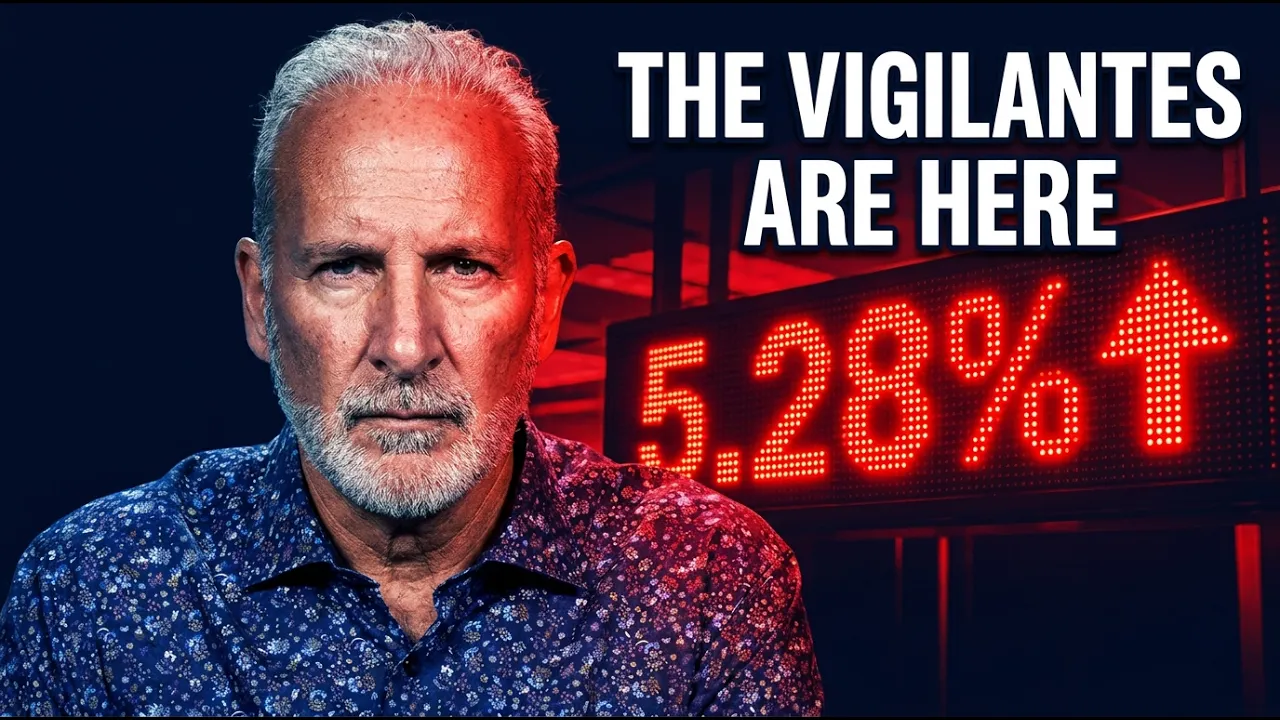
The U.S. economy is teetering on the brink of a major bond crisis, with $40 trillion in debt projected to balloon to $50 trillion and interest rates climbing. Recent economic data, including a weaker-than-expected jobs report and lower-than-anticipated inflation figures, failed to lift the bond market, signaling a "mother of all bond bear markets." Despite a slight rally after the jobs report, bond yields surged to new highs for the week, demonstrating classic bear market behavior where any news is met with selling.
Adding to the economic woes, the trade deficit for August was the fourth worst in U.S. history, contradicting promises to reduce it. Meanwhile, consumer spending outpaced income growth, forcing Americans to dip into savings or borrow more, with the savings rate dropping to a five-year low. The stock market, particularly tech stocks, continues to shrug off this mounting economic weakness, reaching new highs while broader market sentiment shows concerning breadth, with significantly more stocks making new lows than highs.
Short Highlights
- A severe bond crisis is imminent, driven by a rapidly increasing national debt and rising interest rates.
- Recent economic data, including a weak jobs report and lower inflation, failed to rally the bond market, indicating a strong bear market.
- The U.S. trade deficit reached historic highs, contradicting promises of improvement.
- Consumer spending is outpacing income growth, leading to a decline in savings and increased borrowing.
- Despite negative economic indicators, the stock market, especially tech, continues to perform strongly, showing concerning breadth.
- The national debt is projected to reach $50 trillion, with interest payments becoming a significant burden.
Key Details
Bond Market Collapse Imminent [0:00]
- The U.S. is heading for an economic storm characterized by a bond crisis, potentially the worst bond bear market in history.
- With $40 trillion in debt already and projected to reach $50 trillion, coupled with a 5% interest rate, the financial burden is immense.
- The stock market's continued disregard for bond market weakness suggests rates will keep rising until something breaks.
"And there's no reason for rates to stop going up. So they're going to keep going up until something breaks."
Jobs Report Misses Expectations [2:14]
- The September jobs report significantly missed expectations, with only 29,000 jobs created, far below the estimated 85,000.
- Downward revisions to previous months' job numbers, including July being revised to a negative 10,000, further paint a picture of a weakening labor market.
- Even the most pessimistic forecasts for job creation were higher than the actual reported number.
"So we disappointed even the pessimists who only thought we would create 40,000 jobs."
Unemployment Rate Rises, Participation Stagnant [5:38]
- The official unemployment rate increased to 4.2% from 4.1% as more workers re-entered the labor force.
- The labor force participation rate saw a slight uptick to 61.8%, but remains at a historically low level.
- Private payrolls also showed weakness, with only 46,000 jobs added against an expectation of 75,000.
"So a slight increase in the unemployment rate. And that's because you had quite a few workers, according to the household survey, re-entering the labor force."
Earnings Lag Inflation Dramatically [7:37]
- Average hourly earnings saw a minimal increase of 0.1% month-over-month, the lowest in over five years.
- This increase is significantly lower than the inflation rate, with prices rising four times faster than earnings in August.
- The real decline in earnings is even greater due to understated inflation figures, causing significant pain for workers.
"So prices rose four times faster than earnings, which is why consumer confidence is at record lows and there's so much pessimism because people are falling further and further behind."
Bond Market Reaction: Sell-Off Despite Rate Hike Odds Drop [10:57]
- Despite a weak jobs report and a significant drop in the odds of an October Fed rate hike, the bond market sold off sharply.
- Treasury yields hit new highs for the week, demonstrating classic bear market behavior of selling into any news.
- This action defies the expectation that weaker economic data should lead to a bond rally.
"But this is a bear market. In fact, it's probably the mother of all bond bear markets."
Personal Income and Spending Data Disappoints [17:23]
- Personal income growth for August was only 0.2%, revised down from the prior month, while consumer spending rose 0.9%.
- This spending increase was financed by a drop in the savings rate to 4.1% and increased borrowing, indicating financial strain.
- While PCE inflation was slightly better than expected, the trend of spending outpacing income persists.
"So income rose less than half of what people expected, yet spending rose more."
Trade Deficit Hits Historic High [20:06]
- The U.S. merchandise trade deficit in August was the fourth worst in history, swelling to $132.6 billion.
- This occurred despite promises to reduce the deficit, with imports increasing significantly.
- The data suggests importers, not foreign countries, are bearing the cost of tariffs.
"And that was driven by a 5.5% increase in imports and a 1.9% increase in exports."
Stock Market Defies Economic Weakness [25:13]
- The stock market, particularly the tech sector, continues to reach new highs, shrugging off negative economic indicators.
- The NASDAQ hit a new intraday record high, with 11 out of the last 13 days showing gains.
- However, market breadth is concerning, with significantly more stocks making new lows than highs, reminiscent of 1999-2000 and 1973.
"So the tech market is carrying the market."
October Market Volatility Concerns [30:00]
- October is historically a volatile month for stocks, with several major market crashes occurring in this period.
- While September was not as bad as expected for the broader market, the underlying weakness suggests a potential for a significant drop in October.
- The speaker advises caution for long positions in stocks due to the dangerous market environment.
"So this to me is a dangerous time to be long stocks I don't know that there's a lot of upside."
Trump's Inflation Remarks Spark Controversy [37:41]
- Donald Trump's comments suggesting inflation is beneficial for paying down debt have drawn criticism.
- This stance contradicts his promise to fight inflation and suggests a willingness to devalue the currency.
- Bond investors view such statements as a warning signal, implying a potential repudiation of debt through inflation.
"And one of his responses was that inflation was going to pay off the debt rapidly as if this was a good thing."
Gold and Silver: A Potential Safe Haven [43:33]
- Gold prices saw a brief rally on weak jobs numbers but sold off as bond yields rose.
- The speaker recommends buying gold and silver, viewing them as potential safe havens amid economic uncertainty and rising bond yields.
- The strategy involves buying dips, especially with silver trading just above support levels.
"So in the meantime you want to buy this dip in gold and silver buy it over the weekend."
Stagflationary Environment Persists [47:03]
- The overall economic data points towards stagflation, characterized by a weak jobs market, declining consumer strength, and rising prices.
- While GDP numbers may appear strong due to AI-related capital investment, the broader economy is suffering.
- The long-term productivity gains from AI investments remain uncertain.
"The data is stagflation the jobs market is weak consumers are weak."
Bitcoin Holds Steady Amidst Tech Rally [50:08]
- Bitcoin has been holding up with the NASDAQ, showing resilience despite negative economic news.
- Michael Saylor's company has been actively buying back its own debt (MicroStrategy shares), contributing to its price recovery.
- However, the ability to continue buying Bitcoin may be limited by financing constraints.
"Bitcoin again is also holding up with the Nasdaq now and it managed again Bitcoin was up almost 1% on the week."
Rising Interest Rates a Burden on the Economy [54:28]
- The national debt's servicing cost is becoming a significant burden as interest rates rise.
- This contrasts with previous periods when low rates made the debt seem manageable.
- The current situation, where interest rates are high and debt is ballooning, is unsustainable and points towards a potential debt crisis.
"We have $40 trillion in debt and you know it's rising rapidly we're going to be at $50 trillion before you know it and we're paying 5% on that number."
The Inevitability of a Debt Crisis [57:31]
- The U.S. has been granted a long period of low interest rates, allowing debt to accumulate without immediate consequence.
- However, this pass is ending, and creditors are beginning to scrutinize creditworthiness, signaling an impending debt crisis.
- Statements from political figures that downplay the debt or suggest inflation will solve it are alarming signals for bondholders.
"But when it comes to debt crises it doesn't matter until it matters and I've gone over this in my prior podcast talking about Greece or talking about where I live in Puerto Rico."
Mortgage Rates Soar, Housing Market Vulnerable [1:02:35]
- 30-year fixed-rate mortgage rates are approaching 7.5% and are expected to hit 8% soon.
- This sharp increase in mortgage rates puts the housing market at risk of breaking.
- Combined with potential defaults in auto loans and credit cards, the financial system faces significant stress.
"Mortgage rates now I think they're up around 7.5% on a 30 year fixed rate mortgage we're going to be at 8% I think before the end of this month."
Strategic Investment Outside the U.S. [1:05:21]
- The speaker is maintaining investments but diversifying outside the U.S. and focusing on value stocks rather than hyped tech stocks.
- There's an expectation of a dollar decline, which would benefit investments in other currencies.
- The current high interest rates are seen as a burden on the U.S. economy, not a positive sign.
"I'm still invested I'm just mainly invested outside the United States I'm invested in value I'm not invested in all these hyped up stocks."