Turkey's $20 Billion Fund Collapse Explained
Patrick Boyle
90,061 views • 22 hours ago Save 27 min 6 min read
Video Summary
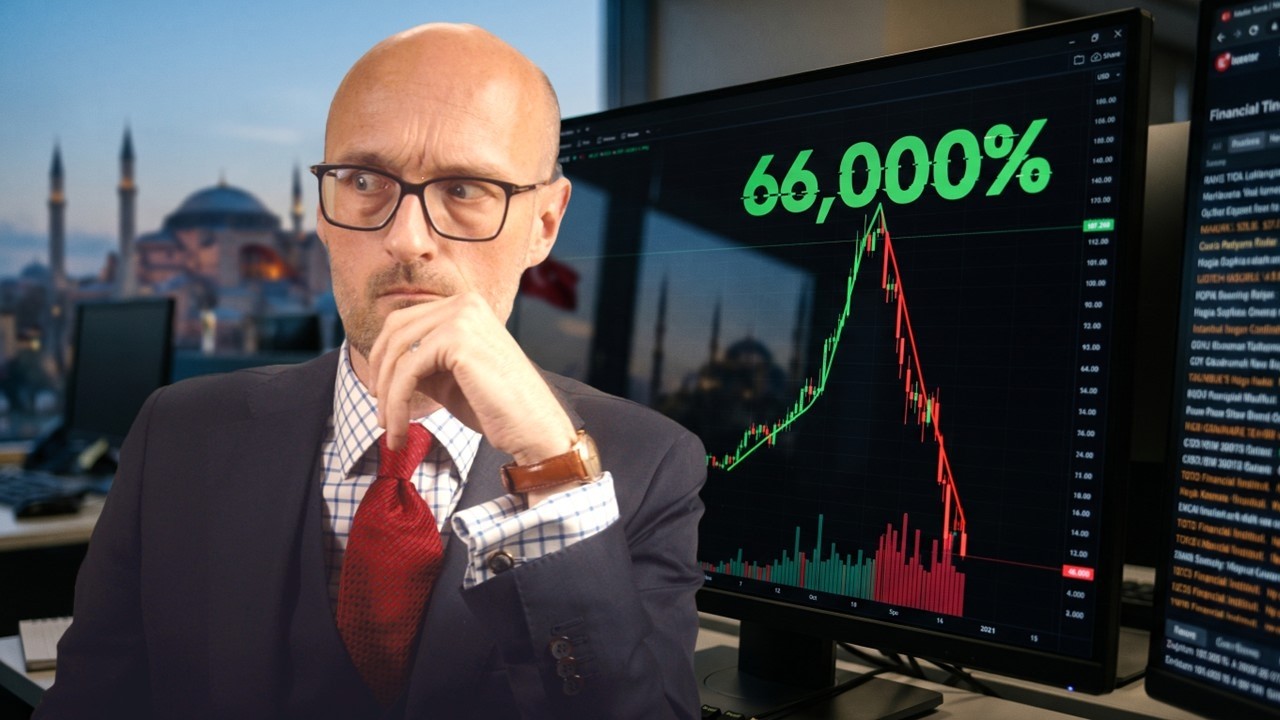
The Turkish financial group Terra, led by Emre Tesman, promised astronomical returns, with its flagship fund reporting over 66,000% in three years. This success, however, was built on a self-reinforcing loop where Terra's funds bought shares of its own parent company, inflating its value. This alleged Ponzi-like scheme collapsed when Turkish regulators intervened, freezing $20 billion in assets and impacting 455,000 people.
As the scheme unraveled, Tesman blamed "malevolent forces," but the investigation points to a system reliant on a constant influx of new money and a lack of sellers. The collapse was triggered by a regulatory rule capping fund holdings, which halted the buying that propped up prices. The aftermath has seen devastating losses for investors and a crisis of confidence in Turkish markets, with the state now tasked with liquidating the frozen assets.
Short Highlights
- Terra's Astronomical Returns: The flagship fund reported over 66,000% returns in three years, outperforming major global banks.
- Self-Reinforcing Scheme: Terra's funds allegedly bought shares of its own parent company, inflating asset values in a loop.
- Regulatory Intervention: Turkish authorities ordered the liquidation of 131 investment funds, freezing $20 billion.
- Investor Impact: 455,000 people found their savings locked inside the collapsed funds.
- Alleged Ponzi Scheme: Turkey's justice minister described the operation as "Ponzi-like."
- Collapse Trigger: A new regulation capping fund holdings halted the buying that sustained prices.
- Search for "Malevolent Forces": The founder blamed external attackers, but the system's flaw was a lack of sellers.
Key Details
The "Goldman Sachs of Turkey" [00:00:00]
- Emre Tesman, founder of the Turkish financial group Terra, believed no one could control the stock market, yet his firm achieved extraordinary returns.
- Terra's flagship fund reported over 66,000% returns in three years, making the brokerage firm temporarily more valuable than global investment bank Lazard.
- Tesman's ambition was to build the "Goldman Sachs of Turkey," aiming for significant growth and market influence.
"I make money, the investor makes money, and what does the state lose? There is no problem here."
Portfolio Pumping [00:01:58]
- Terra's flagship fund allegedly held 99% of its assets in its own parent company's stock at one point in 2023.
- This practice, known as portfolio pumping, inflates the fund's net asset value and the parent company's stock price through a self-reinforcing loop.
- Academics describe this as a "perpetual motion machine," while Turkey's justice minister termed it "Ponzi-like."
"The fund's purchases, he said, push up affiliated stock prices, which inflates the fund's net asset value, which makes the fund management business appear more valuable, which elevates the parent company's earnings and its stock price."
The Allure of High Returns [00:04:33]
- High inflation in Turkey (averaging 50% annually) made funds reporting massive returns highly attractive to investors seeking to preserve savings.
- Investors tend to pile into top-performing funds more eagerly than they withdraw from underperforming ones, creating sustained demand.
- Terra also took companies public, and its funds would then buy shares in these newly listed entities, further influencing prices.
"And with inflation at 50% a year, a big number on a fund statement probably seems a bit less crazy than it would somewhere else."
Manipulating Share Prices [00:05:57]
- Companies like Visny Madnček and Destek Finance Factoring, taken public by Terra, saw dramatic stock price increases after their IPOs.
- Terra's funds were among the main buyers of thinly traded shares, allowing for significant price manipulation.
- Regulators fined Terra fund managers for creating a misleading perception of supply and demand for shares.
"By the end of July, the stock was up more than 2,100%. That same month, Terra's fund and brokerage sold the shares that they had bought in the IPO. In August, the stock fell 75%."
Borrowing and Collateralization [00:08:56]
- Terra's brokerages dramatically increased borrowing, from 132 million Lira to 59.8 billion Lira in one year, to fund its operations.
- Money market funds allegedly lent money using hugely inflated, thinly traded stocks as collateral in reverse repo agreements.
- This practice is likened to using a $10 watch, self-valued at $10,000, to secure a $9,000 loan.
"The money market funds booked these loans at face value, so their prices stayed perfectly stable, right up until the collateral had to be sold."
Liquidity Spirals and Investor Panic [00:11:00]
- The situation mirrors Bill Huang's Archegos collapse, where falling stock prices reduced collateral value, forcing sales and further price drops.
- This phenomenon, termed a "liquidity spiral," leads to rapid market downturns when prices fall and forced selling occurs.
- Individual investors, like a 28-year-old saving for a wedding, faced immediate losses as they frantically tried to sell their holdings.
"When prices fall, the collateral is worth less, so you can borrow less, which forces you to sell, which pushes prices down further."
The Search for "Malevolent Forces" [00:13:00]
- The founder, Emre Tesman, blamed "planned, deliberate and organized speculative attack by notorious malevolent forces."
- Suspects included a former head of Turkey's financial crimes agency, who questioned high returns on social media.
- The core issue was finding buyers for inflated stocks, with Terra's funds acting as the exit for sellers at the top.
"If you have pushed a stock up a few thousand percent, you only really make money if you can sell it at the high. And to sell at the top, you need someone who is willing to buy at the top, which is really the core question here."
Regulatory Action and Collapse [00:16:16]
- On August 29th, Turkey's Capital Markets Board introduced a rule capping the percentage of a company's free float a single fund could hold.
- While lenient, the rule stopped funds from adding to positions, halting the buying that propped up prices.
- Terra announced the acquisition of another fund manager, Pusala, which then couldn't meet redemption requests, signaling the impending collapse.
"And a system that depends on someone buying every single day has a problem when the buying stops."
The Aftermath and Lingering Questions [00:18:38]
- Investors pulled billions from Turkish funds, and Terra itself became unable to pay clients seeking their money back.
- The collapse devastated investors, with some losing nearly all their savings in regulator-approved funds.
- The founder's philosophy, "I make money, the investor makes money, and what does the state lose?" was answered as the state faced the task of liquidating assets, likely at pennies on the dollar.
"My nerves are wrecked. I can't sleep."