Iran terror plots across UK and Europe
The Sun
15,319 views • 4 days ago Save 5 min 3 min read
Video Summary
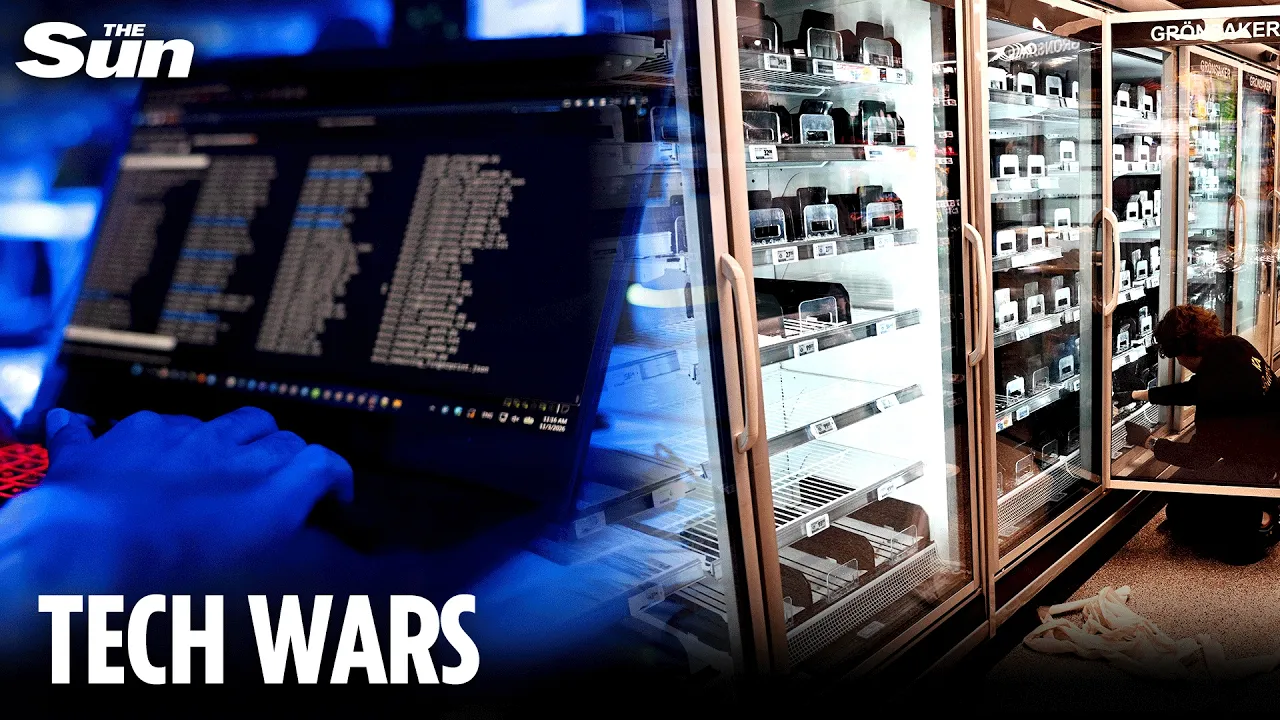
Geopolitical tensions are increasingly manifesting as low-sophistication cyberattacks on critical infrastructure, leaving organizations vulnerable to avoidable breaches. While groups like Cyber Avengers leverage trivial exploits and default passwords to target insecure industrial internet-of-things (IoT) devices, the resulting damage—such as the massive loss of inventory in French supermarkets—highlights a failure in basic security hygiene. These actors prioritize public disruption and fear over technical complexity, often exposing systemic weaknesses in supply chains and third-party management.
The rise of AI further amplifies these threats, allowing even low-skill actors to scale attacks and shorten the time between vulnerability discovery and exploitation. Despite the availability of modern security budgets and advanced threat intelligence, many organizations remain exposed because they fail to coordinate between corporate IT and operational technology (OT) environments. As these groups target increasingly sensitive systems, the lack of fundamental patching and risk assessment creates a persistent, high-impact threat that remains largely preventable.
Short Highlights
- Cyberattacks on critical infrastructure are often low-sophistication but high-impact, targeting insecure IoT and OT devices.
- Most of these attacks are highly avoidable through basic security hygiene, such as avoiding default passwords and removing exposed devices from the internet.
- Organizations struggle to coordinate security between corporate IT and operational technology (OT) environments, creating blind spots.
- AI is enabling attackers to scale operations and reduce the time required to exploit known vulnerabilities.
- Supply chain and third-party access remain significant, unmanaged risks for many companies.
- Attackers increasingly focus on public, high-visibility disruption to drive political agendas.
- Intelligence agencies are currently investigating attribution for recent attacks in France, despite the lack of public claims by suspected groups.
Key Details
Low Sophistication, High Impact [0:00:23]
- Attackers often use trivial methods like brute-forcing passwords or exploiting known, older vulnerabilities to compromise industrial devices.
- Despite the lack of technical complexity, these attacks can cause tens of millions in damages to industries like supermarkets.
- "What it highlights is if you put stuff on the internet and you're not securing it properly then you know these types of attacks can be quite impactful."
The Failure of Foundational Hygiene [0:01:21]
- Many breaches occur because companies leave internet-connected devices, such as commercial refrigeration systems, exposed to public scanning tools like Shodan.
- Organizations frequently fail to patch known vulnerabilities or secure third-party access points.
- "A company that has 10 million pounds worth of meats and goods in fridges should not have an internet connected device that's out there for everyone to look at."
The AI and Scaling Threat [0:02:40]
- Artificial intelligence is lowering the barrier to entry, allowing even teenage hackers to develop malware and execute attacks across thousands of hosts simultaneously.
- The speed of exploitation has increased significantly, leaving less time for organizations to react to emerging threats.
- "Whether it's a nation state or teenage hackers whoever they can now perform and do more sophisticated things."
Coordination and Supply Chain Risks [0:03:13]
- Security gaps often arise when corporate IT teams fail to coordinate with the operational technology (OT) side of the business.
- Third-party vendors often provide an entry point for attackers who exploit the lack of oversight in complex supply chains.
- "It's probably a third party or some part of the business that hasn't perhaps coordinated with the corporate side of the business or the security team."
Geopolitical Agendas and Attribution [0:05:46]
- Activist and nation-state groups use these attacks to generate public fear and signal political alignment.
- While French authorities point to Iranian-linked groups, technical evidence remains subject to ongoing intelligence verification.
- "It's all about putting that fear out in the public."