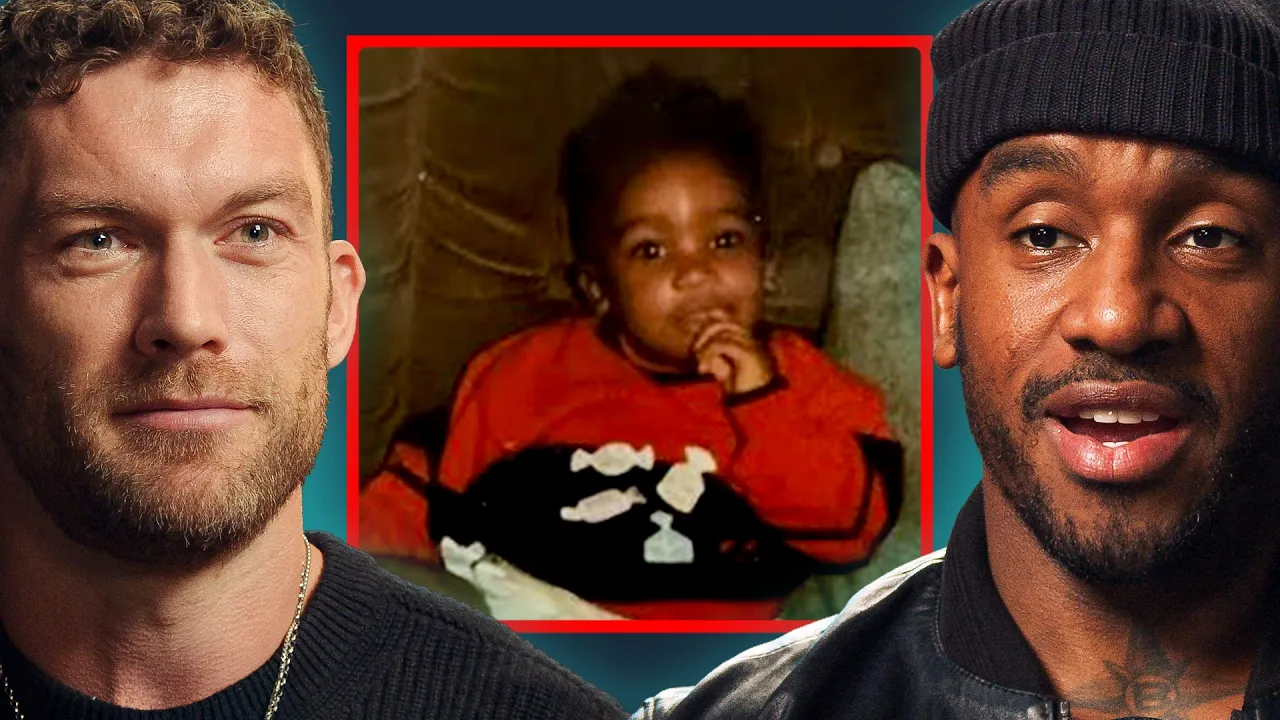
49 Minutes That Will Change How You Think About Success (Wyndham Clark x Mylett)
Ed Mylett
902 views • 18 hours ago Save 40 min 9 min read
Video Summary
Wyndham Clark, a two-time U.S. Open champion, reveals the profound mental struggles and near-quitting moments that preceded his major victories. He shares how the grief from his mother's death, family dysfunction, and the intense pressure of professional golf nearly ended his career multiple times. Clark details his transformative work with a mental coach, Julie Elliot, who employed a holistic approach, addressing personal trauma and emotional well-being to unlock his potential on the course.
Clark emphasizes the importance of process goals over outcome-driven aspirations, explaining how focusing on internal execution rather than external results allowed him to overcome self-doubt and perform under pressure. He recounts using his mother's dying words, "play big," as a guiding principle and how embracing his competitive "dog" while maintaining a loving demeanor helped him navigate intense crowd pressure and secure his second U.S. Open title. His journey highlights the critical link between mental resilience, personal growth, and peak athletic performance.
Short Highlights
- Wyndham Clark is a two-time U.S. Open champion.
- He nearly quit golf multiple times due to grief, family issues, and performance pressure.
- His mother's dying words, "play big," became a guiding principle.
- He credits his mental coach, Julie Elliot, for a holistic approach to his well-being and game.
- Clark prioritizes process goals over outcome goals for consistent performance.
- He learned to manage crowd pressure by reframing negative attention as support.
- The pursuit and process of achieving goals are more rewarding than the outcome itself.
Key Details
The Weight of Two U.S. Open Titles [00:00:00]
- Wyndham Clark's two U.S. Open victories still feel surreal, serving as a constant reminder of his achievements.
- The trophy itself is a tangible symbol of his success, kept for a year as a personal memento.
"And the cool thing about this thing is it's a constant reminder of what you've done."
A Near Career-Ending Struggle [00:01:53]
- Despite being a highly talented player from college, Clark experienced moments where he felt inadequate and unable to handle pressure.
- He openly admits to wanting to quit golf multiple times throughout his career.
"But there was a point multiple times you're like, I can't do this. I'm not any good. I can't handle the pressure."
Grief and the Loss of Joy in Golf [00:02:29]
- His mother's passing when he was 19 profoundly impacted him, leading to a medical hardship year in college.
- The grief, sadness, and anger following his mother's death began to manifest in his golf game, making it unenjoyable.
"So the, the, the grief, the sadness, the anger, everything that I had was coming out in the golf."
The COVID-19 Slump and Renewed Doubt [00:03:48]
- A break during the COVID-19 pandemic led to a loss of his game, exacerbated by playing without fans, which diminished the fun.
- This period reignited thoughts of quitting, as golf felt like it wasn't working out as planned and was negatively affecting his personal life.
"And that's where golf again, kind of got tough. And I thought, man, maybe this isn't, uh, you know, it's not working out how I thought."
Seeking Help: Prayer and Mental Coaching [00:04:19]
- Clark turned to prayer and discussions with his inner circle to navigate his struggles.
- This led him to seek help from his caddy and agent, who recommended working with a mental coach, Julie Elliot.
"And then honestly, that kind of led to my caddy and agent, um, who's here to me going to see Julie, which really helped me on the mental side of, of the golf game."
Julie Elliot's Holistic Approach [00:04:52]
- Elliot's method differed from typical sports psychologists by focusing on a holistic approach, addressing off-course issues first.
- She delved into his past, including his mother's death, his relationship with his father, and family dynamics, to understand his reactions.
"She takes a holistic, uh, approach. She wants to make sure everything off the course is in line so that when you get on the course, it's, it's free flowing and you can get in the flow."
Unpacking Personal History for Golf Performance [00:05:58]
- By unraveling personal issues, Clark gained self-awareness about why he reacted certain ways, likening it to peeling an onion.
- This therapeutic process, while potentially risky, was exactly what he needed to improve his mental game.
"And then as we were unraveling a lot of those things, I found out more about myself, why things happen or why I react to certain things."
Integrating Mindfulness and Eliminating Negative Self-Talk [00:07:04]
- Clark began meditating daily, starting with short sessions and gradually increasing to 15-25 minutes to control his thoughts.
- A major breakthrough was eliminating negative self-talk and self-deprecation, which had plagued his game and personal life.
"And then came, you know, really getting rid of, uh, negative self-talk. And that was probably what was the thing I did the worst on the golf course was self-deprecation."
Unleashing Potential Through Self-Work [00:08:51]
- By addressing his personal issues, Clark found it easier to focus on playing one shot at a time on the golf course.
- This mental shift allowed him to access a higher level of physical capacity and execution, benefiting his performance.
"And so when I got onto the golf course, then I could focus on playing one shot at a time and all the normal cliche cliche."
Broader Perspective: Golf as Just a Game [00:09:35]
- Gaining a broader perspective on life, beyond golf, provided context and reduced the perceived severity of on-course struggles.
- Separating his identity from golf allowed him to view it as a game, fostering enjoyment and optimal performance.
"And then you go, oh yeah, this is just a game, which is amazing place to be because then you do just have fun with the game."
Maintaining High Standards Amidst Perspective Shift [00:10:37]
- Clark managed to gain a greater perspective without lowering his standards of self-expectation or performance caliber.
- He still aimed to be the best and win championships, but the gap between dreams and reality no longer consumed him.
"I still want to be the number one player in the world. I still want to win tons of championships."
The Underwhelming Reality of Achieving Dreams [00:11:52]
- Winning the U.S. Open and the associated fame were surprisingly underwhelming; the real reward was the personal confidence gained.
- The pursuit of a goal often provides more dopamine and satisfaction than the actual achievement.
"I would say winning the trophy and all the fame and accolades that come with it is definitely underwhelming, to be honest."
The Reward is in the Process [00:13:39]
- The most rewarding aspect of his success was the process of working through a bad year, getting a new swing coach, and refining his game with Julie.
- This preparation and hard work leading up to his wins provided immense satisfaction, more so than the victories themselves.
"Well, the previous year was a pretty bad year. Um, and I would say the process of after all the crap that happened last year... was, was truly like the most, um, rewarding thing."
Process Goals Over Outcome Goals [00:16:00]
- Clark sets process goals, focusing on daily mental routines like replacing negative thoughts with positive ones and taking deep breaths.
- He judges himself based on adherence to these process goals, not solely on his score, which helps detach from the outcome.
"So I actually don't have result goals. Um, I have process goals. So I think when you have a process goal, I think you're able to then separate yourself from the outcome."
Silencing the Crowd: The "Play Cocky" Strategy [00:21:38]
- During the first U.S. Open, facing a crowd heavily favoring another player, Clark's coach advised him to replace "Go Ricky" chants with "Play Cocky" in his mind.
- This mental reframing turned perceived opposition into motivation, allowing him to perform under pressure.
"Okay, every time we hear go Ricky, I want you to replace it with play cocky and think of it as them cheering for you."
The Oakmont Incident: A Wake-Up Call [00:27:02]
- After missing the cut at Oakmont, Clark punched lockers in frustration, an event that was captured and publicized.
- He views this incident, though negative, as a catalyst that woke him up from a career funk and marked the beginning of his comeback.
"And so I walk off the green, there's tons of people. I go into scoring and I am just hot. I'm so hot."
"Play Big": Mom's Final Words [00:32:19]
- His mother's dying wish was for him to "play big" and play for something larger than himself, using his platform to influence others positively.
- This core principle guides his career, emphasizing that true reward comes from impacting lives, not just personal achievements.
"Play big, Wyndham, play big. Do you have any imposter syndrome still?"
The "Dog" Within: Competition and Compassion [00:35:50]
- Clark acknowledges having a competitive "dog" within him, capable of intense drive, but balances it with love and poise.
- He believes one can exhibit both fierce competitiveness and genuine compassion, a duality he demonstrated during his second U.S. Open win.
"Yeah, no, 100%. Like I, and I showed it, I think I got it. It showed on 16, I made a putt to for birdie for two shot lead."
Advice for Pursuing Dreams After Trauma [00:43:14]
- Find your "why"—your core motivation—to serve as a stable base during failures and setbacks.
- Embrace the pursuit and the process of chasing your dreams, finding more reward in the journey than the final outcome.
"And you have to know that you're just chasing a dream, but don't know why you're chasing it. I think it can really screw you up."