The Hidden Cost of Covered Calls Beginners Should Know
SMB Capital
7,555 views • yesterday Save 8 min 3 min read
Video Summary
Unlock extra income from your stock holdings by selling covered calls, but understand the crucial trade-off: you're selling your potential future upside for immediate cash.
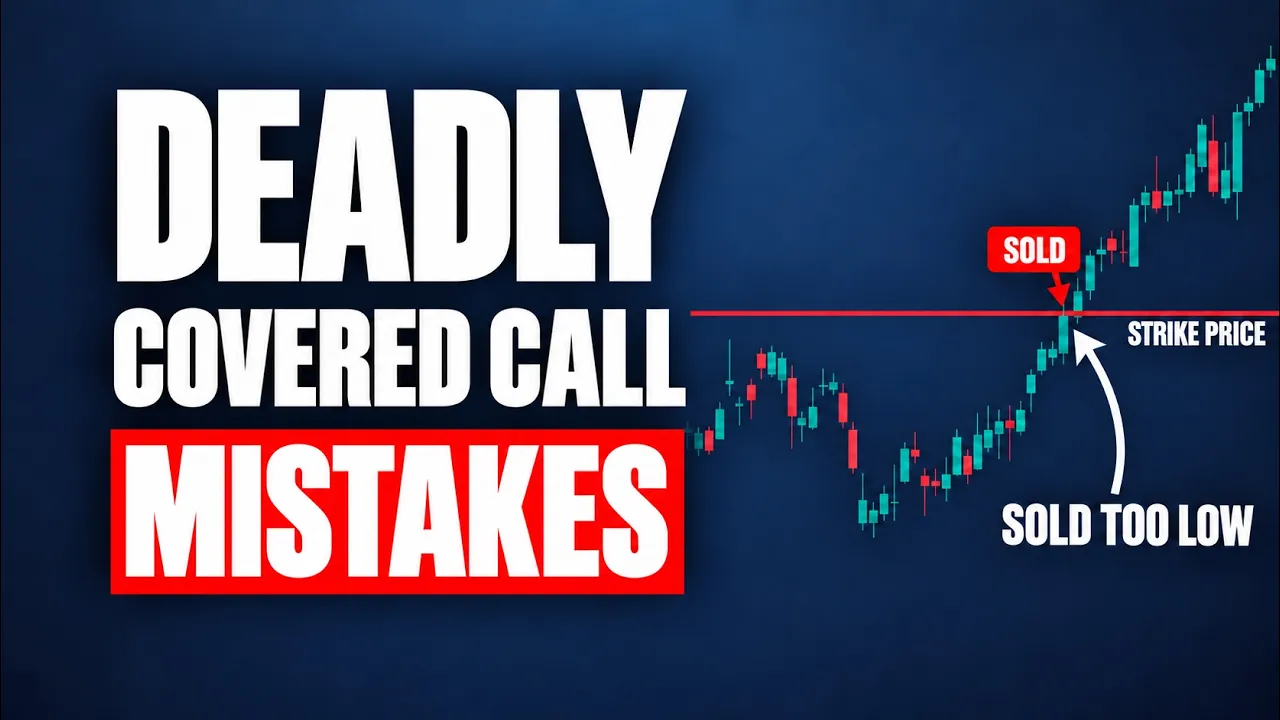
This strategy involves owning 100 shares of a stock and selling a call option against them. In exchange for this obligation, you collect a premium, which can reduce your cost basis and offer a small cushion against price declines. However, selling a call caps your potential profit if the stock price soars. The key is to decide first at what price you're comfortable selling your shares, then assess the premium offered, rather than chasing the highest premium and potentially capping your gains at an undesirable level.
Short Highlights
- Covered Call Mechanics: Own 100 shares of stock and sell one call option against them.
- Premium Collection: Receive immediate cash (premium) for selling the call.
- Benefits: Reduces cost basis, provides downside cushion, generates income.
- The Trade-off: Caps your potential upside profit if the stock price significantly increases.
- Key Decision: Determine your acceptable selling price for the stock before selling the call.
- Strategic Choice: The right covered call depends on your goals—income vs. maximizing upside.
Key Details
The Covered Call Strategy [0:10]
- Generate additional income from stocks you already own by selling a call option against them.
- You collect a premium immediately in exchange for an obligation.
-
"What if you could take a stock position you already own and start generating additional income from it?"
Understanding the Obligation [0:48]
- Selling a call option means you are obligated to sell your 100 shares at the strike price if the stock is above it at expiration.
- The premium received compensates you for taking on this obligation and granting someone else the right to potentially buy your shares.
-
"Because when somebody pays you premium for an option, they're paying you for something."
Benefits of Covered Calls [1:39]
- Premium collection can reduce your effective cost basis in the stock.
- The premium offers a small cushion against potential stock price declines.
-
"Economically, I can look at this as reducing my adjusted cost of the position."
The Critical Trade-Off: Capped Upside [2:43]
- Selling a covered call puts a ceiling on your potential profit if the stock price rises significantly.
- You must be comfortable selling your shares at the strike price, as you forgo any gains above that level.
-
"But you're also putting a ceiling on how much money you can make if that stock takes off."
Strategic Decision-Making [4:27]
- The most important rule is to never sell a call at a strike price where you are not comfortable selling your shares.
- Your decision should start with determining your acceptable exit price for the stock, not solely focusing on the premium amount.
-
"First determine where you're willing to sell. Then look at what the market is willing to pay you to make that commitment."