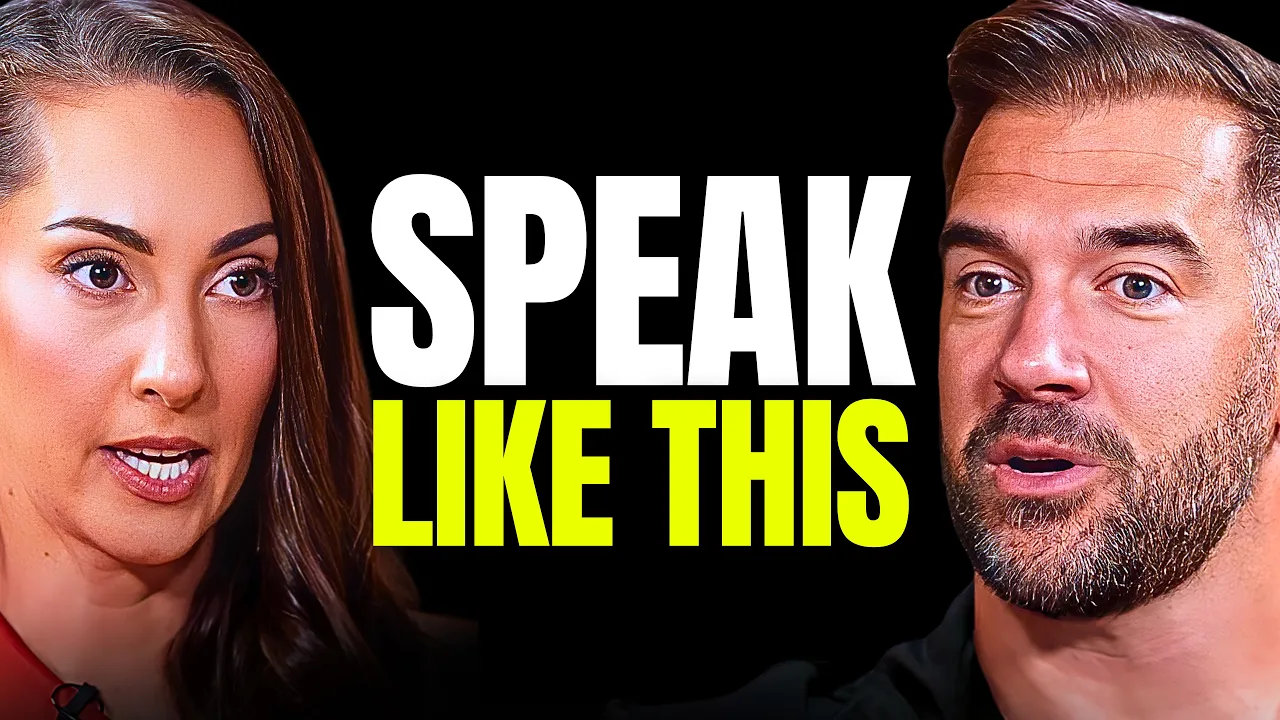
The Science of Communication: How to Connect with Anyone | Vanessa Van Edwards
Lewis Howes
565 views • 22 hours ago Save 74 min 7 min read
Video Summary
In an era increasingly dominated by AI and digital communication, genuine human connection is becoming a rare and precious commodity. Behavioral investigator Vanessa Van Edwards argues that our "conversational muscles" are atrophying as we interact more with technology than with each other. This shift, she explains, is exacerbating a global loneliness epidemic, as superficial digital exchanges fail to provide the deep sense of understanding and belonging that humans crave.
Van Edwards introduces a framework for building deeper connections, emphasizing the importance of asking "power questions" that elicit stories rather than facts, and progressing through three levels of conversation: general traits, personal concerns, and self-narrative. She warns against common conversational pitfalls like asking "Have you been busy?" or "What do you do?" and instead advocates for questions that foster curiosity and emotional resonance. By consciously practicing these skills, individuals can navigate the challenges of modern communication and cultivate more meaningful relationships, even amidst the rise of artificial intelligence.
Short Highlights
- The rise of AI and digital communication is weakening human "conversational muscles," contributing to a loneliness epidemic.
- Genuine connection requires moving beyond superficial small talk to deeper levels of conversation.
- Asking "power questions" that elicit stories, not just facts, is key to building rapport.
- Technology cannot replicate the human need to feel understood, chosen, and loved.
- Mastering conversation involves developing skills like active listening, empathy, and asking insightful questions.
- Developing charisma means signaling warmth and competence authentically.
- Consciously practicing social interactions is crucial for maintaining strong relationships.
Key Details
The Decline of Real-Time Conversation [00:00:00]
- The question "Have you been busy?" is identified as the single worst question in any conversation, as it prompts negativity or makes the respondent sound like a "loser."
- In the age of AI, conversations must compete with the dopamine-driven digital feed, requiring more engaging questions and stories to pull people away from their phones.
"Our conversations are directly competing with our phones."
The Age of AI and Shifting Conversational Muscles [00:02:46]
- Humans are increasingly conversing with technology, which shapes our "conversational muscles" to be more directive and less focused on politeness or connection.
- Interacting with AI requires a different set of skills than interacting with humans, leading to a need to "shift gears" between the two.
"When we're talking to AI, we're using a kind of conversational muscle, very directive, very assertive, not polite, not about connection, not about reciprocity."
Conversation as Social Exercise [00:04:40]
- Conversation is likened to exercising social muscles, similar to how weightlifting exercises the body.
- We are flexing our social muscles more than ever, but primarily with technology, not with each other, leading to potential negative ripple effects.
"We are flexing our social muscles now more than ever to technology, not to each other."
The Loneliness Epidemic [00:07:10]
- Despite feeling connected through digital means like voice notes and social media, a significant portion of the world's population experiences loneliness.
- Digital interactions often lack the feedback, eye contact, and reciprocal emotional support found in synchronous human conversations.
"We are in a loneliness epidemic. No, one in six people worldwide are affected by loneliness."
The Chemistry of Connection [00:08:40]
- Synchronous conversations with other humans trigger the release of oxytocin, the "chemical of love and connection," which fosters belonging and improves social cognition.
- Dopamine, the "chemical of pleasure," is also released during engaging conversations, providing energy and motivation.
"Real time communication means so phone call and FaceTime is OK."
Competing with the Digital Feed [00:11:00]
- Conversations must now compete with the constant stream of content on phones, which often provides more immediate dopamine hits.
- The unique human ability to understand and make others feel "chosen" is something technology cannot replicate.
"Our questions have to be so good. Our stories have to be so good that we actually pull you off of your phone."
The Three Core Human Desires in Conversation [00:13:00]
- In all conversations, humans are deeply searching for answers to three fundamental questions: "Do you understand me?", "Do you choose me?", and "Do you love me?"
- Technology can offer relatable content but cannot fulfill these core needs for personal understanding and validation.
"And technology cannot do any of those three things."
The Art of Asking Power Questions [00:14:00]
- Master conversationalists ask highly specific questions that break autopilot and are designed to elicit stories, not just facts.
- Questions that seek stories, emotions, and experiences are more engaging and create deeper connections than factual inquiries.
"They are asking first questions that break autopilot."
"Tell Me More": The Ultimate Conversational Phrase [00:17:30]
- The simple phrase "Tell me more" is identified as a powerful tool to encourage deeper sharing and create more interesting conversations.
- This phrase works best when preceded by an engaging question that invites a story or emotion.
"I've learned that there's three words that you can say to make yourself one of the most interesting people in any room. And the three words are, tell me more."
Navigating Conversation Levels [00:20:00]
- Conversations progress through three levels: Level 1 (General Traits), Level 2 (Personal Concerns), and Level 3 (Self-Narrative).
- Extroverts can sometimes "skip levels" by going too deep too fast, hindering genuine connection.
"The brain literally cannot process that way."
Level 1: General Traits and Putting Others at Ease [00:21:30]
- Level 1 focuses on basic facts about someone, like hometown or job, presented through stories to make the other person feel at ease.
- Questions like "Have any fun plans coming up?" or "What are you grateful for today?" are effective Level 1 openers.
"Level one is about finding out the facts through story."
Avoiding Conversational Pitfalls [00:25:00]
- The "worst" questions include "Have you been busy?" (prompts negativity) and "What do you do?" (triggers social scripts and autopilot).
- Instead of generic responses, breaking autopilot with humor or a structured answer (label, who, why) can create more engaging interactions.
"What do you do? is socially scripted, right?"
Level 2: Personal Concerns and Dream Building [00:34:00]
- Level 2 involves understanding someone's goals, motivations, values, and what keeps them up at night.
- "Dream builders" foster connection by being additive and curious, while "dream killers" (often with good intentions) can shut down ideas by being subtractive or overly critical.
"Dream builders are additive. They are constantly adding."
Conversational Confetti and Information Gaps [00:42:00]
- Howard Stern's technique of sprinkling "conversational confetti" (e.g., "What's the weirdest thing that ever happened to you?") creates information gaps that draw listeners in.
- These questions, when used authentically, generate curiosity and make conversations more exciting and memorable.
"He is creating what are called information gaps."
Level 3: Self-Narrative and Authentic Signaling [00:53:00]
- Level 3, self-narrative, is the story we tell ourselves about ourselves and is best reserved for intimate relationships.
- Charisma is defined as a blend of warmth and competence, which must be authentically signaled to be believed.
"If you have authentic warmth and competence, it's actually a signaling issue."
The Future of Conversation and AI [01:08:00]
- AI is becoming a "calculator for conversations," making it easier to avoid difficult interactions and practice authentic communication.
- This reliance on AI risks diminishing our ability to navigate real-world social friction, which is essential for building confidence and learning.
"AI is like the new calculator."
Making Every Interaction Count [01:17:00]
- The goal of conversation should be connection, not just likability, and making every interaction count is paramount.
- Practicing "cornerstone conversations" and "YAP challenges" (recording yourself speaking about an idea) can help develop these crucial social skills.
"How to connect with anyone and make every interaction count."