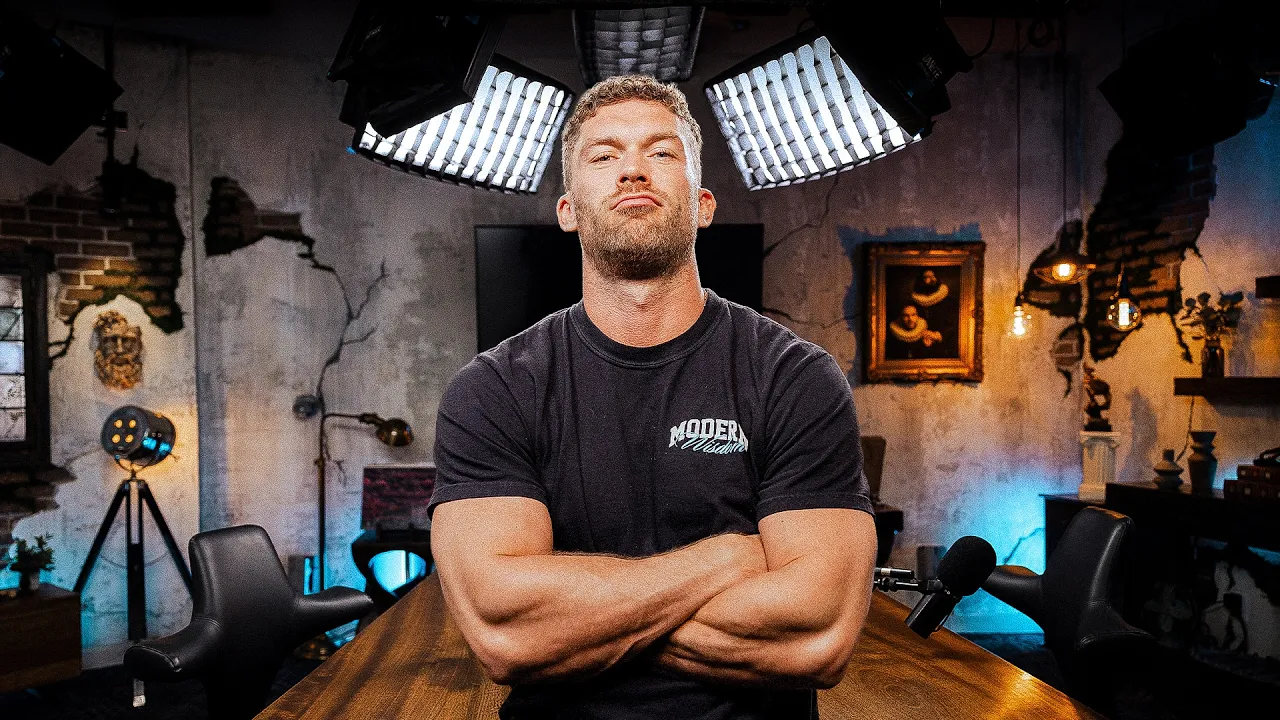
Secret Service Agent: How To Stay In Control When Someone Is Trying To Manipulate You!
The Diary Of A CEO
514,978 views • 9 months ago Save 70 min 11 min read
Video Summary
Former Secret Service agent Desmond O'Neal shares science-backed interrogation techniques for effective communication, especially in difficult conversations. He emphasizes the importance of having a plan, with 'P' for purpose, to avoid getting sidetracked by emotions. O'Neal also highlights the power of active listening and asking clarifying questions, noting that people are less accurate in understanding others than they believe. He stresses that true connection and effective communication stem from genuine curiosity and empathy, rather than trying to "fix" or control the situation. A fascinating insight is that people who are telling the truth often introduce complications into their stories, while liars tend to avoid them.
O'Neal outlines a four-part plan (PLAN) for navigating challenging conversations: Purpose, Listen, Ask, and Next Steps. He illustrates these principles with real-life examples, from investigating serial offenders to understanding everyday disagreements. The core message is that effective communication, even in high-stress situations, relies on maintaining focus, demonstrating genuine curiosity, and fostering authentic connection. This approach aims to prevent misinterpretations and build stronger relationships, even with difficult individuals.
Short Highlights
- Effective communication, especially in "dark conversations," requires a plan with "P" for purpose, driving tactics and keeping one on track.
- Understanding "multiple goals theory" (task, identity, relational) is crucial, as misalignment can cause problems.
- Active listening is challenging due to cognitive bandwidth; one must inhibit extraneous thoughts to stay engaged.
- Empathy accuracy is surprisingly low, with estimates at 15-40%, highlighting the need for asking questions.
- Body language is important, but focusing on changes in state and curiosity is more effective than making assumptions.
- The "PLAN" framework: Purpose, Listen, Ask, Next Steps.
- Stop trying to be right, stop saying "I understand," and stop giving unsolicited opinions to improve communication.
- Trust is built through vulnerability, openness, and self-congruence, not manipulation or trying to "influence" for personal gain.
- Leadership is defined by being calm under chaos and making decisions with low certainty.
- Rapport is built by making people feel seen, heard, and understood, often by addressing their immediate needs before pursuing your own agenda.
Key Details
The Challenge of Difficult Conversations [00:00]
- Labeling someone as a "narcissist" or "gaslighter" hinders understanding their true motivations.
- Difficult conversations often involve high stress and strong emotions, making them hard to navigate.
- The video introduces a framework for handling these conversations effectively, offering both things to do and things to stop doing.
- Former Secret Service agent Desmond O'Neal, with over 30 years of experience, shares science-backed techniques for communication and getting people to open up.
"But when you need to go into a dark conversation to make things simple, there are four things that you can do because we all have those conversations."
The PLAN Framework for Communication [00:59]
- The acronym PLAN represents a strategic approach to conversations: Purpose, Ask, Listen, Next Steps.
- P is for Purpose: Understanding "why are you there?" or the "goal of the conversation" is essential, especially in emotional discussions, to maintain focus and control.
- A is to Ask: People are only accurate about 40% of the time when guessing what others think, a figure that drops to 15% in emotional conversations, highlighting the power of asking questions.
- The "L" and "N" in the acronym are also critical components, though not fully detailed at this early stage.
"The victory lies in the little things that you do. So, you need to have a plan."
Desmond O'Neal's Background and Expertise [04:51]
- O'Neal's career spans corrections officer, police officer, SWAT officer, and Secret Service agent.
- He also developed a polygraph career, dealing with individuals' deepest secrets.
- His experience includes internal affairs, investigating fellow officers, which required navigating complex interpersonal dynamics.
- He observed that interview and interrogation methods were evolving, moving from physical abuse to psychological manipulation.
"So now I have people that are giving me their deepest, darkest secrets."
The Evolution of Interrogation Techniques [06:18]
- Early interrogation methods in the 1900s involved physical abuse ("the third degree").
- Society evolved towards psychological manipulation as a primary method.
- O'Neal sought a more evolved approach, pursuing a Master's degree and researching the High-Value Detainee Interrogation Group (HIG).
- The HIG model was a three-prong approach: research, practitioners, and trainers, emphasizing the science behind interrogation.
"So, it was less about hands-on and more about trying to get people to talk to you from a psychological perspective."
Avoiding Labels and Understanding Behavior [08:38]
- The first step in a difficult conversation is to remove labels like "narcissist" or "gaslighter."
- These labels allow for blame but prevent understanding the person's motivations and behavior.
- Empathy is situationally based and subjective; everyone can lack empathy at times.
- Understanding what constitutes gaslighting versus what is a genuine attempt to discredit or make someone feel at fault is crucial.
"If you just blatantly label somebody as being like this person's a narcissist, you've just you've just made it easy for yourself. You've just put blame on them and you're not going to be able to really understand who this person is and why they are the way they are."
The Purpose: Driving Your Conversation [11:09]
- The "P" in PLAN stands for Purpose, which defines why you are in the conversation and what your mission is.
- Your mission drives your tactics and helps you stay on track when faced with aggression or insults.
- Multiple goals theory suggests we pursue simultaneous goals: task-oriented, identity-based, and relational.
- Misalignment of these goals, like prioritizing personal identity over team success (e.g., a "ball hog"), indicates a problem.
"Because your mission is going to drive your tactics. Your mission is going to determine if things get off track."
The Case of JC Dugard and Philip Garrido [14:46]
- O'Neal shares the story of interviewing Philip Garrido, who kidnapped JC Dugard for 18 years.
- His goal was to understand Garrido's life and timeline concerning the disappearance of Michaela Garrett.
- O'Neal spent four days interviewing Garrido, engaging him with respect and consistent presence.
- Despite Garrido's aggressive and condescending behavior, O'Neal stayed focused on his purpose, ultimately concluding Garrido was not involved in the Garrett case.
"My purpose is not to make him feel that I'm smarter than him. Is not to belittle or berate him..."
Indicators of Truthfulness [18:16]
- Consistency in conversation across multiple days is an indicator of truth.
- Spontaneous corrections of details (e.g., the order of events) also suggest truthfulness.
- Truth-tellers often introduce complications and details that make a story more realistic.
- Liars tend to avoid complications and create simpler narratives, leading to gaps when questioned deeply.
"When complications are introduced to a story, right, people who lie don't do that, right? It's truth tellers will often do that because it's just like this is just what happened."
Listening: The Unspoken Language [21:44]
- Listening is often the hardest part of communication due to the internal dialogue running much faster than speech.
- Cognitive inhibition is required to narrow bandwidth and fully engage with the speaker.
- Stephen Covey's quote: "Most people don't listen with the intent to understand. They listen with the intent to reply."
- Controlling a conversation comes from listening, not talking, by allowing the other person to speak more.
"You have too much cognitive bandwidth. you have the ability to listen to me and then do multiple other things which is oftentimes why people will drift out..."
Asking: Deepening Understanding [24:26]
- Asking questions shows active listening, curiosity, and a genuine desire to understand.
- Empathy accuracy is low (20-40%), meaning we often misinterpret others' feelings and thoughts.
- Emotional conversations further reduce empathy accuracy, as ego protection can cause ears to "go offline."
- Observing non-verbal cues and asking about them ("It seems like..." vs. "I think...") can clarify misunderstandings.
"Your ability to be empathetic when things are hard becomes harder and you have to be very mindful of that."
The N in PLAN: Next Steps [31:31]
- "N" stands for Next Steps, which involves determining how to resolve the issue and what the end goal is.
- Asking the other person about their vision for the future of the relationship is key.
- The goal is to find an "amicable way forward" where both parties can enjoy each other's time.
- Resolution involves understanding what the other person needs and how to best achieve it.
"Do you think that you and I can find an amicable way forward where when I when you and I engage, you know, we can really enjoy each other's time and and this thing not go bad?"
Handling Insults and Maintaining Composure [33:24]
- If someone starts insulting you, revert to your original purpose for the conversation.
- Address the behavior directly and specifically, explaining why it's problematic.
- Do not return insults in kind; maintain your composure and professionalism.
- Losing your cool means losing control and falling into the other person's strategy.
"I am going to call you out on it. It's also showing me that I am not afraid to confront this type of behavior and I'm seeing it..."
Me-Me Syndrome and Outward Reflection [40:05]
- "Me-Me Syndrome" describes a self-centered perspective where everything is about the individual, often prevalent in Western cultures.
- This inward focus hinders understanding others' experiences and perspectives.
- True connection requires outward reflection, considering how others perceive and experience the world.
- The best negotiators spend significant time understanding others' viewpoints.
"When you fail to take in consideration that other people have other experiences based on how they pick up the world... you are going to have a really hard time having a deep, honest, connective relationship with somebody if it's just about you."
Influence vs. Manipulation [46:17]
- Influence is nudging someone in a direction beneficial for both parties, characterized by honesty, clarity, and transparency.
- Manipulation involves nudging someone for personal gain, often through lies or deceptive tactics, potentially harming the other person.
- In the US, lying to subjects in interrogations is legal, but it shifts the act towards manipulation.
"Influence is about nudging a person in a certain direction that's beneficial for both you and them. That's influence."
Building Trust Through Vulnerability and Self-Congruence [51:15]
- Trust is built by being vulnerable, open, and sharing about oneself.
- Self-congruence, being aligned with your ideal self, and being transparent fosters trust.
- True influence comes from authenticity and being inspired by someone's actions and words, not from trying to manipulate.
- Trust operates in concentric rings: self-trust first, then a small circle of unconditional trust, and then conditional trust for everyone else.
"Trust is about being vulnerable. Trust is about being open and sharing a little bit about yourself."
Leadership: Calm Under Chaos [55:33]
- A hallmark of great leadership is being calm under chaos and managing high-stress, uncertain situations.
- Leadership is a feeling, how you make others feel, not just about personal qualities.
- Decisiveness, even with low certainty and incomplete information, is a key leadership trait.
- The worst decision is often no decision at all.
"Somebody who's calm under chaos. That would be my definition of a leader."
The Power of Owning Decisions [01:00:37]
- Many people choose the "certain misery" of their current life over the uncertainty of change.
- Making decisions with the best available information, even if uncertain, is crucial.
- Hindsight bias can hinder growth; it's more productive to learn from decisions and use them to become a better person.
- Owning decisions, whether right or wrong, leads to growth and self-awareness.
"If you make the wrong decision then it's experience if you make the right decision then it's confirmation."
Rapport: Making Others Feel Seen and Heard [01:08:09]
- Rapport is not built on superficial kindness but on understanding a person's values and needs.
- It involves paying attention, being engaged, and making the other person feel seen, heard, and understood.
- To build rapport, one might need to address the other person's immediate concerns before pursuing their own agenda.
- This demonstrates empathy, reduces ambiguity, and establishes authenticity.
"Rebuilding rapport is understanding values in terms of a person. Rapport is understanding, you know, a person's presence and what they're needing from you."
Three Things to Stop Doing for Better Communication [01:12:05]
- Stop trying to be right: This often leads to defensiveness and hinders understanding.
- Stop telling people "I understand": While you can understand words, you can never fully grasp another's internal experience, and this can dismiss their unique feelings.
- Stop giving unsolicited opinions: People often want to be heard and feel understood, not immediately offered solutions or advice unless they ask for it.
"You will never understand their headspace in terms of the the specificity of that. And so what you will see is I if if you're sharing a story like if you shared a personal story with me..."
The Guest's Closing Question [01:17:09]
- The question left for the next guest is: "What decision do you most regret? And would things have turned out better if you had made it differently?"
- The current guest, Desmond O'Neal, states he has no regrets, as all his decisions, even difficult ones, have contributed to who he is today. He emphasizes learning from experiences rather than regretting them.
"I can't tell you that there's something that I look back that I regret because I think that there's things we learn from."