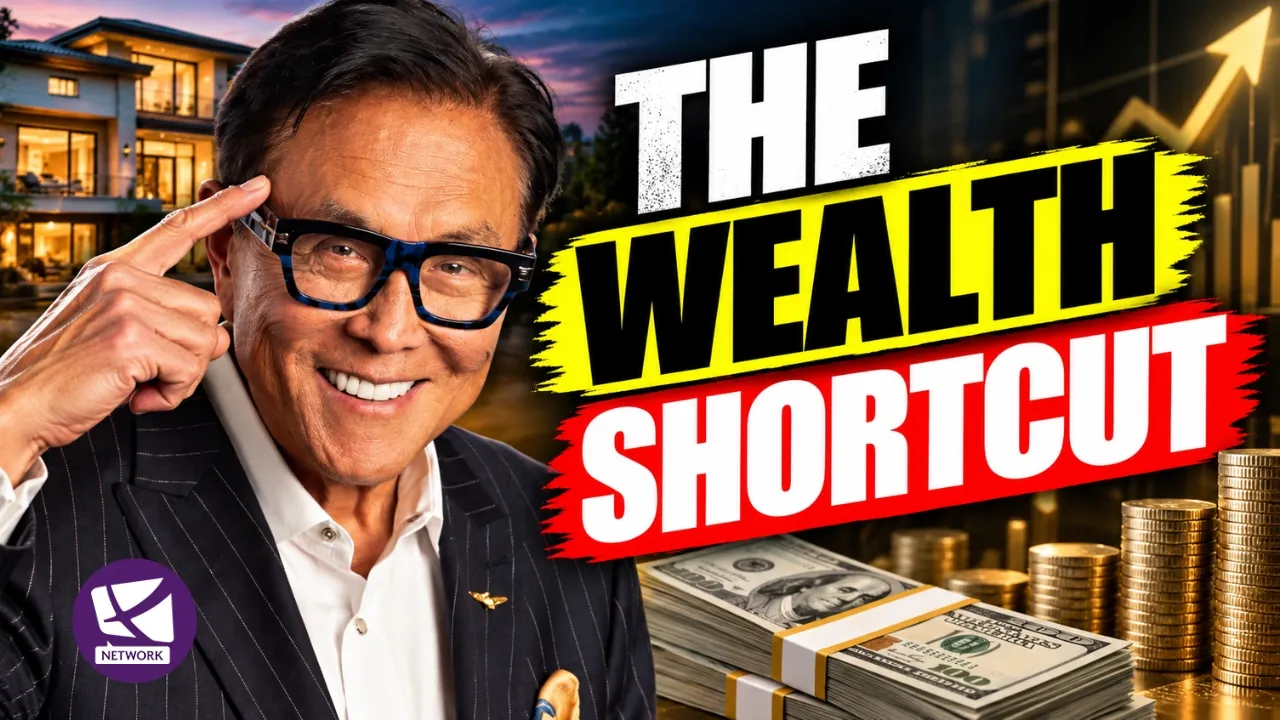
Robert Kiyosaki: The Shortcut to Building Wealth Most People Ignore
The Rich Dad Channel
222 views • 22 hours ago Save 24 min 6 min read
Video Summary
In an increasingly volatile world, the need for financial education, particularly in real estate, has never been more critical. Robert Kiyosaki, joined by tax strategist Tom Wheelwright and real estate expert Jason Hartman, emphasizes that while markets are unpredictable, "doing nothing is the worst thing you can do." They argue that financial literacy is the key to navigating economic downturns, citing historical examples like the 2008 crash where prepared investors, like Kiyosaki himself, not only survived but thrived by acquiring assets at a discount.
The panel highlights the significant tax advantages and wealth-building potential of real estate, especially when leveraging debt. Wheelwright explains that the government offers substantial "discounts" through tax incentives for investing in areas like housing, energy, and business. Hartman adds that tenants can effectively pay down debt while investors benefit from tax deductions, creating a powerful cycle of wealth accumulation. They stress the importance of choosing knowledgeable mentors and coaches to understand evolving market trends and avoid common pitfalls, warning against outdated strategies and the dangers of relying solely on traditional retirement accounts like 401(k)s.
Short Highlights
- Financial education is paramount in today's uncertain economic climate.
- Real estate offers unique opportunities for wealth creation through tax benefits and debt leverage.
- Choosing the right mentors and coaches is essential for navigating market changes.
- Traditional investments like 401(k)s are risky compared to real assets.
- Proactive investment in real assets is key to thriving during economic downturns.
- Landlord-friendly states offer better environments for real estate investors.
- Adapting to new opportunities and trends is crucial for continued success.
Key Details
The Imperative of Education in Volatile Times [0:00]
- The current global economic climate is described as "crazy" and "insane," necessitating increased financial education rather than less.
- Doing nothing out of confusion is the worst possible strategy; individuals must decide to be "in" or "out" of education.
- Real estate's illiquid nature requires more education, unlike stocks or bonds.
"We don't know what's coming tomorrow. So the more prepared, the more educated we can be, the better we are."
Real Estate as a Strategic Investment [2:30]
- The current market conditions are compared to 2000 and 2008, presenting opportunities for educated investors.
- While many people shy away from real estate during downturns, it is often the best time to invest.
- Kiyosaki's own success in 2008, where he and his wife Kim made significant profits as the market crashed, is highlighted.
"The best real estate in the world went on sale. But the average person was saying, oh, I don't want to fix toilets."
The Power of Smart Teams and Debt [5:00]
- The importance of having knowledgeable advisors, like tax strategist Tom Wheelwright, is emphasized for courage in investments.
- Kiyosaki mentions acquiring a billion dollars in debt since 1971, contrasting with advice to live debt-free.
- Debt is framed as "real money" and a tool for the financially educated, not for "stupid people" unaware of its benefits.
"Guys like Dave Ramsey says live debt free. Well, for 99% of the people, you should live debt free because you're stupid."
Tax Incentives as Government Subsidies [8:30]
- Tom Wheelwright likens government tax incentives for investing to a "20% or 30% discount" at a store like Neiman Marcus.
- Even in tough markets or when prices seem high, tax incentives can offer a significant discount, making the tax code a crucial part of investment strategy.
- The government essentially subsidizes real estate investors through the tax code and entities like Fannie Mae and Freddie Mac.
"The government's offering if you invest the right way and you have the right advisors, they're saying, look, we'll give you a 30%, 40% discount on your investments."
Identifying Investor-Friendly Markets [12:00]
- Opportunities are found in "good, solid, linear markets" that are cashflow-oriented, not overly expensive, and business/landlord friendly.
- States like Arizona, Texas, Florida, Tennessee, and Georgia are contrasted with places like New York and California, where squatting laws can be problematic for landlords.
- These favorable markets often have lower costs of living and higher quality of life, with many residents working remotely.
"You don't have this type of environment where, if you have to kick a tenant out, because they're not upholding their contract, that you're looked at in the courtroom as the big evil landlord."
Due Diligence and Diversification in Real Estate [15:30]
- Investors are encouraged to visit and learn about the markets they invest in, rather than blindly trusting deals presented by others.
- While online research tools are available, visiting properties is recommended, though some clients buy first and then visit.
- Diversification across three to five markets is advised, avoiding the mistake of being spread too thin across too many.
"The important thing is to do your due diligence. A lot of that can be done online now."
The Capitalist vs. Marxist Mindset on Taxes [19:00]
- The discussion shifts to the ideology behind taxation, with Kiyosaki labeling supporters of higher taxes as "Marxists."
- He argues that capitalists use investments to legally reduce taxes, while those with jobs (often called "cheaters" by Marxists) may have fewer options.
- The government incentivizes investment in areas like housing, energy, and business, leading to tax breaks for those who participate.
"When I tell people we don't pay taxes, they think I'm a criminal. No, I'm a capitalist."
The Role of Coaches and Mentors [25:00]
- The value of "coachable" clients who actively seek guidance is highlighted by Tom Wheelwright.
- Kiyosaki emphasizes having coaches for health, wealth, and happiness as a shortcut to success.
- Relying on experts like Wheelwright for tax code knowledge and Hartman for real estate trends saves time and effort.
"If there is any shortcut to success in business and in investing, it's to get a great coach, to get a great mentor."
Macro Trends and Future Opportunities [30:00]
- A potential "biggest stock market crash in history" is predicted, creating "huge problems" but also "huge opportunities."
- The decline of commercial real estate due to remote work is noted, with a trend towards converting hotels into apartments or condominiums.
- Investing in essential sectors like healthcare, food, shelter, transportation, communication, energy, and security is recommended.
"The future was that the big office buildings would be homeless shelters."
The Advantage of Borrowing and Real Assets [35:00]
- Using debt (borrowing) significantly enhances tax benefits in real estate investment, potentially yielding 80% more benefit than using one's own money.
- The government incentivizes the creation of real assets, which should ideally lead to paying no taxes.
- Following the law and utilizing legal tax incentives is presented as the smart, patriotic approach, contrasting with "cheating."
"You're compounding your tax benefit by borrowing."



![Footage: FlyDubai Israel Plane Hijack - What Happened [737 Max Dubai to Tel Aviv FZ1073 A6-FKF]](https://i.ytimg.com/vi/IVbfu7kzCIE/hqdefault.jpg)