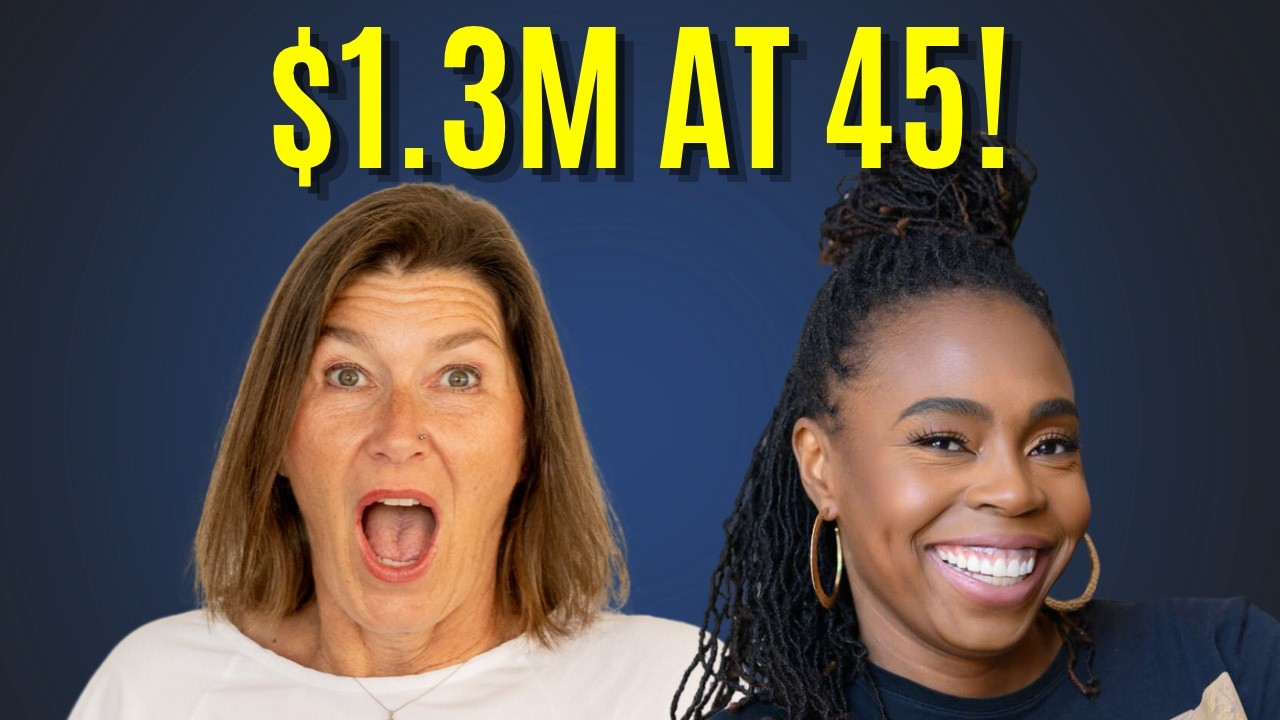
Naseema Went Bankrupt at 25, Became a Single Mom at 30, and Built $1.3M by 45
BiggerPockets Money
231 views • 21 hours ago Save 35 min 9 min read
Video Summary
Nasima McElroy transformed her financial life from bankruptcy and divorce to millionaire status by age 45. After a difficult divorce left her with a large home and significant debt, McElroy dedicated herself to financial education, learning to budget and prioritize debt repayment. She aggressively paid off nearly $1 million in debt in under three years, primarily by selling her home and strategically allocating funds. This financial reset allowed her to shift focus to aggressive investing, maxing out retirement accounts and building a substantial portfolio. Despite numerous personal challenges, including multiple moves and becoming a single mother again, McElroy's consistent financial systems provided resilience, enabling her net worth to grow to over $1.3 million.
Short Highlights
- Millionaire by 45: Nasima McElroy achieved millionaire status by age 45 despite significant financial setbacks.
- Debt Payoff: Paid off nearly $1 million in debt in under three years.
- Financial Reset: A divorce in 2015 triggered a journey to financial independence.
- Investment Strategy: Aggressively invests, maxing out retirement accounts.
- Current Net Worth: Over $1.3 million in assets, with over $1 million invested.
- Resilience Through Crisis: Financial systems provided security during personal hardships.
- Financial Intentionality: Founded Financially Intentional to share financial strategies.
Key Details
The Financial Journey Begins [00:00:00]
- Nasima McElroy's financial story started with bankruptcy, divorce, and single motherhood, yet she became a millionaire by 45.
- She experienced significant financial struggles despite earning a high income as a labor and delivery nurse.
-
"I mean, I guess my formal money story starts kind of in 2015, being a single mom, kind of owning this McMansion with just me and my baby and like earning a lot of money for a long time, but feeling really, really poor."
Early Financial Struggles [00:01:55]
- In 2015, McElroy was a single mom in a 4,000 sq ft home in Northern California, earning $200,000 annually.
- Her debts included $200,000 in student loans with $1,900 monthly payments and a $630,000 mortgage with a $4,000 payment.
- Despite her income, she felt broke and lacked savings, not understanding where her money was going.
-
"I just knew that every month I did not have any savings. I just felt really, really broke."
The Catalyst for Change [00:04:18]
- The primary motivation for change was her desire to provide a secure future for her daughter.
- She committed to learning about finances with the same intensity as her academic pursuits.
- McElroy utilized her hour-long commute to consume financial podcasts and audiobooks.
-
"If I don't do better for myself, I got to do better for this baby I have. If something were to happen to me, I need to know that my daughter would be cool."
Implementing Financial Changes [00:05:19]
- Key changes included learning to budget and understanding the concept of "paying yourself first."
- She set a goal to become debt-free and consistently put $4,000 a month towards her debt.
- This shift prioritized debt repayment, leading to other financial aspects falling into place.
-
"I just had to get intentional. And it was also a very like challenging time in my life where I couldn't work more."
Aggressive Debt Payoff [00:06:50]
- Within a couple of months of implementing budgeting and zero-based budgeting, she ramped up her debt payment.
- In under three years, she paid off nearly $1 million in debt.
- This was achieved through consistent monthly payments and significant capital allocation moves.
-
"And then after that, in under three years, I was able to pay off nearly a million dollars in debt."
Major Capital Allocation for Debt Reduction [00:07:35]
- A significant move was selling her house, which had a remaining balance of $58,000 but was valued around $600,000.
- The proceeds from the sale, combined with her monthly payments and other financial adjustments related to her divorce, contributed to paying off the debt.
-
"Part of me starting over was when I had that $58,000 left, kind of wiping everything out by selling my house, which was, you know, I said like in the $600,000 range at that time."
The Impact of Financial Education [00:09:46]
- Consuming financial content normalized the idea of getting finances in order and paying off massive debt.
- It changed her circle of influence, exposing her to people who talked openly about wealth and debt reduction.
-
"It just normalized putting your finances in order. It normalized the concept that paying off massive amounts of debt is possible."
Post-Debt Financial Snapshot [00:10:29]
- By November 2017, she had paid off nearly $1 million in debt in about two years and eight months.
- Her net worth at that point was under $100,000, but she was finally in the green.
- She moved into a two-bedroom apartment to condense her living situation.
-
"At that point, I would say, you know, I still had investments in the background and I did profit a little bit. So I think for the first time I was kind of in the green."
Transition to Aggressive Investing [00:11:30]
- Her savings rate immediately increased, shifting from debt payoff to aggressive investing.
- She began maxing out her 403B, 457, and Roth IRA accounts.
- She also started saving for her daughters' college funds.
-
"It immediately shifted. It was like, it's interesting. So I kind of went from like this Dave Ramsey aggressive, like debt payoff camp to more of like the fire, like aggressively invest."
Navigating Life Changes and Continued Growth [00:13:40]
- Between 2017 and 2020, she moved four times due to her partner's job and family needs.
- Despite these moves and working less for a period, she continued to save and max out investment accounts.
- Her net worth continued to grow, demonstrating the power of consistent saving and investing.
-
"I was able to still save. I was able to still max those accounts out, even though I was working significantly less for a year timeframe, but that's what I prioritized over everything."
Home Purchase Amidst Challenges [00:15:25]
- In 2020, she bought her current home for $630,000 with a 10% down payment and a 2.85% interest rate.
- She encountered issues with the builder's preferred lender, which initially offered a high interest rate, but secured a better rate through a mortgage broker.
- She became a single parent again shortly after moving into the house.
-
"The home was 630,000 again, but it was a little bit smaller. So now my house is about 2500 square foot, I did 10% down, I ended up getting a 2.5 or 2.85, I'm sorry, interest rate."
Building Financial Resilience [00:21:00]
- McElroy emphasizes that her financial systems provided security, enabling her to leave an abusive relationship.
- She built her platform, Financially Intentional, to share her journey and teach others about managing finances.
- Despite numerous life stressors, her consistent financial systems protected her.
-
"The thing is, is like, when people look at like stories like mine and see like, Oh, she paid off a million dollars in debt, then you know, she became a millionaire, seven years later, they think it's like this linear process. It's like a freaking rollercoaster and things are going on in the background and life is happening."
Current Financial Position and Future Outlook [00:27:20]
- As of 2021-2022, her net worth is around $1.3 million, with over $1 million invested in stock market index funds.
- She continues to invest aggressively, maxing out retirement accounts for herself and her daughters.
- She does not plan to pay off her current low-interest mortgage, viewing it as a hedge against inflation.
-
"So right now I'm sitting at about $1.3 million in assets, over a million dollars of that is just invested in all my regular boring stock market index fund accounts."
Real Estate Investment History [00:29:40]
- McElroy's early investment experience involved buying five houses by age 25, leading to significant losses during the 2008 housing market crash.
- She experienced two short sales, two foreclosures, and ultimately filed for bankruptcy in 2010.
- This experience created deep trauma around real estate investing for her.
-
"I had to go through two short sales, two foreclosures, and ultimately had to file bankruptcy in 2010."
Lessons from Turbulence [00:35:45]
- The systems put in place since 2015 have proven reliable, providing security even when life events cause disruptions.
- She has experienced significant setbacks, including being off work for months due to an accident, but her financial resilience prevented a major setback.
-
"The thing is, is like, when people look at like stories like mine and see like, Oh, she paid off a million dollars in debt, then you know, she became a millionaire, seven years later, they think it's like this linear process. It's like a freaking rollercoaster and things are going on in the background and life is happening."
Work Optionality and Future Plans [00:38:30]
- McElroy loves her job as a labor and delivery nurse and has achieved work optionality, allowing her flexibility.
- She can choose to work part-time or take extended time off, such as traveling with her children.
-
"But now I have like a dream schedule. I literally work three days one week. I work two days another week. If I wanted to have two weeks off, I'd only have to take off one day."
Advice and Continued Growth [00:44:50]
- McElroy is proud that she has changed the trajectory of her daughters' lives through her financial decisions.
- She emphasizes the power of intentionality and building systems that provide security.
-
"I'm just proud that I get to go on this journey and that my daughters get to see that and like that I have changed the trajectory of their lives because of the decisions that I've made and how they get to opt out of a lot of the BS that I had to go through because I made a couple of intentional decisions."
Key Takeaways on Debt and Investing [00:47:30]
- Scott Trench highlights the importance of paying off debt earlier in life, especially during turbulent periods, as opposed to solely investing.
- He notes that the arbitrage between debt interest rates and investment returns only works if one can financially survive market downturns and personal crises.
-
"And I think that paying off your mortgage, keeping debt on the books, investing instead, there's a real case for that in personal finance."
Author and Resources [00:49:00]
- Nasima McElroy is the author of "Smart Money."
- She is also the founder of Financially Intentional and hosts the Financially Intentional Podcast.
-
"And if your story is anything relationally similar to hers, you may get a lot of value out of her plan."