Rick Rule: 5 Reasons Gold & Silver Could Protect Your Wealth - Robert Kiyosaki, Kim Kiyosaki
The Rich Dad Channel
612 views • 1 month ago Save 36 min 6 min read
Video Summary
The U.S. financial system is built on a foundation of arithmetic failure, where government debt, deficit spending, and quantitative easing are systematically eroding the purchasing power of the dollar. With the federal government facing $120 trillion in off-balance-sheet liabilities and offering "return-free risk" through Treasury bonds, holding fiat currency has become a guaranteed path to wealth destruction. Precious metals like gold and silver serve as the ultimate insurance policy against this inevitable devaluation, acting as "payment in and of itself" rather than a promise to pay.
Investors are currently ignoring a historic warning sign: the market share of precious metals is at its lowest point in decades, sitting at less than 0.5%. When institutional investors inevitably flee debt markets to escape negative real interest rates, the resulting surge in demand for tangible assets could cause prices to skyrocket. Rather than waiting for the government to "fix" the economy, the solution is immediate personal responsibility: moving wealth into hard assets that do not rely on the solvency or integrity of a counterparty.
Short Highlights
- The U.S. government's $120 trillion in off-balance-sheet liabilities makes long-term debt instruments a guaranteed loss of purchasing power.
- Precious metals are not just investments; they are "payment in and of itself" that requires no trust in a counterparty.
- The current market share of precious metals is under 0.5%, suggesting a massive "return to mean" could triple or quadruple demand.
- Holding cash is a strategic "option premium" that provides the liquidity and courage to act when market crises create buying opportunities.
- Inflation is currently "academic" to most, but once the cumulative impact hits the standard of living, the shift to hard assets will accelerate.
- Institutional investors will likely face "disintermediation" out of bonds as they realize their current portfolios cannot meet future obligations.
- Government confiscation of gold is unlikely because negative real interest rates and inflation are more effective, "popular" ways to steal wealth.
Key Details
The Failure of Fiat Currency [00:06:55]
- Precious metals function as a store of value because they are payment in themselves, unlike dollars which are "I owe you nothing" promises.
- Gold remains valuable during times of war and social turmoil when trust in government institutions evaporates.
gold isn't a promise to pay its payment in and of itself.
The Quantitative Easing Trap [00:08:43]
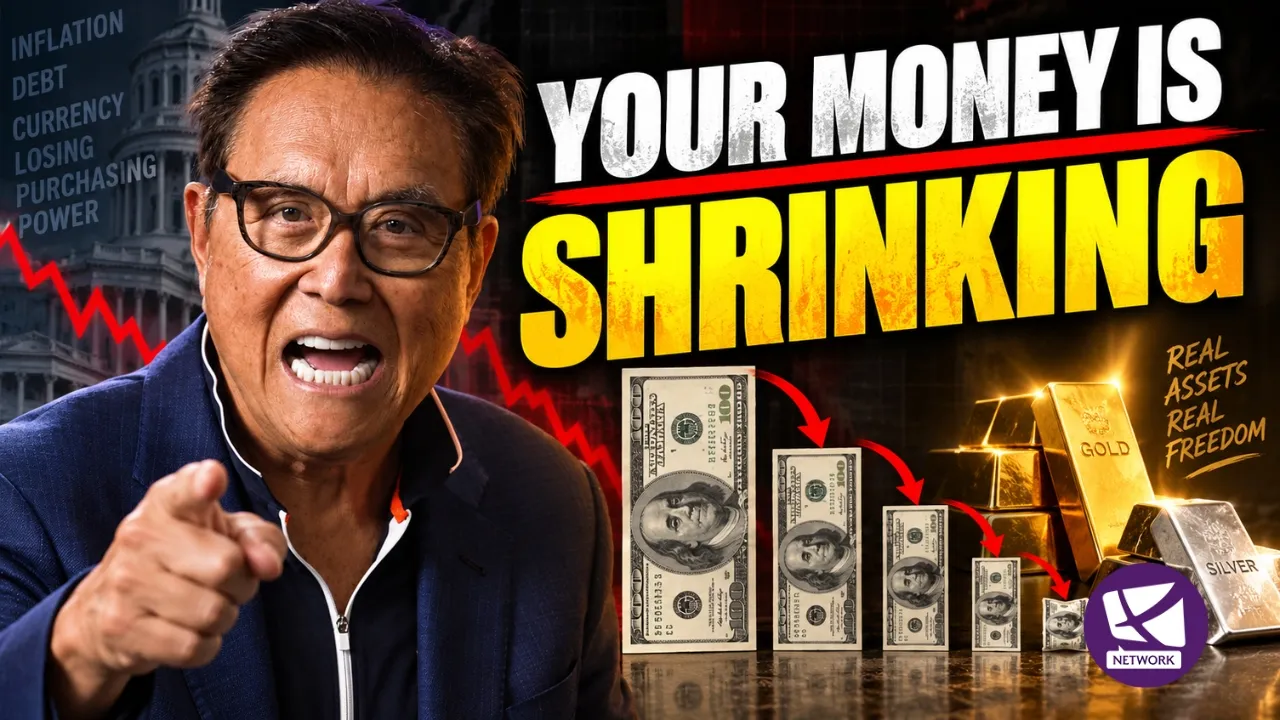
- Approximately 30% of all U.S. dollars in circulation were created in the last 30 months, diluting the value of existing stock.
- Increasing the money supply without corresponding economic growth is a form of counterfeiting that inevitably depreciates purchasing power.
It has been estimated that 30 percent of all the U.S. dollars in circulation have come into circulation in the last 30 months.
The $120 Trillion Debt Problem [00:10:05]
- The federal government's off-balance-sheet liabilities for entitlements like Social Security and Medicare total $120 trillion.
- Servicing this debt with a $3 trillion annual deficit is mathematically unsustainable, leading to inevitable rescheduling rather than repayment.
the net present value off-balance sheet liabilities of the U.S. government, not state and local governments, just the federal government, is $120 trillion.
The Guarantee of Negative Real Interest [00:11:15]
- Investors in U.S. 10-year Treasuries are accepting a guaranteed loss of purchasing power of roughly 4% annually.
- This "return-free risk" is a deliberate government policy that punishes savers to manage the national debt.
they solemnly swear to reduce your purchasing power by 4% compounded a year for 10 years, and they will keep that promise.
Historic Lows in Precious Metals Demand [00:12:30]
- The market share of precious metals is at a historic low of less than 0.5%, significantly below the three-decade mean of 1.5% to 2%.
- A return to mean demand would require the market to triple or quadruple, creating massive upward pressure on prices.
the market share of precious metals and precious metals securities relative to other savings and investment assets in the United States is less than one-half of 1%.
Institutional Disintermediation [00:14:10]
- Pension funds and endowments are trapped in a 60/40 equity-to-debt model that is failing due to negative real yields.
- Large institutions will likely be forced to exit bond markets, shifting capital into assets that protect against fiat deterioration.
I believe that you're going to see fairly massive disintermediation out of bonds and debt instruments by the largest institutional investors in the world.
The Utility of Cash as an Option [00:19:40]
- Maintaining liquidity, even while suffering negative real interest rates, provides the courage to capitalize on market crashes.
- Cash acts as a "soporific" that allows investors to sleep while waiting for liquidity crises to create high-return opportunities.
I consider the negative real interest rate that I suffer to be an option premium because the cash gives me the tools and the courage to take advantage of any future crisis.
The Reality of Government Coercion [00:24:55]
- Government power is ultimately rooted in the monopoly on force and violence, which is used to allocate resources politically.
- Unlike private business, where value is delivered to a free customer, government taxation is enforced through the threat of incarceration.
governments have a monopoly, Robert, on force and violence.
Why Confiscation Is Unnecessary [00:27:00]
- The government does not need to overtly confiscate gold when they can steal wealth covertly through inflation and negative real interest rates.
- Overt theft is politically risky, whereas "stealing from the unborn" via deficit spending is currently widely accepted.
the powers that be don't have to steal your gold; they can sell you treasuries where you sign up voluntarily for a guaranteed loss.
The Inflation Warning [00:28:45]
- The 1970s serve as a warning: inflation is not a "big deal" until it compounds enough to meaningfully degrade the standard of living.
- Most people currently view inflation as an academic issue rather than a life-altering problem because they haven't been "bitten" hard enough yet.
It wasn't until the 73 or 74 when people had gone through four or five years where the cost of living increased substantially faster than their savings did.
The Hidden Cost of Government [00:30:20]
- Official CPI metrics ignore the massive increase in the cost of government, specifically income, property, and excise taxes.
- The cumulative effect of these taxes, combined with inflation, represents a significant, unmeasured decline in personal wealth.
the idea that the cost of government isn't one of my, one of the factors in my cost of living just astonishes me.