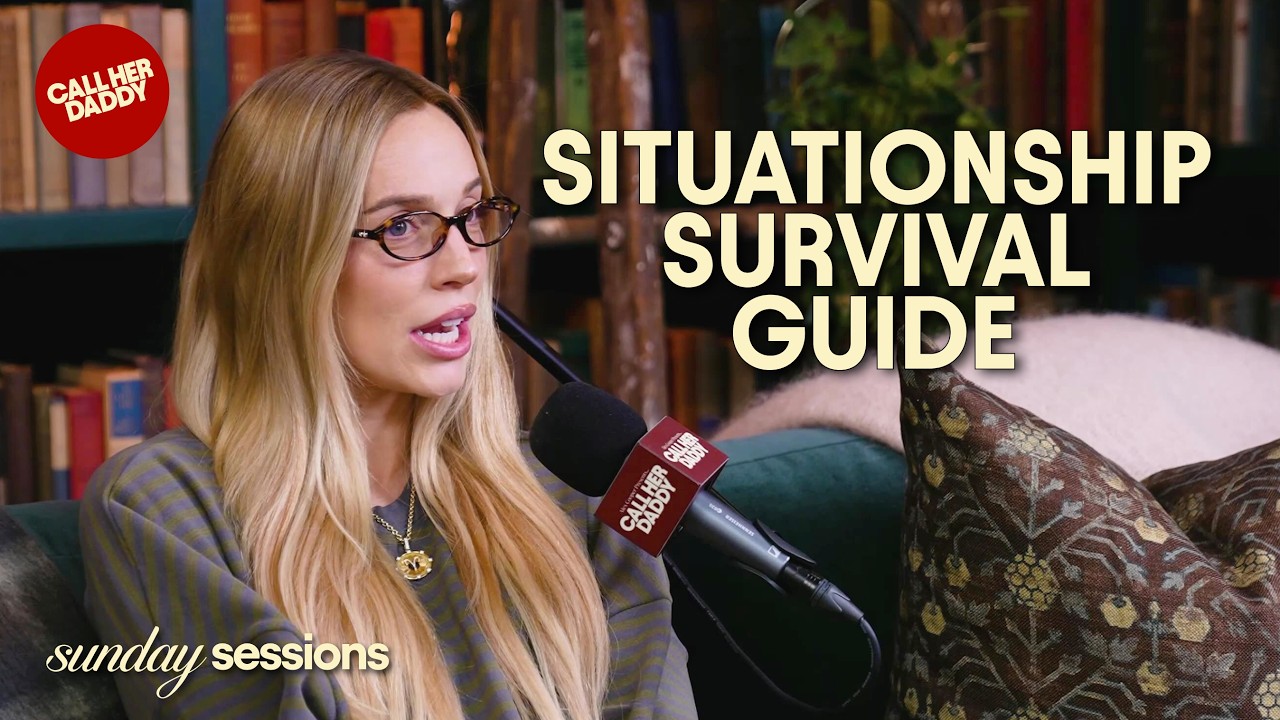
The Situationship Survival Guide
Call Her Daddy
7,925 views • 17 hours ago Save 37 min 7 min read
Video Summary
This video tackles the pervasive issue of "situationships," defined as relationships lacking commitment where one person desires more than the other is willing to offer. The speaker outlines four common types: the classic, the deadline-driven, the intimacy-first-then-avoidant, and the "sleeper" situationship that drags on for years.
The core of the problem, the speaker explains, lies in intermittent reinforcement, a psychological phenomenon akin to gambling that creates an addictive dopamine high. This cycle of unpredictable attention masks the underlying issues and red flags, leading individuals to invest more emotionally while the other party remains non-committal. The video details the progression through phases of initial excitement, desperate attempts to "be chill," intense detective work, and eventual, often anticlimactic, endings. It emphasizes that the pain of a situationship ending stems from mourning the unlived potential and fantasy, rather than the reality of the relationship, and offers advice on how to move forward by focusing on self-worth and recognizing unhealthy patterns.
Short Highlights
- What is a Situationship?
- A relationship lacking commitment where one person wants more than the other.
- Types of Situationships
- Classic: Guy just out of a relationship, hoping for more.
- Deadline: Guy moving away, can't get attached.
- Intimacy-First, Avoidance-Later: Moves fast, then pulls away.
- Sleeper: Lasts years with no commitment.
- The Psychology of Addiction
- Intermittent reinforcement creates a dopamine high, similar to gambling.
- Phases of a Situationship
- Phase 1: Initial excitement and dopamine hits.
- Phase 2: Trying to be chill while desperate for consistency.
- Phase 3: Becoming a detective to understand the dynamic.
- Phase 4: The anticlimactic ending and withdrawal.
- Why Situationships Hurt More Than Breakups
- Mourning unlived potential and fantasy, not the reality.
- Breaking Free
- Acknowledge you're mourning the fantasy, not the person.
- Stop fantasizing and take the person off the pedestal.
- Focus on self-worth and recognize unhealthy patterns.
- Understand that the right person won't require convincing.
Key Details
The Epidemic of Situationships [0:00]
- Situationships are prevalent and becoming more popular.
- The "Call Her Daddy Situationship Detox Plan" is presented to address this issue.
- Many people DM the host asking how to survive a situationship.
"I realize there is an epidemic that we kind of need to address, okay?"
Defining a Situationship [1:36]
- A situationship is built on the idea that one person wants a relationship and the other wants attention without commitment.
- It often involves wondering if the other person will text and questioning the value of brief moments of connection.
- While women can also want casual relationships, honesty with oneself is crucial.
"Because the very foundation of a situationship is built upon the idea that one person wants a relationship and the other wants the attention without the commitment."
Types of Situationships [4:08]
- Case A (Classic): Hooking up with someone who says they don't want anything serious, but you hold out hope.
- Case B (Deadline): The person is moving away soon and cannot get attached.
- Case C (Intimacy in the Front, Avoidance in the Back): Moving very fast initially, then the person becomes avoidant.
- Case D (Sleeper): A situationship that has gone on for years without any progression towards commitment.
"You basically, let's say you start hooking up with a guy who says he doesn't want anything serious."
The Adrenaline High of Starting [8:16]
- Situationships begin with undeniable chemistry and an "adrenaline high."
- Texting becomes frequent and rapid, with casual hangouts and inside jokes forming.
- There's a sense of possibility, but not yet concrete plans for the future.
"And then from there, anytime his name pops up on your phone, your heart just drops and pretty soon you're texting every single day and you're both going back and forth and the speed is lightning."
Intermittent Reinforcement [9:56]
- The inconsistency in attention triggers intermittent reinforcement, similar to the high of slot machines in Vegas.
- The brain releases more dopamine when the unpredictable reward (a text, a kiss) finally arrives.
- This makes one addicted to the highs, masking the fact that the person might be average.
"When you don't know when the next hit is coming, whether it's a kiss or a text, your brain starts chasing after it."
Ignoring Red Flags [11:34]
- The up-and-down nature of situationships feels good, masking the person's flaws and red flags.
- Examples include the person bringing up their ex or never mentioning future plans.
- As comfort grows, the dynamic can suddenly shift, causing anxiety.
"He still brings up his ex. But like, isn't it just so great? Like, he's been in a serious relationship before."
Phase Two: Trying to Be Chill [13:49]
- This phase involves lightly bringing up exclusivity or testing the waters for more consistency.
- When met with "I'm just not ready for something serious," you rationalize it, perhaps recalling stories of slow-burn relationships.
- You tell yourself you're the "cool girl" who doesn't need commitment, lying to yourself as you compromise your wants.
"And when you try to bring this up, you're met with the classic, I really like hanging out with you. I'm just like not ready for something serious."
Escalating Anxiety and Investment [15:41]
- With each passing day and unanswered text, anxiety increases.
- The lack of progress feels like a dagger, especially when you've invested more emotionally than they have.
- You feel more invested while they remain at the same initial stage.
"And that is where we enter good old phase three."
Phase Three: Becoming a Detective [16:54]
- To combat the lack of control and anxiety, you become a "detective," engaging in unhealthy stalking behaviors.
- This involves creating fake accounts to follow their social media and investigate their connections.
- While impressive, this behavior is not healthy and further increases anxiety, making the person the sole focus.
"So the opposite of anxiety is action, right? And so that's what you do to distinguish this all-consuming feeling of complete lack of control."
Phase Four: The Ending [19:07]
- Situationships end in various ways: a text, running into them with someone else, or excuses like focusing on career.
- Ghosting is also a common, painful ending.
- A worst-case scenario is blurting out your feelings after drinking, leading to either ghosting or a dismissive response.
"Maybe you get a text. Maybe, maybe you run into him at a bar with another girl."
The Pain of No Closure [22:14]
- Unlike a regular breakup, a situationship ending lacks closure, making it harder to process.
- There's no formal breakup conversation, leaving you wondering what's wrong with you.
- The pain is often minimized by friends because the relationship "was never real."
"It is so hard to get over a situationship because there is no closure, right?"
Mourning the Fantasy, Not the Person [24:53]
- The intense pain comes from mourning the built-up fantasy and potential, not the actual person.
- You need to stop fantasizing, take the person off the pedestal, and recognize they are not your person if they didn't want you.
- The right person will not require convincing or playing games.
"If a situation ship ends and you feel like you're actually dying inside and you're like, why does this hurt? You're not mourning this person."
The Situationship Detox Plan [29:36]
- Stop making it about him and start making it about you.
- Ask yourself if you want to be with someone who causes anxiety and insecurity.
- Recognize that if they told you they didn't want a relationship, your inability to change their mind is not a failure on your part.
"You have to basically take the spotlight that you are shining on this person and you need to swing it back around to yourself."
Understanding the Dynamic [31:53]
- Men can benefit from situationships by hiding flaws and attracting women who fill in the blanks with fantasies.
- If you are still fantasizing, there's no room to move forward or meet new people.
- Letting go is better than hoping they will change their mind; sometimes, losing you makes them realize their mistake.
"Situations work really well for men because they get to kind of hide all their flaws and then we just like fill in all the blanks with all the roses and the fun stuff."
Moving On and Self-Awareness [34:44]
- Be easy on yourself but recognize patterns of entering situationships.
- It's dangerous if you consistently put yourself in these situations.
- Therapy can help unlearn the addiction to the chase and the high.
"Be easy on yourself, but also just recognize the patterns."