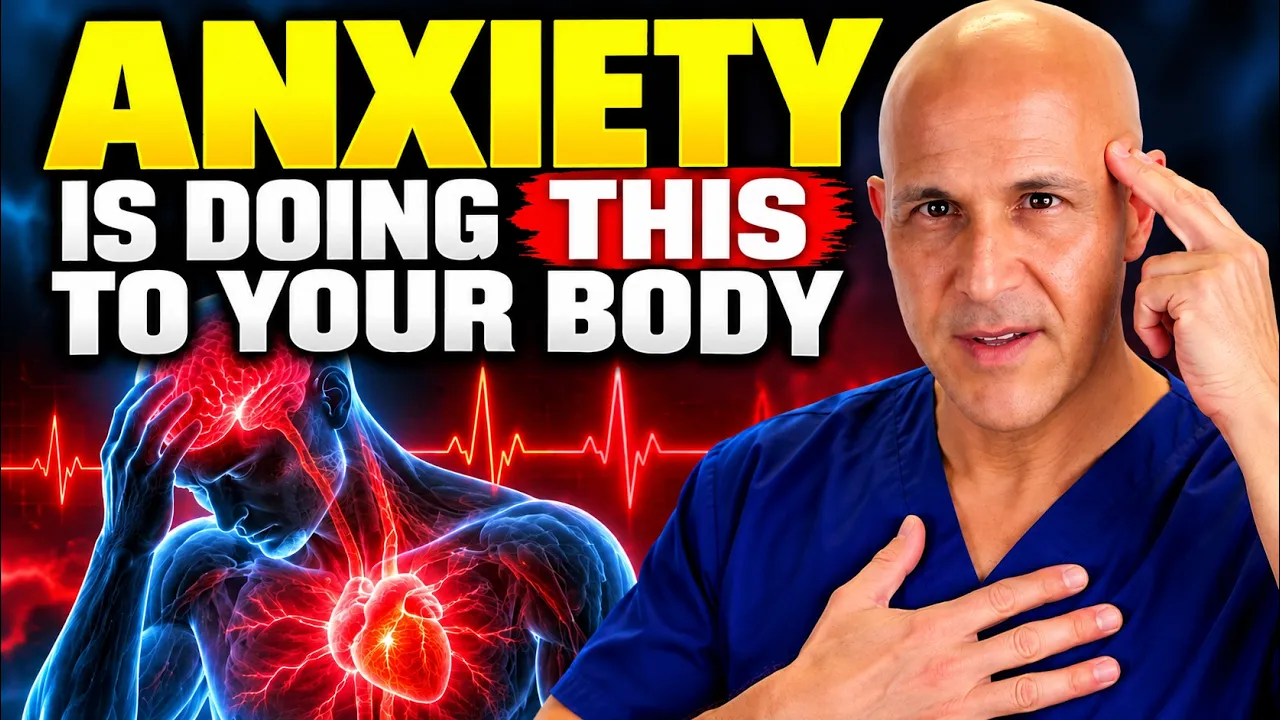
Anxiety Is Doing THIS to Your Body — Here’s How to Stop It | Dr. Mandell
motivationaldoc
50,913 views • 2 days ago Save 3 min 3 min read
Video Summary
Anxiety doesn't feel like stress; it feels like dying. When anxiety surges, your nervous system triggers a fight-or-flight response, flooding your body with adrenaline and cortisol. Blood vessels constrict, redirecting blood flow away from extremities and digestion towards the brain, causing dizziness, lightheadedness, and a feeling of unreality. Your heart pounds, chest tightens, and your brain frantically searches for the source of danger, creating an anxiety loop.
This intense physical reaction, though terrifying, is not dangerous and cannot kill you. Dr. Alan Mandel explains that these sensations are an overactive protective mechanism. By guiding your body through simple physical actions—opening your chest, pressing your feet firmly, exhaling longer, and gently turning your head—you can signal safety to your nervous system, reduce stress hormones, and regain control. This approach bypasses the anxious thoughts and directly calms the body's survival response, transforming anxiety from an emergency into a manageable wave.
Short Highlights
- Anxiety sensations mimic dying, not just stress.
- The fight-or-flight response overloads the body with adrenaline and cortisol.
- Physical symptoms include dizziness, heart palpitations, and chest tightness.
- Anxiety cannot kill you; it's an overactive protection mechanism.
- Guiding your body with posture, breath, and movement calms the nervous system.
Key Details
The Terrifying Sensation of Anxiety [0:04]
- Anxiety feels like dying, not just stress, with symptoms like lightheadedness, dissociation, heart pounding, and digestive shutdown.
- The brain interprets these intense physical sensations as immediate danger, asking "What is seriously wrong with me?"
"When anxiety hits hard, it doesn't feel like stress. It feels like you're dying."
The Body's Fight-or-Flight Response [0:48]
- Anxiety triggers the nervous system's full fight-or-flight mode, spiking adrenaline and cortisol.
- Blood vessels constrict, redirecting blood flow from extremities and digestion to the upper body and brain.
- This causes cold, tingly hands, stomach shutdown, rapid shallow breathing, and reduced oxygen delivery to the brain, leading to dizziness and a feeling of unreality.
"When anxiety surges, your nervous system flips into full flight or flight, adrenaline and cortisol spikes instantly..."
Calming the Overstimulated Nervous System [2:28]
- Simple physical actions can signal safety to the nervous system and counteract the stress response.
- Opening the chest by rolling shoulders back, pressing feet firmly into the ground, and taking slow breaths with longer exhales directly lower adrenaline and slow the heart rate.
- Gently turning the head side to side stimulates balance centers, improves blood flow to the brain stem, and reduces dizziness.
"Now press your feet firmly into the ground. Notice the pressure through your heels and toes."
Reclaiming Control from Anxiety [4:15]
- Sensory feedback from the body—posture, breath, pressure, and movement—overrides anxious thoughts and breaks the fear cycle.
- As the body receives signals of safety, stress hormones decrease, blood flow normalizes, and the possibility of sleep returns.
- Understanding that intense sensations are an overactive protection, not a sign of danger, loosens anxiety's grip and restores control.
"The moment you stop fighting the sensations and start guiding your body instead, the threat signal loses its power."