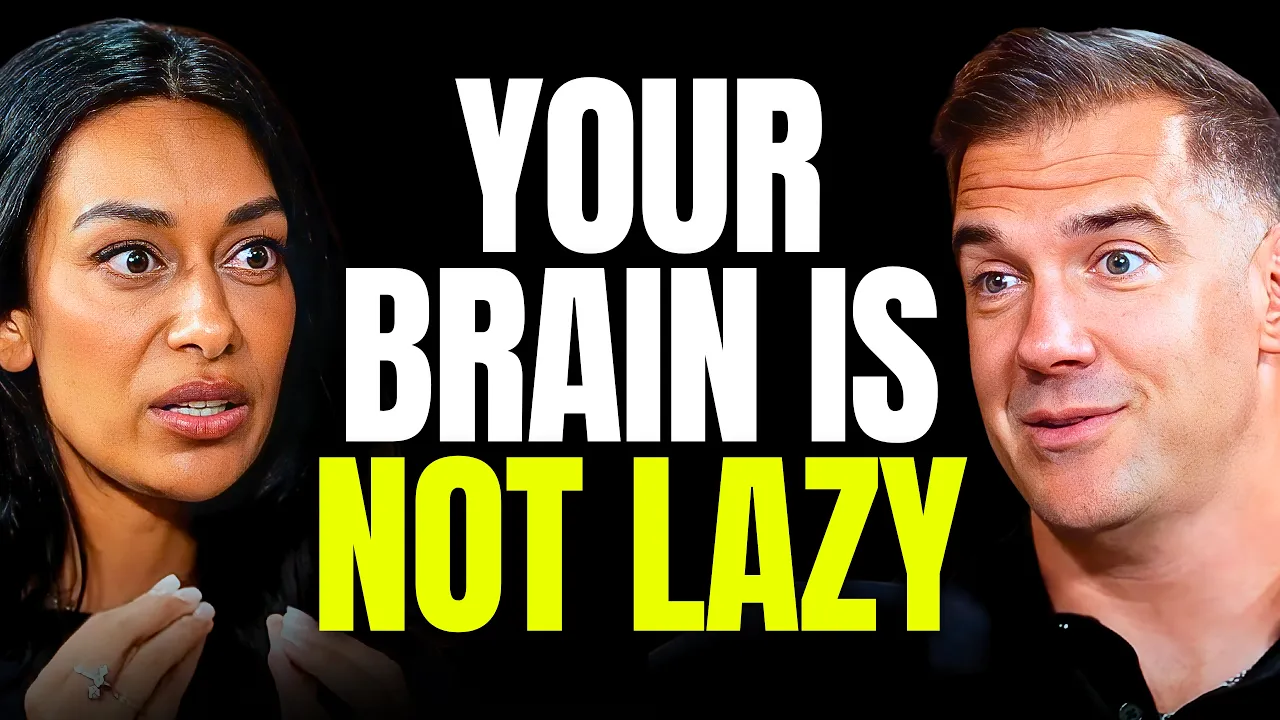
ADHD Doctor: How To Hack Your Brain For Better Focus | Dr. Sasha Hamdani
Lewis Howes
28,394 views • 1 month ago Save 68 min 10 min read
Video Summary
Dr. Sasha Hamdan, a psychiatrist and ADHD specialist, challenges the conventional understanding of ADHD, asserting it's fundamentally a regulation issue rather than solely an attention deficit. She explains that while genetics are the primary cause, external factors like trauma, PTSD, and anxiety can fragment focus, mimicking ADHD symptoms without being the root cause. Dr. Hamdan criticizes the over-reliance on medication as a first-line treatment, advocating for a combined approach of behavioral, lifestyle, and medicinal interventions. She also highlights how the current diagnostic criteria, developed for young males, often fail to accurately identify ADHD in women, leading to misdiagnoses of anxiety or depression and prolonged suffering.
Short Highlights
- ADHD is a Regulation Issue: Dr. Hamdan posits that ADHD is fundamentally about emotional and regulatory difficulties, not just attention deficits.
- Genetics as the Root Cause: While trauma and other factors can mimic ADHD symptoms, genetics are identified as the primary cause.
- Diagnostic Challenges for Women: Current ADHD diagnostic criteria, based on hyperactive young males, often fail to identify symptoms in women, leading to misdiagnosis with anxiety or depression.
- Medication vs. Holistic Treatment: While medication can be life-changing for some, it's not the only solution; behavioral and lifestyle modifications are crucial components of treatment.
- Rejection Sensitive Dysphoria (RSD): This neurological phenomenon causes profound emotional responses to perceived rejection, impacting daily life.
- Emotional Regulation Skills: Learning to manage intense emotions is key to navigating life, even when facing significant challenges like loss.
- Modern Society's Impact: While not causing ADHD, the digital and overwhelming nature of modern life can exacerbate existing symptoms.
Key Details
The Nature of ADHD [00:00:00]
- ADHD is often misunderstood, with many factors like trauma, PTSD, and anxiety fragmenting focus and behavior, but these are not the root cause of ADHD.
- Genetics are identified as the primary root cause of ADHD, not trauma.
"what would you say is typically the root cause of someone having adhd genetics it's not trauma really no"
Understanding ADHD vs. ADD [00:01:49]
- ADD is an outdated term; ADHD now encompasses inattentive, hyperactive, and combined presentations.
- Inattentive presentation involves difficulty initiating/completing tasks, forgetfulness, and disorganization, often seen in daydreamers.
- Hyperactive presentation involves physical and verbal impulsivity and difficulty staying still.
"add and adhd same thing same thing same thing it's just add is an outdated term"
Diagnosing ADHD [00:03:38]
- Diagnosis can involve computer evaluations, therapy, primary care, or psychiatric interviews focusing on longitudinal patterns of focus and impact.
- It's crucial to rule out other conditions that can fragment focus.
"equally important to diagnosing in adhd is diagnosing out everything else that could be fragmenting focus which are a lot of things"
A New Perspective on ADHD [00:04:37]
- Dr. Hamdan dislikes the name "Attention Deficit Hyperactivity Disorder," finding it confusing and incomplete.
- She proposes ADHD is truly a "regulation issue," encompassing attention, motivation, energy, and emotion.
"i think it's truly a regulation issue emotional regulation all i think attention is in there"
Medication as First-Line Treatment [00:05:55]
- Many doctors first prescribe medication for ADHD, sometimes with questionable results.
- The speaker recalls children who seemed to worsen on medication.
"these kids almost seem like they got worse or it was just like it didn't seem like it helped them"
Treatment Approaches for ADHD [00:07:19]
- Effective ADHD treatment involves both behavioral/lifestyle modifications and medication, often in combination.
- Some individuals thrive with behavioral management alone.
"the two ways you can treat adhd which is behavioral and like lifestyle modification and medication"
The Role of Genetics in ADHD [00:08:13]
- Dr. Hamdan reiterates that ADHD is primarily genetic, not caused by adverse childhood experiences.
- She addresses the concern that a "trauma hypothesis" might cause parents to hesitate in seeking treatment for their children.
"primarily it's genetic and i'll tell you my beef with this trauma perspective of it"
Distinguishing ADHD from Other Conditions [00:10:39]
- Practitioners differentiate ADHD by looking at consistent patterns from early childhood, distinguishing them from trauma responses or metabolic issues.
- Context, timing of symptoms, and longitudinal patterns are key.
"is this a consistent pattern from birth this was going on with ups and downs"
Flaws in Diagnostic Criteria [00:11:51]
- The diagnostic criteria for ADHD were initially based on hyperactive young males, failing to capture diverse presentations.
- Europe amended its criteria in 2019 to include emotional regulation, but the US has not.
"that initial data was done on hyperactive young males so right now we have this diagnostic criteria that's not encapsulating so many other presentations"
Misdiagnosis of Anxiety and Depression [00:13:09]
- Emotional dysregulation associated with ADHD is often misdiagnosed as anxiety or depression, leading to ineffective treatments.
- Patients may be put on multiple antidepressants without addressing the underlying ADHD.
"doctors are like okay well it's anxiety it's depression and they're treated with antidepressant after antidepressant"
The Impact of Misdiagnosis [00:14:29]
- Misdiagnosing and prescribing incorrect medication can be objectively harmful, altering brain function negatively.
- This perpetuates a cycle of ineffective treatment and patient suffering.
"if it's the wrong diagnosis it is objectively harming them because you're giving a medica a medication that is changing your brain functioning"
Delayed Diagnosis in Women [00:15:04]
- Women are often diagnosed with ADHD much later in life (around age 35), frequently after seeking help for their children.
- Hormonal fluctuations, societal expectations, and masking symptoms contribute to delayed diagnosis.
"the average age of diagnosis for males six to eight for females 35 of of adhd or anxiety and depression"
Differentiating Emotional States [00:17:24]
- True anxiety and depression are distinguished from situational stress by patterns over a prolonged period, affecting sleep, appetite, mood, and concentration.
- Situational sadness after a breakup may resolve, whereas clinical depression persists.
"you're looking over a period of time and you're looking like is this person and dealing with like musculoskeletal stuff"
Rejection Sensitive Dysphoria (RSD) [00:19:12]
- RSD is a profound emotional response to real or perceived rejection, criticism, or disappointment.
- It's a neurological phenomenon, not just being "too sensitive."
"rejection sensitive dysphoria and that is a profound emotional response to real or perceived rejection criticism or disappointing someone"
Navigating Intense Emotions [00:22:08]
- Feeling emotions deeply and intensely is neurological, not a flaw, and can be managed with learned skills.
- The book "Too Sensitive" offers tools for navigating these intense emotions without letting them control one's life.
"it is just you're wired like there are some people that process emotion more intensely"
The Amygdala and Frontal Lobe Connection [00:27:33]
- In emotionally sensitive individuals, the amygdala (threat detector) is hyper-responsive, releasing alarm chemicals.
- The frontal lobe (logic and decision-making) is under-responsive, weakening the connection and allowing emotions to override logic.
"the amygdala hyper responsive so now it's like taking emotional data processing it and it's dumping alarm chemicals"
Personal Journey and Diagnosis [00:30:07]
- Dr. Hamdan was diagnosed with ADHD in fourth grade but wasn't told it was medication, believing it was a vitamin.
- She felt betrayed upon learning the truth in medical school when her symptoms resurfaced.
"i was like did i have a stroke what is wrong with me like why are things stroke yeah i just felt like in medical school no i didn't actually"
Overcoming Challenges and Finding Purpose [00:35:04]
- A pivotal moment occurred after her father's death, where Dr. Hamdan realized the direct impact of emotional status on functional capacity.
- This realization spurred her to write about emotional regulation and healing traumatic memories.
"that was the first time lewis that i was like my emotional status directly impacts my functional status"
Societal Pressures and Modern Life [00:43:29]
- Modern society, with its digital overload and fast pace, exacerbates ADHD symptoms and contributes to anxiety and depression.
- Screens can fragment focus, especially in early childhood development.
"does this increasingly like digital overwhelming world does that cause adhd no does it worsen adhd for sure"
Parental Guidance on Screen Time [00:46:08]
- Moderation is key regarding screen time for children; it's not inherently harmful but can fragment focus.
- Integrated play, movement, and screen-free interactions are encouraged for healthy development.
"i don't think like if you have an excessive amount of like guilt and shame about stuff like that i don't like it's all about moderation to me"
Emotional Tools for Overwhelm [00:49:01]
- For those feeling overwhelmed but not diagnosed, tools like deep breathing and movement can help regulate the nervous system.
- Understanding one's unique presentation of overwhelm (e.g., withdrawal vs. pacing) is crucial for applying the right tool.
"i think one of the best things is the way we talk about emotional sensitivity and dysregulation and overwhelm is also understanding that it can present very differently"
The Impact of Rejection [00:55:58]
- The amygdala's hyper-responsiveness to perceived threats triggers a fight-or-flight response, overwhelming the under-responsive frontal lobe.
- Without skills to manage this cascade, individuals are at the mercy of their emotional reactions.
"your frontal lobe is supposed to help you do checks and balances and be like this actually isn't totally accurate"
Navigating Rejection: Helpful vs. Harmful Advice [00:58:09]
- Harmful advice includes telling someone with RSD to "just calm down."
- Supportive responses involve curiosity, presence, and allowing the individual to regulate their nervous system, like moving closer or asking "what happened?"
"just calm down it's like oh my god thank you so much i never thought of that"
Overcoming Fear of Rejection in Relationships [01:04:14]
- Fear of rejection can lead to compensation behaviors like perfectionism or people-pleasing, or avoidance of pursuing goals.
- Dr. Hamdan shares her experience of leaving relationships due to fear of conflict and rejection, eventually finding a partner who helped her navigate these fears.
"i feel like in my 20s you know i i tell my husband like i've never been broken up with because i would leave"
Cultural Expectations vs. Personal Choice [01:10:51]
- Cultural expectations, like arranged marriages, can provide a framework for those afraid of rejection, but overcoming this fear is part of human experience.
- Dr. Hamdan's relationship faced challenges due to cultural differences but ultimately succeeded through love and understanding.
"the cultural kind of expectation of an arranged marriage really good for someone who's scared of rejection"
Three Truths for the World [01:18:11]
-
- Don't be scared of your emotions; lean into them and process them.
-
- Time with loved ones is precious; cultivate and cherish these relationships.
-
- Lead with kindness, even when the world expects otherwise.
"don't be scared of your emotions like lean into them"
- Lead with kindness, even when the world expects otherwise.
Defining Greatness [01:21:44]
- Greatness lies in understanding and working with one's brain to unlock its potential.
"greatness is truly understanding and being able to work with your brain"
The Drive Behind Motivation [01:23:09]
- Motivation is shaped by identity; having motivation to stay home or play video games is still motivation.
"you have a ton of motivation to stay home you have a ton of motivation to play video games"