Is criticism of Spain on border control legitimate or politics? | Inside Story
Al Jazeera English
55,624 views • 1 month ago Save 23 min 4 min read
Video Summary
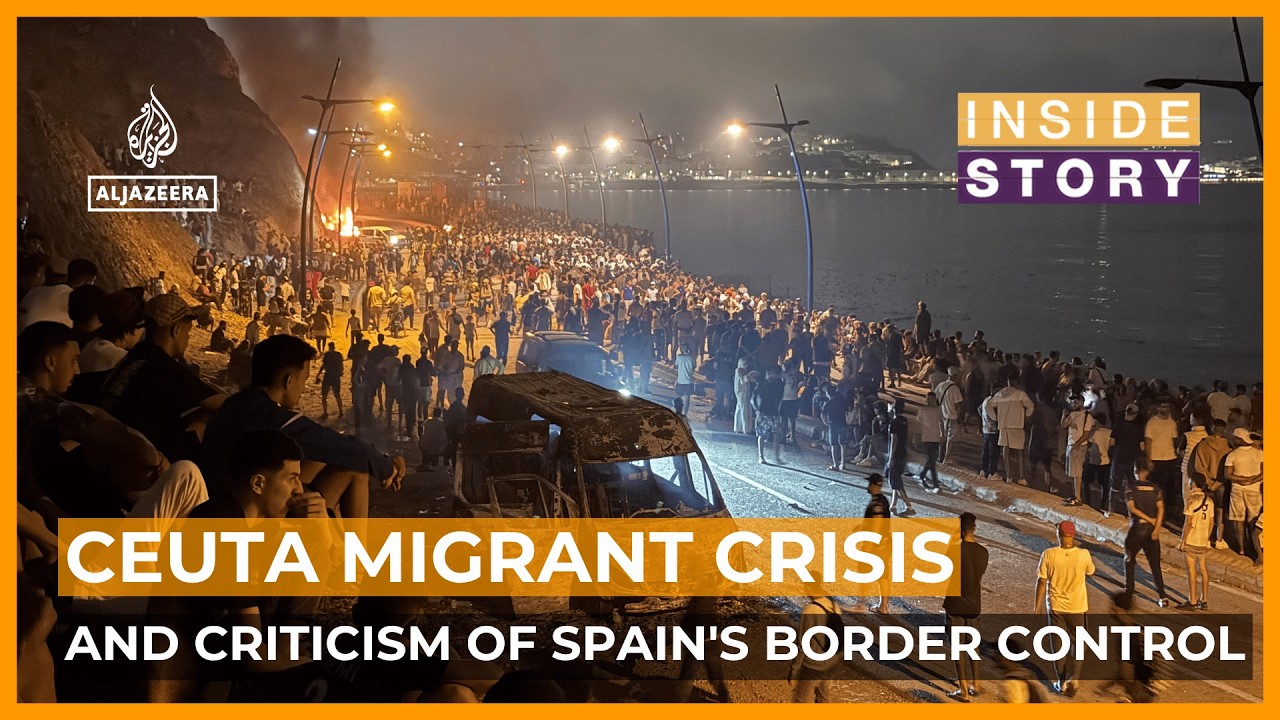
Tens of thousands of migrants surged into Spain's North African territory of Ceuta from Morocco, overwhelming border fences and sparking a political firestorm across Europe and the United States. While Spain's government attributes the influx to trafficking networks and misinformation, claiming most migrants have since returned, the incident has intensified debates on border management and immigration policies.
European leaders, including Italy's prime minister, have condemned the event, with some temporarily suspending border-free travel and calling it a threat to security. U.S. President Donald Trump even linked the surge to American midterm elections. Experts suggest the event highlights a deep-seated desperation among migrants and a complex interplay of geopolitics, misinformation, and national politics, particularly as Spain grapples with its relatively migrant-friendly stance amidst a more hostile European climate.
Short Highlights
- Tens of thousands of migrants crossed into Spain's North African territory of Ceuta from Morocco.
- Spain's prime minister blames trafficking networks and misinformation for the surge.
- Most migrants have since returned to Morocco, but dozens died during the crossing.
- European leaders and U.S. President Trump have reacted strongly, linking the event to border security and politics.
Key Details
The Ceuta Influx [0:18]
- Tens of thousands of migrants streamed into the Spanish Territory of Ceuta from Morocco.
- They bypassed border fences by swimming or pushing through wire.
- Spain's prime minister blamed trafficking networks for spreading misleading online information.
"What we're doing is speeding up everything related to the processing of cases and the repatriation of migrants who have entered irregularly, mainly since yesterday."
Migrant Motivations and Dangers [1:14]
- Many migrants spoke of seeking better opportunities and escaping low wages and lack of prospects in their home countries.
- Dozens of people died attempting to reach Ceuta.
- One migrant described the scene as heartbreaking, witnessing families with infants.
"I spent maybe 14 years for studying, but nothing. Just sitting in your home or working for 12 hours for a less salary. So that's why I come in to here."
European and US Reactions [1:45]
- Italy's prime minister announced the temporary suspension of free movement with Spain, calling it a threat to European border security.
- The head of the European Commission deemed the situation unacceptable.
- U.S. President Donald Trump criticized Democrats, linking the surge to the U.S. midterm elections.
"We have the safest border in the world. If we're not in office, our country will be invaded at levels that made Spain look small-time."
Spain's Migration Policy Context [2:14]
- Spain's socialist government has a different approach to migration, previously granting residency and work permits to hundreds of thousands of undocumented migrants.
- The incident highlights the desperation of migrants seeking a better life.
"For the thousands of people risking their lives to make it to Europe, it's not about politics. Many say they just want the opportunity to make a better life for themselves and their families."
Ceuta's Unique Geography and Misinformation [3:25]
- Ceuta is a Spanish territory separated from continental Europe by the Mediterranean Sea and bordered by Morocco.
- Travel between Ceuta and the Schengen area requires passport or ID checks.
- Migrants were reportedly misled by information suggesting they could easily enter continental Europe.
"So, although, obviously, Theuta is Spain and it's part of the Spanish land, it's separated from the continental Europe. And I think that this is extremely important."
Geopolitics and Border Control [5:07]
- The incident is linked to geopolitics and challenges to Spanish and EU authority.
- Morocco's initial stance was ambiguous, but cooperation on border control and pushbacks followed.
- The situation is complex, involving migration, Mediterranean geopolitics, and the strategic importance of Ceuta and Melilla.
"And I think that there is a lot of, I don't know how to put it in a very accessible way, challenging Spain and challenging the EU around a number of issues."
Political Impressions vs. Substance [7:00]
- European politicians' reactions are driven by politics and public perception rather than the actual threat.
- Spain generally has good border control, but the temporary loss of control created a powerful image.
- Politicians feel pressured to appear strong on border security to appease electorates.
"But what people see is a temporary loss of control. And that makes the position of center politicians in Europe, all over Europe, more difficult."
Immigration as a Political Tool [9:11]
- Immigration is often used as a political cudgel, easier than solving complex issues.
- The perception of disorder at borders fuels public reaction.
- The goal should be a humane, managed border that respects humanitarian needs and economic benefits.
"I think that too often it's become that. I think, look, people don't like images of disorder. And I think that's what people are reacting to in Spain."