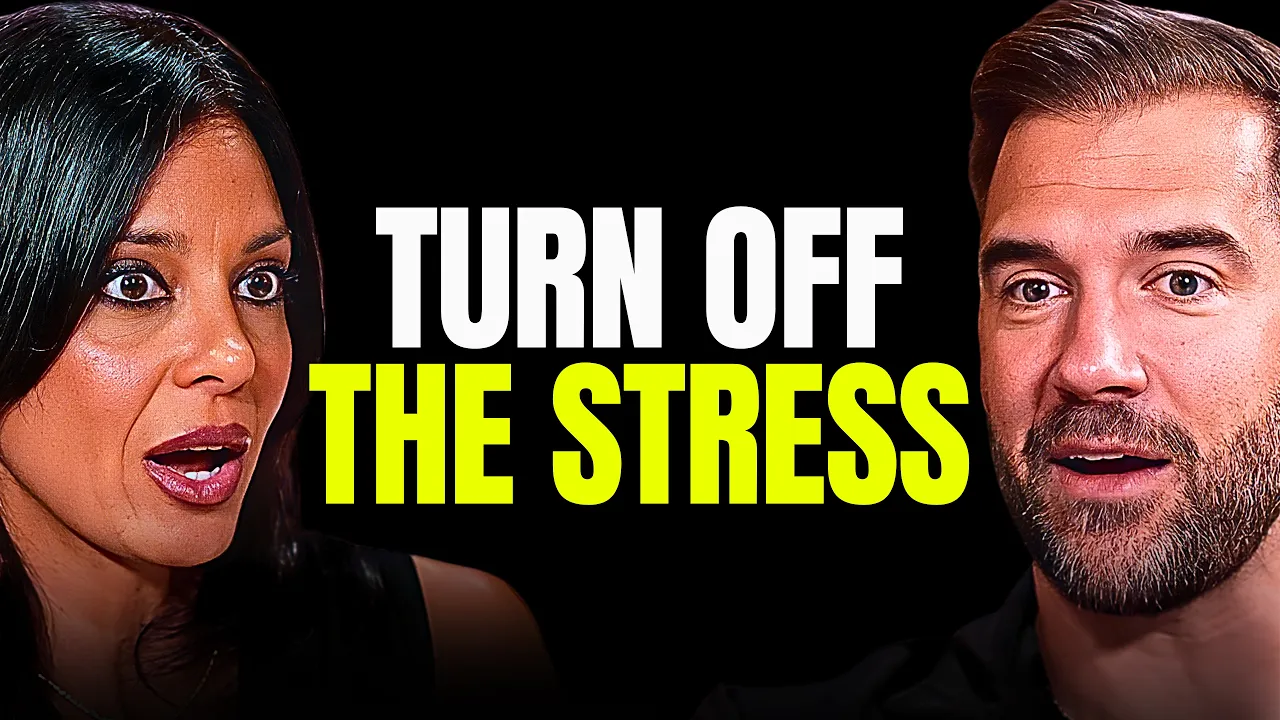
How To REWIRE Your Mind To Stop Stressing & Handle Anything | Dr. Tara Narula
Lewis Howes
487 views • 21 hours ago Save 63 min 15 min read
Video Summary
Stress is the nation's biggest health threat, impacting cardiovascular health and overall well-being. Dr. Tara Narula, a cardiologist, highlights how the constant activation of the body's stress response, designed for survival, leads to chronic illness and burnout. She observes that patients, even those with heart conditions, often present with overwhelming stress, anxiety, and depression, indicating a critical gap in medical practice that neglects mental and psychological health.
Narula explains the intricate mind-body connection, where stress can directly cause physical symptoms like chest pain and heart issues, including stress-induced cardiomyopathy. She advocates for integrating mental health support, like therapy, into cardiology practice, emphasizing that addressing psychological well-being is crucial for physical healing and disease prevention. The conversation also touches on resilience, the impact of modern stressors like social media, and the importance of connection, purpose, and acceptance in navigating life's challenges.
Short Highlights
- Chronic stress is the primary health threat in the U.S., leading to burnout and illness.
- The body's stress response, meant for survival, is constantly activated in modern life, causing damage.
- Patients often report stress, anxiety, and depression as their primary concerns, even when seeking cardiac care.
- There's a significant disconnect between mental and physical healthcare, with a need for integrated approaches.
- Stress can directly cause heart problems, including stress-induced cardiomyopathy (broken heart syndrome).
- Resilience, the ability to adapt to stress, is crucial for both physical and mental well-being.
- Practicing acceptance, flexible thinking, and finding purpose are key to building resilience.
Related Video Summary
Key Details
The Pervasive Threat of Stress [00:00]
- Stress is identified as the nation's most significant health threat, yet it remains inadequately addressed.
- The body's natural stress response, designed for survival in acute situations, is chronically activated in modern life, leading to detrimental health outcomes.
- Imagine people walking around with their stress response dialed to the maximum every day, which is incredibly damaging.
"Stress is really our biggest health threat in this country and one that we just have not addressed enough."
The Three Phases of Stress [00:28]
- The original father of stress research, Hans Selye, described three phases of stress response: alarm, resistance, and exhaustion.
- The alarm phase is the initial shock of a stressful event.
- The resistance phase involves actively coping with the stressor.
- The exhaustion phase occurs when the body can no longer fight, leading to burnout and chronic illness.
"The first was an alarm phase. Oh my gosh, what's happening? The second is a state of sort of pushing against it or resisting the stress. And the last is exhaustion."
Patients' Primary Concerns: Stress Over Symptoms [01:00]
- As a cardiologist, Dr. Narula observes that while patients come for cardiovascular concerns, their top concerns are often stress, depression, anxiety, and feeling overwhelmed.
- Her office, intended for heart health, frequently becomes a space for patients to unload emotional burdens.
- The act of simply listening and providing a safe space for vulnerability is profoundly meaningful for patients and the doctor.
"The answer I would get almost universally was, I am stressed. I am depressed. I am anxious. I'm just overwhelmed by everything that's happening in my life."
The Mind-Body Connection in Cardiology [01:58]
- Dr. Narula emphasizes the intricate link between mental and physical health, often referred to as the mind-body connection.
- Stress and anxiety can directly cause physical symptoms like chest pain and heart disease, and vice versa.
- Fixing mental well-being is essential for addressing physical health issues.
"It really is this bridge. And I think that's what's really important for people to recognize is so often we say there is a mind body connection."
The Impact of Unaddressed Mental Health [02:30]
- Patients suffering from depression, anxiety, or overwhelming life stressors may not be able to adhere to medical treatments or attend appointments.
- The current medical system is not adequately equipped to tailor care to patients' mental well-being.
- Providing a safe space for patients to talk and validating their feelings can significantly impact their health.
"They can't take care of their own needs because they're drowning under the weight of everything else that's happening in our, in their life."
The Therapeutic Power of Conversation [03:00]
- Even a brief conversation can lower blood pressure in patients who feel heard and validated.
- Dr. Narula encourages therapy for patients, normalizing it as a tool for managing stress and improving overall well-being.
- Addressing mental well-being is a prerequisite for patients to engage with and benefit from cardiovascular treatments.
"And then the third is I really focus on telling people to seek therapy."
The Challenge of Accessing Mental Healthcare [03:45]
- While Dr. Narula can refer patients to therapists, a critical shortage of mental health practitioners leads to long waiting lists and high costs.
- This lack of access frustrates efforts to address the mental health component of cardiovascular disease prevention and healing.
- Stress and mental well-being are significant risk factors for heart attacks and strokes, underscoring the need for accessible mental healthcare.
"The problem is, as you know, we have a crisis in this country. We don't have enough mental health practitioners."
Stress-Induced Heart Attacks: A Real Entity [04:30]
- Stress can directly cause heart attacks, even in physically fit individuals, through a phenomenon called Takotsubo cardiomyopathy.
- This condition, often called "broken heart syndrome," involves a surge of stress hormones that stun the heart muscle.
- While predominantly seen in older women, it can occur from both negative and positive extreme stress.
"So for example, there is something called a stress-induced heart attack, a real entity in cardiology that not many people know about."
The Cumulative Effect of Stress [05:30]
- When combined with other cardiovascular risk factors, stress can be the tipping point that leads to a heart attack or stroke.
- Even on its own, chronic stress can be a direct cause of serious cardiac events.
- Learning to manage and turn off the stress response is vital for survival and health.
"Absolutely. That is the thing that it's hard to come back from if you pile that on top of anything else as well."
Understanding the Stress Response [06:00]
- The stress response is a biological survival mechanism that prepares the body for 'fight or flight' by increasing heart rate and blood pressure, while shutting down non-essential functions.
- In modern life, this response is frequently triggered by everyday stressors, leading to chronic activation.
- Hans Selye's research highlights that it's not the stress itself, but our response to it, that is damaging.
"The problem is that in our lives here at Los Angeles and my daily life in New York, people are constantly turning on the stress response chronically day after day, hour after hour for every single insult."
The Cycle of Burnout [06:50]
- Chronic stress leads to a cycle of alarm, resistance, and eventual exhaustion, resulting in burnout.
- Burnout is now prevalent across all fields, including medicine, and impacts everyday lives.
- Living in a state of burnout means constantly trying to survive emotionally.
"And that's the part where we see people get chronically sick from chronic stress."
Integrating Psychology into Medical Training [07:30]
- Medical training typically lacks education on navigating emotions and integrating psychological care.
- Dr. Narula advocates for medical institutions to incorporate psychology into clinical practice and training programs.
- Teaching patients about the stress response and resilience skills is essential for holistic care.
"I hope that this ignites a fire under every single medical institution and hospital and, you know, training program to say, we need to do a better job integrating psychology into clinical medicine."
The Power of Resilience [08:15]
- Resilience is the ability to transform a stress response into a resilient one, allowing individuals to thrive despite challenges.
- Dr. Narula's book focuses on building resilience as a critical skill for navigating life's adversities.
- Trauma and challenges elicit the stress response, making a resilient response necessary for recovery and growth.
"But the whole second part, and the part that really is where we need to be investing is, how do we actually help people dial down the stress response and know that they can survive whatever life throws their way."
Personal Resilience: Overcoming Adversity [09:00]
- Dr. Narula shares her personal experience of losing vision in one eye at age 22, which was a turning point in understanding resilience.
- The fear and uncertainty surrounding her diagnosis were crippling, leading her to interpret everyday occurrences as confirmation of her worst fears.
- The Serenity Prayer and the story of journalist Richard Cohen, who lived a full life despite multiple sclerosis and cancer, provided her with strength and a model for resilience.
"And that was really the turning point for me. I think we all have that moment where I thought I was like spiraling really."
The Trauma of a Medical Diagnosis [10:00]
- Receiving a serious medical diagnosis, like heart disease, can be a traumatic event that turns a person's world upside down.
- Patients often experience fear and paralysis, questioning their mortality and future.
- Medical professionals need better training in delivering bad news compassionately, recognizing its impact.
"And it's a trauma. And I recognize that no one calls a medical diagnosis, a form of trauma. Nobody talks about that, but we should."
Reinventing Oneself After Trauma [10:45]
- Dr. Narula advises patients that they may never be their "old self" after a life-altering diagnosis, but they can become something new and beautiful.
- This involves accepting the change, embracing flexibility, and reinventing oneself to create a life of joy, meaning, and purpose.
- The ability to adapt and redefine one's life path is key to thriving after trauma.
"But you can be something that is totally different and totally new and totally beautiful where you can have a life where you can thrive."
The Victim Identity vs. An Identity of Hope [11:30]
- Holding onto a "victim identity" after a traumatic diagnosis makes overcoming challenges significantly harder.
- Conversely, individuals who adopt an identity of inspiration, hope, and possibility often turn their lives around.
- Dr. Narula shares stories of patients who transformed their challenging circumstances into opportunities for growth and helping others.
"And so it just shows you that no matter what happens to you, no matter how difficult it is, you can still be not only an agent of change for other people, but you can have fine meaning for yourself."
The Power of Social Connection and Spirituality [12:30]
- Acceptance, flexible thinking, and finding purpose are crucial tools for resilience.
- Social connection, faith, and spirituality play a vital role in healing and coping with stress.
- Prayer and spiritual practices can help dial down the stress response, promoting a state of calm.
"And I've had so many patients tell me that what pulled them through was their faith. Really? Was their faith."
Modern Stressors: Social Media and News [13:30]
- Many patients report increased stress due to social media, constant news consumption, and political polarization.
- Fear-based news and the curated realities of social media contribute to anxiety and feelings of inadequacy.
- Limiting exposure to negative news and social media can be beneficial for mental well-being.
"Over the last 10 years, have you seen people become more stressed because of social media, their phones, AI or the news and politics? That's what I hear all the time."
Raising Resilient Children in a Digital Age [14:15]
- Parents are advised to be strict with social media use and encourage children to develop resilience without relying on devices.
- The constant dopamine hits from screens can alter brain development and make the real world seem unappealing.
- Teaching children to be bored, handle challenges, and be authentically themselves is crucial.
"So we want them to be resilient. We want them to be able to be bored and deal with challenge without relying on a device to get them through."
The Impact of Screens on Children's Brains [15:15]
- Excessive screen time can negatively impact children's developing brains, altering neural pathways and attention spans.
- The quick dopamine hits from screens can lead to an inability to focus on less stimulating, real-world activities.
- This creates unseen stress in children and can hinder their ability to function in the real world.
"It's totally changing the wiring and the firing and the way the brain is functioning."
Parental Stress and Empowering Children [15:45]
- Parenting brings a unique level of stress due to the constant worry for a child's well-being and lack of full control.
- Arming children with tools of resilience is a key strategy for parents, as they cannot control or prevent all future challenges.
- Providing a roadmap for navigating life's difficulties empowers children and can reduce parental stress.
"And I think as a parent, you relinquish some of that control over all of the inevitable things that are going to happen to your child that will cause you stress."
Three Pillars of Resilience for Children [16:30]
- Dr. Narula identifies three key tools for raising resilient children: acceptance, flexible thinking, and purpose.
- Acceptance involves understanding that adversity is universal and must be acknowledged.
- Flexible thinking, or "moving goalposts," allows individuals to adapt and create new paths when faced with setbacks.
"The first tool, which is acceptance. And one of the researchers in psychology that I interviewed in the book and for a CBS news story, I'm Dr. Lucy Hone."
Finding Purpose and Meaning [17:15]
- Having a purpose in life acts as a "lighthouse," pulling individuals forward during dark times.
- Tragedy can sometimes become a catalyst for finding a new purpose, often by helping others who have faced similar challenges.
- This sense of purpose provides meaning and drives individuals to continue despite adversity.
"I call it the lighthouse. It is what pulls you forward from your darkest times and moments when you're wondering, how can I go forward?"
The Power of Social Connection and Daily Practice [17:45]
- Real social connection, not online interaction, is a powerful tool for healing and resilience.
- Engaging in shared activities, spending time with loved ones, and even brief positive interactions with strangers can significantly improve well-being.
- Prioritizing relationships is more important for happiness than money or success, as shown by long-term studies.
"So I think really paying attention to our world and who we have in it and how we can build connections."
Financial Stability vs. Emotional Well-being [18:30]
- Financial stress is a significant burden, but financial stability does not guarantee happiness.
- Lack of love, unfulfilling jobs, or other life stressors can lead to unhappiness even with financial security.
- Slowing down the pace of life, as seen in retirement or moving to less urban environments, can significantly reduce stress levels.
"On the other hand, I think a lot of people have financial stability, but they don't have love in their life, or they don't have a job they love."
The Impact of Cardiovascular Disease [19:15]
- Cardiovascular disease is the leading cause of death for both men and women, killing more women than all cancers combined.
- It is often a silent process until a critical event like a heart attack or stroke occurs.
- Prevention through managing risk factors like stress, diet, and lifestyle is crucial.
"Cardiovascular disease. Is it more for, is a higher percentage of men or higher percentage of women or is it the same? Leading cause of death for both."
"Broken Heart Syndrome" and Its Causes [19:45]
- Stress-induced cardiomyopathy, often called "broken heart syndrome," can lead to a heart attack, sometimes fatally.
- This occurs due to a massive surge of stress hormones, like epinephrine and cortisol, released from the brain.
- Learning resilience strategies before a crisis is essential for managing such events.
"The stress-induced heart attack I told you about is often called broken heart syndrome. Really? Yes."
The Physical Manifestations of Emotional Pain [20:30]
- Emotional pain and stress can manifest as physical symptoms like chest pain, tightness, and pressure, even without underlying heart disease.
- Microvascular dysfunction and vasospasm in the heart's blood vessels can occur due to stress.
- The power of mental release and therapy can alleviate these physical symptoms by addressing the underlying emotional distress.
"So I have a lot of patients where we'll do a scan or imaging of their heart because we think it could be disease and it's not."
The Role of Therapy and Interpretation [21:15]
- How individuals interpret life events and their responses to stress significantly impact their physical and emotional well-being.
- Therapy can help individuals change their responses to feelings, behaviors, and life events, leading to improved quality of life.
- Palliative care principles, focusing on finding meaning and enjoying life even amidst suffering, highlight the importance of mental and emotional resilience.
"So a lot of this pain, I feel like it comes from how we interpret life's events, how we interpret what is happening or what might happen or won't happen."
Three Truths for the World [21:45]
- Dr. Narula's three truths for the world are: 1) Love is paramount – loving oneself and others. 2) Find and pursue passion and purpose in life for fulfillment. 3) Practice gratitude intentionally to appreciate life's positive aspects.
- She emphasizes that even small conversations can have a profound impact on others, and everyone has the power to be a healer.
"One would be love is the most important thing. I think that we are on this planet to love ourselves, learn to love ourselves and learn how to love others."
Defining Greatness [22:30]
- Greatness is defined as being authentically oneself, accepting flaws and imperfections, and unconditionally loving others.
- It also means being a light or a healer for others, even if it's just for one person.
"I think that greatness is being authentically who you are and loving yourself for your flaws, your perfections, your imperfections, and same with the people in your life."