Don’t Put That Toothbrush Back in Your Mouth Until You See This | Dr. Mandell
motivationaldoc
52,495 views • 1 month ago Save 5 min 3 min read
Video Summary
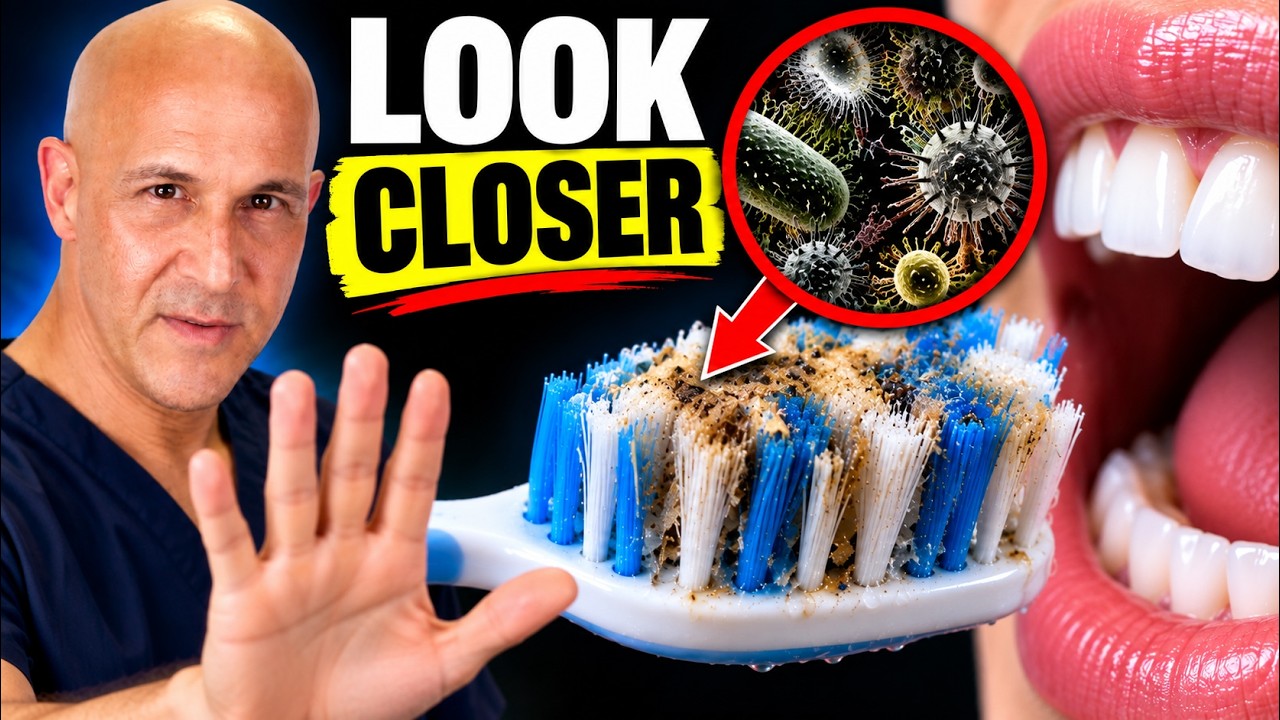
Your toothbrush may be a breeding ground for bacteria, harboring microorganisms like Streptococcus, Staphylococcus, and even E. coli. While your mouth naturally hosts various bacteria, improper storage—such as keeping a wet brush in a closed container or near a flushing toilet—can significantly increase the risk of contamination.
Maintaining oral hygiene is not about sterilization, but about managing moisture and physical contact. By ensuring your toothbrush dries thoroughly in an upright position, keeping it away from potential aerosolized particles, and replacing it every three months, you can prevent your cleaning tool from becoming a source of unnecessary germs.
Short Highlights
- Avoid covering wet toothbrushes with plastic caps, as this traps moisture and promotes bacterial growth.
- Store toothbrushes upright and separated from others to allow for thorough air circulation.
- Keep your toothbrush away from the toilet to avoid potential contamination from aerosolized particles during flushing.
- Clean your toothbrush holder regularly to prevent the buildup of residue, moisture, and debris.
- Replace your toothbrush every three months or sooner if the bristles become frayed or bent.
- Wash your hands before brushing to prevent transferring contaminants from your fingers to the bristles.
Key Details
The Hidden Dangers of Your Toothbrush [0:00]
- Toothbrushes naturally collect saliva, food particles, and bacteria during every use.
- Research has identified various microorganisms on used brushes, including Streptococcus, Staphylococcus, and in some cases, E. coli and Candida.
The thing you use every single day to clean your teeth may be carrying more than toothpaste and water between these bristles.
The Moisture Problem [1:15]
- Bacteria thrive in damp environments, making proper drying essential for hygiene.
- Covering a wet toothbrush with a cap or placing it in a closed container creates an ideal environment for microorganisms to persist.
You may be actually creating a better environment for those microorganisms to continue to persist.
Bathroom Contamination Risks [2:15]
- Flushing a toilet can release invisible aerosols that settle on nearby surfaces, including your toothbrush.
- Always close the toilet lid before flushing and store brushes away from the toilet and wet countertops.
- Your hands are a primary source of contamination; wash them thoroughly before handling your toothbrush.
If your toilet has a lid, close it before flushing. Keep your toothbrush a reasonable distance from the toilet.
Maintenance and Replacement [4:15]
- Daily sterilization with chemicals or boiling water is unnecessary and can damage the bristles.
- Replace your brush every three months or sooner if bristles are worn, as frayed bristles are less effective at cleaning.
- Never share toothbrushes, as this facilitates the exchange of saliva and potential blood from irritated gums.
Rinse it. Separate it. Let it dry. And replace it when it's worn.