What Does the Bible Say About Killing in War?
Shawn Ryan Show
126,530 views • 2 days ago Save 9 min 3 min read
Video Summary
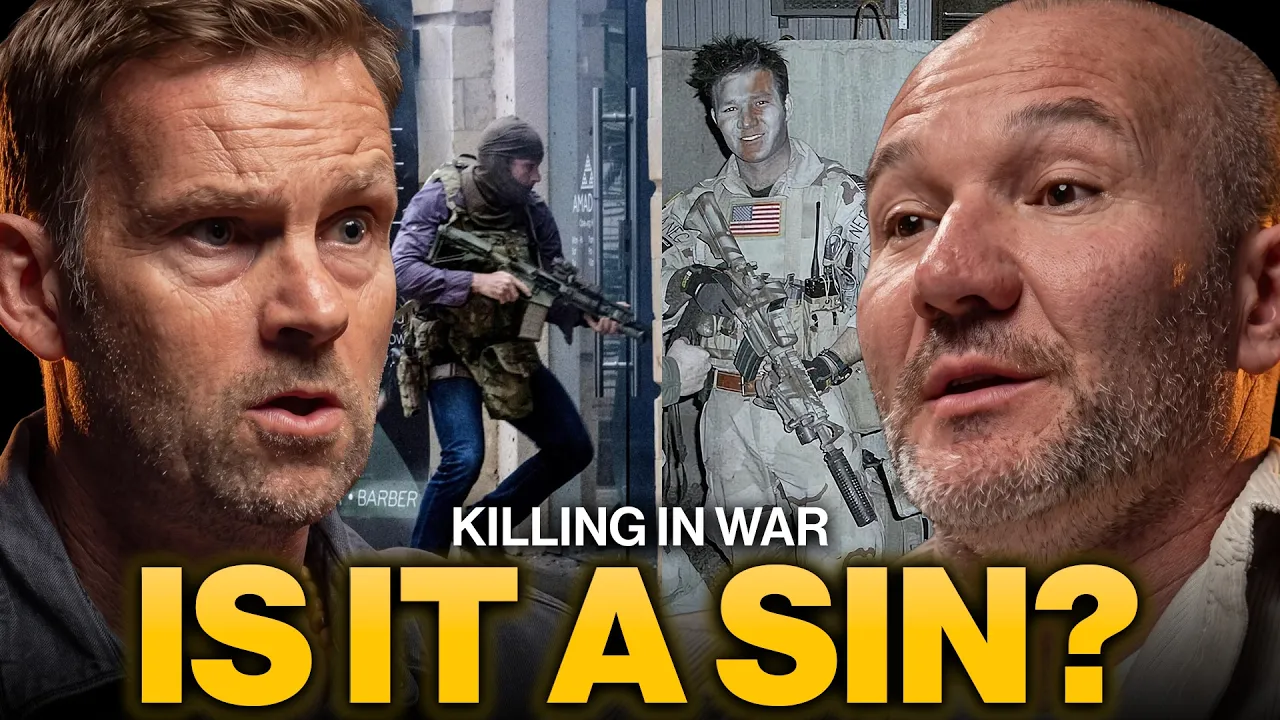
A former special operations soldier reveals the disturbing culture within elite military units where killing is celebrated and can become an obsession, potentially leading to PTSD and suicide. He argues that while soldiers may technically follow rules of engagement, they will ultimately face divine judgment for their actions. The discussion contrasts this with the idea of fighting for a "greater good," questioning who defines it and suggesting that greed and propaganda often drive military actions.
This perspective challenges conventional notions of warfare, suggesting that even justified kills under orders can have devastating psychological consequences if not aligned with one's conscience. The conversation touches on the role of faith and morality in warfare, positing that a decline in religious adherence contributes to societal moral chaos, as individuals lack a divine framework to justify their actions.
Short Highlights
- Killing in warfare is presented as a normality and a necessity for the "greater good."
- The concept of "greater good" is questioned, with suggestions of greed and propaganda influencing military actions.
- A soldier's conscience and God's knowledge of one's heart are central to judging actions in war.
- Military culture can foster an obsession with killing, leading to psychological issues like PTSD.
- Adherence to rules of engagement does not absolve individuals from ultimate accountability for their actions.
- Societal deviation from religious principles is linked to moral chaos and disorder.
Key Details
The "Greater Good" in Warfare [00:00:00]
- Killing in warfare is described as a normality, necessary for the "greater good" of one's side.
- The determination of what constitutes the "greater good" is questioned, especially when opposing sides, like Christian soldiers in WWI, believe they are fighting for it.
- Actions taken for pleasure or outside rules of engagement are equated to street murder.
"So if you kill someone in cold blood, God knows."
Divine Judgment and Intent [00:01:41]
- God knows what is in a soldier's heart when they take a human life.
- Even actions taken under duress or following orders are subject to divine scrutiny.
- The ultimate accountability for actions rests with the individual, regardless of success or failure.
"God knows what's in your heart when you pull the trigger, did whatever you did to extinguish another human life."
Propaganda and Greed in Warfare [00:03:10]
- Military actions, such as those in Afghanistan and Iraq, are questioned as being for "greater greed" rather than the "greater good."
- Propaganda can deceive soldiers into believing in unjust wars.
- The military-industrial complex is suggested as a motivator for conflict.
"What was America doing in Afghanistan after we killed bin Laden? Was that for the greater good?"
The Culture of Killing in Special Operations [00:06:39]
- Killing can become an obsession or addiction, with a culture that fawns upon those who have killed.
- Having killed someone is seen as a "badge of honor" and a "reputation" in some military circles.
- It is considered shameful if a soldier hasn't killed anyone.
"It is your reputation, you know?"
Moral Accountability and Faith [00:11:11]
- Soldiers may technically kill within rules of engagement but may have killed unnecessarily, contributing to PTSD.
- Deception and manipulation are seen as tools used to justify actions, especially for "blue-collar people" joining the military.
- Ultimately, individuals will answer to God for their actions, regardless of changing rules of engagement or societal justifications.
"But whatever you do in this life, you will have to answer to Godfall."