Goodbye, Tough Workouts: Japan's 3-Second Training - Medical Frontiers
NHK WORLD-JAPAN
306,963 views • 1 month ago Save 22 min 6 min read
Video Summary
In Japan's rapidly aging towns, a revolutionary five-count, three-second strength training method is transforming lives. Developed by researchers like Professor Nosaka Kazunori, this unique exercise focuses on eccentric contractions—the lengthening of muscles—which studies show are far more effective than traditional methods. This approach has demonstrated significant improvements in muscle strength, bone density, and even cardiovascular health, offering a path to a longer, healthier life even for the elderly.
The method's simplicity and effectiveness have garnered global attention. By emphasizing slow, controlled movements during the lowering phase of exercises, such as sitting down or lowering a weight, and a quick, powerful movement during the lifting or standing phase, it stimulates muscles and bones without excessive strain. This has led to remarkable results, including increased muscle mass and strength in older adults, and has even shown promise in rehabilitation for conditions like COPD, reducing oxygen consumption and improving physical function.
Short Highlights
- Revolutionary Exercise Method: A unique five-count, three-second strength training program from Japan focuses on eccentric contractions.
- Proven Effectiveness: Studies show it improves muscle strength by 10% and muscle mass by 18% in older adults within 10 weeks.
- Health Benefits: Beyond muscle, it enhances bone density, lowers blood pressure, and increases fat metabolism.
- Simplicity: Exercises can be done using body weight or simple movements, making them accessible for all ages.
- Global Recognition: Media worldwide are highlighting this method as a way to stay stronger and avoid injury.
- Rehabilitation Potential: Shows promise in improving physical function and reducing strain for patients with conditions like COPD.
Related Video Summary
Key Details
The Challenge of Aging Populations [00:00:00]
- Tadatown in Saga Prefecture, Japan, has 40% of its population aged 65 and above, significantly higher than the national average.
- This demographic reality highlights the need for effective health and fitness solutions for the elderly.
"And here about 40% of the population is aged 65 and above, which is well above the national average."
A Unique Strength Training Approach [00:01:00]
- A community center in Tadatown hosts an exercise program for women averaging 80 years old.
- The program involves a unique strength training method with a five-count, three-second movement cadence.
- This method is designed to build muscle, improve bone density, lower blood pressure, and increase fat metabolism.
"It looks like an exercise program. A group of women averaging 80 years old were engaged in strength training."
The Science of Eccentric Contractions [00:02:00]
- Professor Nosaka Kazunori explains three types of muscle contractions: isometric, concentric, and eccentric.
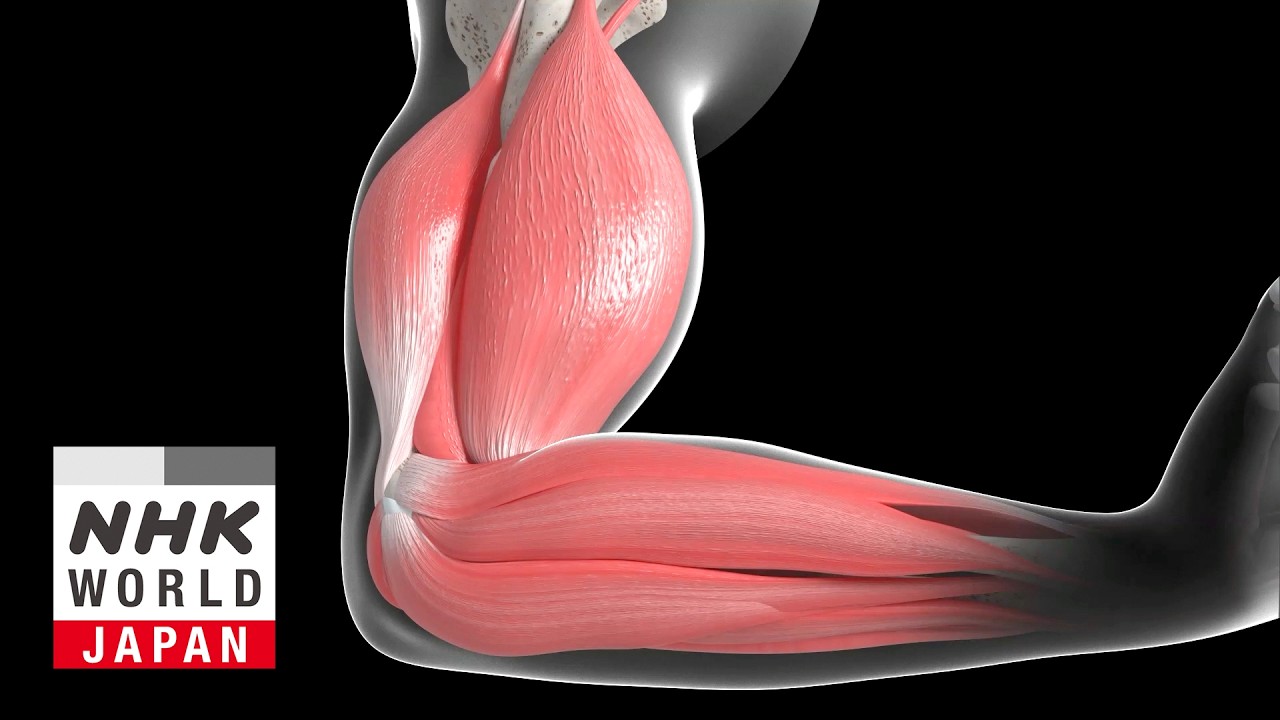
- Eccentric contractions, where muscles lengthen while under tension (like lowering a weight slowly), generate more force and are key to this method.
- Studies show eccentric contractions allow for more repetitions without fatigue compared to concentric ones.
"When we are lowering the weight slowly, then muscle lengthens. This is eccentric contraction."
Tangible Results for Seniors [00:04:00]
- Taratown has implemented exercise classes based on Nosaka's research, showing significant improvements in older residents.
- After just 10 weeks of once-a-week training, leg muscle strength increased by an average of 10%, and muscle mass by 18%.
- This demonstrates the method's effectiveness even in advanced age, combating the natural decline in muscle strength starting around age 30.
"However, when older people follow the new exercise method just once a week for 10 weeks, their leg muscle strength increased by an average of 10% and muscle mass by 18%."
Practical Exercises and Their Benefits [00:06:00]
- Instructor Nakamura Masatoshi demonstrates exercises using body weight, focusing on slow, controlled eccentric movements.
- Exercises target quadriceps (for standing/walking), Iliopsoas (for posture/fall prevention), calf muscles (for walking), and abdominal muscles.
- The key is to focus on the stretch during the slow, lowering phase (3 seconds within a 5-count), with a quick rise.
"As you count to five, slowly sit down over three seconds."
Eccentric vs. Concentric: A Clear Winner [00:11:00]
- Research comparing concentric and eccentric exercises in older adults showed greater gains in muscle mass, strength, and endurance with eccentric training.
- Experiments with young adults also confirmed that eccentric exercise, even just once a day, efficiently increases muscle strength.
- An 84-year-old participant showed a 5% decrease in body fat and a 1.7kg increase in muscle mass over time.
"However, the one that performed eccentric exercises saw greater gains in all four areas."
Real-World Applications and Benefits [00:15:00]
- A study in Taiwan showed that descending stairs (eccentric) led to greater improvements in bone density, heart rate, blood pressure, and metabolic markers compared to ascending stairs (concentric).
- Descending stairs also improved cognitive function, possibly due to increased vigilance.
- The method can be integrated into daily activities, like sitting down slowly on a chair or toilet.
"So you may use maybe escalator, elevator to go up, but you need to use stairs to go down. That's very beneficial."
Rehabilitation and Reduced Strain [00:18:00]
- In Chile, eccentric exercises (backward pedaling) in COPD patients reduced oxygen consumption by 50% and heart rate by 30% compared to concentric exercises (forward pedaling).
- Patients undergoing eccentric rehabilitation showed improved walking distance and physical function.
- A device developed in Japan supports users who need assistance, enabling them to perform seated eccentric exercises safely.
"In other words, eccentric exercise can be performed efficiently with less oxygen."
Precautions and Future Outlook [00:23:00]
- Eccentric exercise can cause muscle soreness, especially after a break; listening to one's body and resting is crucial.
- Muscle adaptation occurs during rest, making consistency key.
- The goal is to increase people's health span, making them happier, healthier, and fitter through regular eccentric exercise.
"If you get sore, that is an indication of something long in your muscle. You just need to listen to your body carefully."
An 88-Year-Old's Active Life [00:24:00]
- Akamatsu Hatsuyo, 88, continues to manage a large vegetable garden independently.
- Despite her daily activity, she values the social connection and physical benefits of the community exercise class.
- Her commitment to both her garden and the class exemplifies the desire to stay active and mobile.
"Even so, the exercise class remains an important part of her routine."