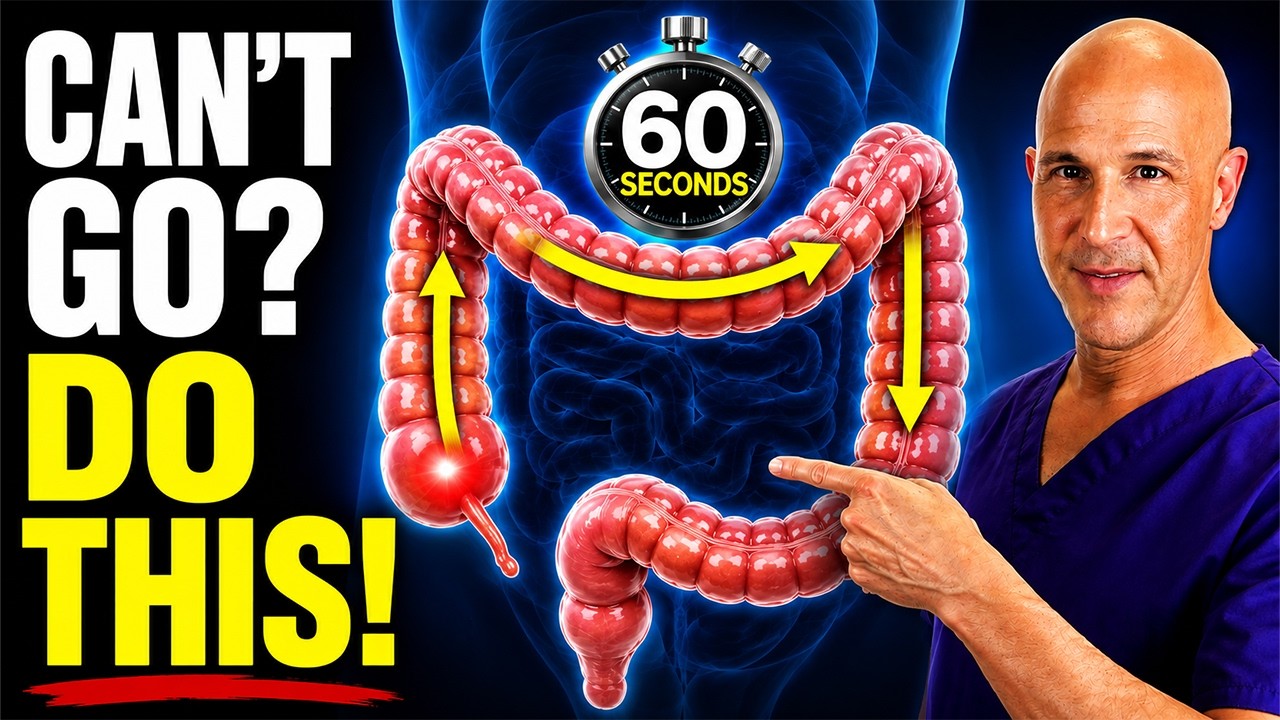
Do This for 60 Seconds to Get Your Bowels Moving | Dr. Mandell
motivationaldoc
59,374 views • 1 month ago Save 5 min 3 min read
Video Summary
Discover a simple 60-second abdominal massage technique that can help wake up your digestive system and encourage natural bowel movements. This method follows the path of stool through the large intestine, using gentle pressure and slow breaths to stimulate peristalsis.
Beyond the massage, leverage your body's natural rhythms by responding to the urge to go, especially in the morning after waking and eating, thanks to the gastrocolic reflex. Proper toilet positioning with feet elevated can further ease elimination. The video also stresses the importance of gradually increasing fiber intake from whole foods, staying hydrated, and incorporating regular movement throughout the day to combat sluggish digestion. Chronic stress can disrupt gut function, so mindful breathing and relaxation are key. Ignoring the urge to defecate can disrupt your body's natural routine, so listening to your body is crucial for maintaining comfortable and regular digestion.
Short Highlights
- A 60-second abdominal massage can stimulate bowel activity.
- Morning and post-meal urges are prime times for bowel movements due to the gastrocolic reflex.
- Proper toilet positioning can significantly ease elimination.
- Gradually increase fiber intake from whole foods, paired with adequate fluids.
- Regular physical activity supports intestinal motility.
Key Details
Gentle Abdominal Massage for Bowel Stimulation [0:17]
- If constipated, bloated, or feeling incomplete emptying, try a 60-second massage to encourage natural movement.
- This technique aims to wake up the digestive system by stimulating peristalsis, the muscular contractions that move waste.
- Place your hand on the lower right abdomen, massage upwards, across the top to the left, and down the left side.
"Your intestines aren't just passive tubes, they are coordinated waves of muscular contraction called peristalsis that helps move waste through your digestive tract."
Leveraging Morning and Post-Meal Urges [1:18]
- The colon is naturally more active after eating due to the gastrocolic reflex, making mornings and post-meal times ideal for bowel movements.
- When you feel the urge, especially after waking or eating, don't ignore it; go to the bathroom.
- Combine this with drinking water, light movement, and eating breakfast if it's part of your routine.
"When food enters and stretches your stomach, signals are sent through the digestive system that encourage the colon to contract and make room for what's coming next."
Optimizing Toilet Position and Straining [1:57]
- Elevate your feet on a stool so your knees are higher than your hips, lean forward, and rest your forearms on your thighs.
- This position changes the angle between the rectum and anal canal, making complete emptying easier without excessive straining.
- Avoid prolonged, hard pushing, as it can lead to issues like hemorrhoids.
"If you're pushing and straining hard for long periods of time, stop."
Understanding Constipation and Fiber Intake [2:31]
- Constipation isn't just about infrequent bowel movements; it can also involve hard stools or a feeling of incomplete emptying, even with regular visits.
- Dramatically increasing fiber intake without adequate fluids can cause more gas, bloating, and discomfort.
- Gradually increase fiber from whole foods like vegetables, fruits, beans, lentils, oats, chia seeds, flax seeds, kiwi, and prunes, ensuring sufficient fluid intake to soften stool.
"Fiber is extremely important for normal bowel function, but more is not always better overnight."