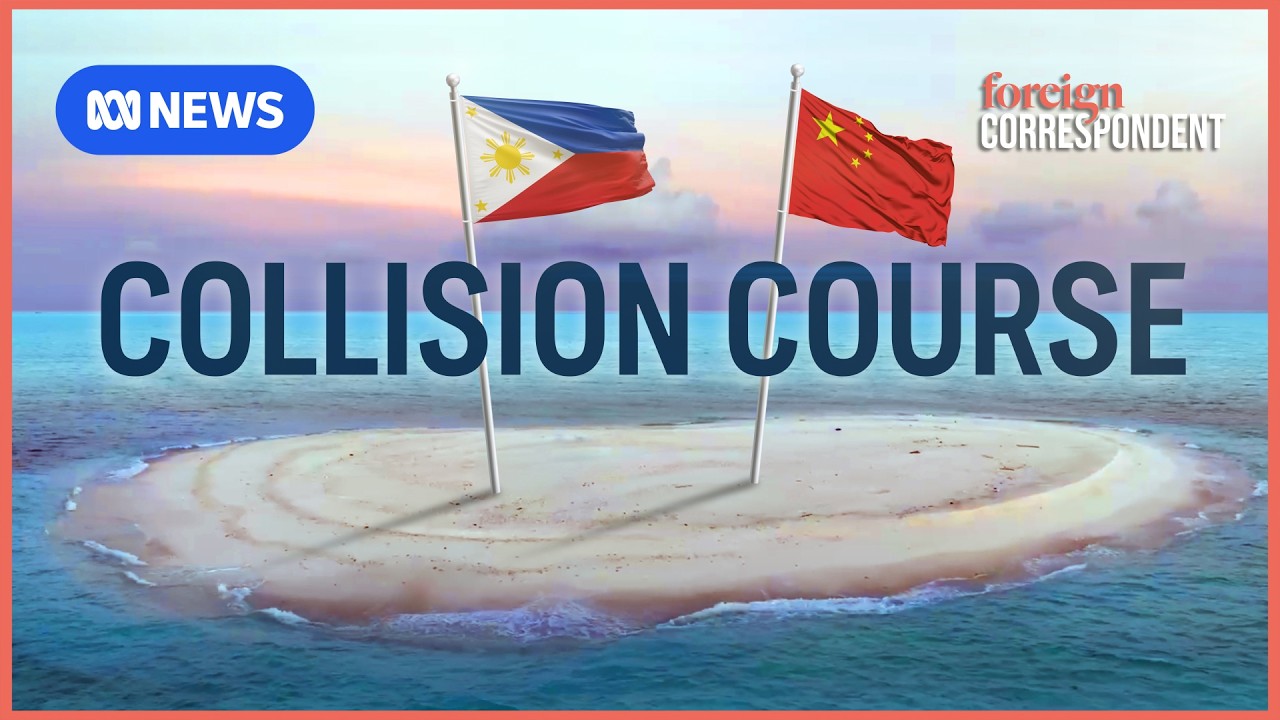
Could the South China Sea become the next global battleground? | Foreign Correspondent
ABC News In-depth
149,717 views • 1 month ago Save 25 min 5 min read
Video Summary
China's escalating territorial claims in the South China Sea are creating a dangerous flashpoint, with Filipino civilian ships now facing direct radio contact and surveillance from Chinese Coast Guard vessels in waters vital for global trade. This aggressive posture, marked by increasing confrontations and the militarization of artificial islands, is not only a direct challenge to the Philippines' sovereignty but also a significant concern for international stability.
Amidst this maritime tension, the Philippines is strengthening its defense ties through large-scale military exercises like Balakatan, involving multiple allied nations. These drills, including simulated amphibious landings, underscore a growing regional coalition preparing to counter China's assertiveness. However, the region also grapples with the economic fallout of global conflicts, such as soaring inflation in Manila attributed to the US-led war on Iran, sparking frustration and questioning the reliability of long-standing allies.
Short Highlights
- China's Coast Guard is actively confronting Filipino civilian ships in disputed South China Sea waters, escalating territorial tensions.
- The Philippines is strengthening its defense capabilities through large-scale joint military exercises with multiple international partners.
- China has built artificial islands and military bases in the South China Sea, disregarding international court rulings.
- Filipino citizens are undertaking civilian voyages to assert their presence and rights in the West Philippine Sea.
- The conflict impacts global trade and fisheries, with the South China Sea being a critical global shipping lane.
- The Philippines faces economic hardship, including soaring inflation, partly due to global conflicts impacting fuel supplies.
- There are growing concerns about the reliability of the United States as an ally for Southeast Asian nations.
Key Details
China's Confrontation at Sea [0:00]
- Tensions are high in the South China Sea as Chinese Coast Guard vessels make radio contact with a Filipino civilian ship in waters claimed by both nations.
- This incident highlights the ongoing territorial dispute in a crucial global shipping lane, carrying a fifth of world trade.
- The presence of more Chinese ships signals an intensification of China's assertive actions in the region.
"This is precisely what we've been wanting to tell, that China has been present in our seas."
Military Exercises and Alliances [0:44]
- Hundreds of military personnel on the Philippine island of Palawan are participating in Exercise Balakatan, a large-scale military drill involving seven nations.
- The exercise includes 17,000 personnel from countries like Canada, France, New Zealand, Australia, and Japan, with the United States sending the largest contingent.
- These drills simulate repelling a mock invasion and test military capabilities, aiming to build confidence among partners in an uncertain world.
"Well, look, in an increasingly uncertain world, we all read the news. It's good to practise a little bit of, you know, those types of serials, things that bring confidence to our partners."
China's Naval Buildup and Claims [2:00]
- China is conducting its own live-fire exercises in waters between the Philippines and Taiwan, demonstrating its growing naval power.
- The Chinese navy is building ships at a faster rate than the United States, showcasing its status as the world's largest navy.
- Control over the South China Sea is crucial due to its busy shipping lanes, rich fisheries, and its role as a lifeline for millions.
"China's navy is building ships much faster than the United States."
Legal and Physical Assertions [2:48]
- Under international law, the Philippines has a 370km exclusive economic zone, which China disputes by claiming almost all of the territory within its Nine-Dash Line.
- A decade-old court ruling in The Hague rejected China's claim, but China has ignored it, building islands and military bases on Mischief Reef and Subi Reef.
- Rear Admiral Jay Tariella of the Philippines Coast Guard has become a prominent voice against China's actions, releasing videos of Chinese vessels harassing Filipino ships and fishermen.
"You've been accused by China of spreading false narratives, of making baseless remarks and smearing Chinese leaders. What do you make of that?"
Civilian Resistance and Chinese Interference [4:16]
- Filipino civilian groups, including activists and youth organizations, are undertaking voyages into the contested waters to assert their presence.
- Onboard a civilian ship sailing towards Pagasa, a Chinese Coast Guard vessel is spotted tailing the group, despite being within the Philippines' exclusive economic zone.
- Retired Rear Admiral Romel Ong describes China's actions as "grey zone tactics," a form of coercive economic and psychological warfare designed to degrade moral will.
"We spotted a Chinese Coast Guard vessel five nautical miles away from our vessel."
Pagasa Island and Daily Life [6:00]
- The journey continues towards Pagasa Island, the furthest point of Filipino territory in the South China Sea, under the watchful eye of Chinese Coast Guard vessels.
- Upon approaching Pagasa, mobile phones receive messages welcoming them to "China," and additional Chinese Coast Guard vessels appear.
- Despite demands from the Chinese Coast Guard to report intentions and cease movement, the Filipino captain continues towards Pagasa.
"This is China Coast Guard. Your monitor is in the world under the jurisdiction of China. Please report your intentions and not to move."
Economic Impact and Shifting Alliances [8:42]
- The US-led war on Iran has caused an energy crisis in Manila, leading to soaring food prices and inflation, frustrating Filipino citizens.
- Jipney drivers express anger over the economic hardship caused by disruptions in fuel supplies, questioning the reliability of the United States.
- Concerns are raised about the US potentially making concessions to China, leaving Southeast Asian nations like the Philippines vulnerable.
"It's a very big effect when it's happening in other countries."