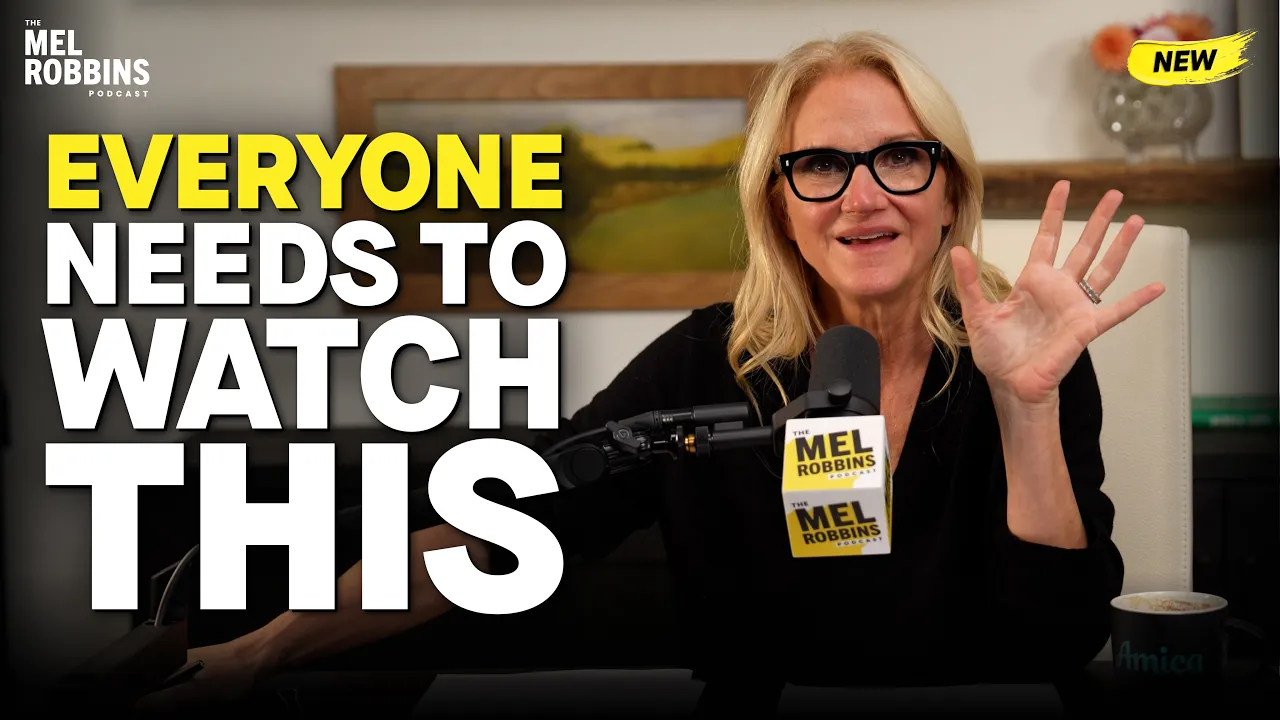
This One Skill Makes Every Relationship Better
Mel Robbins
21,904 views • 22 hours ago Save 37 min 5 min read
Video Summary
Empathy, the ability to make others feel seen, heard, and understood, is presented as a powerful skill that makes people more likable and influential. The speaker emphasizes that empathy isn't about pity or sympathy, but about genuine understanding. Research suggests individuals have at least nine daily opportunities to practice empathy, which can significantly improve relationships and personal well-being.
The video outlines four practical ways to cultivate empathy: 'Ask, Don't Guess,' by inquiring about others' feelings instead of assuming; 'Go First,' by initiating contact and offering support proactively; 'Paper Plates,' by providing tangible help without being asked, anticipating needs; and 'Keep on Waving,' by consistently offering small gestures of connection and recognition. Practicing these techniques not only benefits others but also fosters self-liking and stronger social connections.
Short Highlights
- Empathy is a skill that makes people likable and influential.
- It involves understanding others' feelings and perspectives, not feeling sorry for them.
- Research indicates at least nine daily opportunities to practice empathy.
- Four ways to practice empathy: ** Ask, Don't Guess ** Go First ** Paper Plates (Actionable Support) ** Keep on Waving
Key Details
The Power of Empathy [0:00]
- Empathy is a skill that makes people likable and influential.
- It is distinct from sympathy or pity; it's about understanding.
- People like others because of how they make them feel—seen, heard, and interested in.
"People do not remember what you do. They remember how you made them feel."
Empathy as a Superpower [2:08]
- Empathy is an influential skill, not a sign of weakness.
- It taps into the law of reciprocity: doing nice things for others prompts them to reciprocate.
- Mirror neurons help us feel what others feel, creating a neural bridge.
"Neuroscientists often talk about mirror neurons as this neural bridge that connects you to other people."
Understanding Empathy with Dr. Stuart Ablon [3:36]
- Dr. Stuart Ablon defines empathy simply as "understanding."
- It means grasping another's feelings, perspective, and situation before judging or fixing.
- Research shows at least nine opportunities daily to practice empathy.
"Empathy is about understanding another person, what they're feeling, what their perspective is, what they're dealing with."
Practice 1: Ask, Don't Guess [5:44]
- Stop assuming you know how others feel; ask direct questions.
- Avoid filling in blanks about people's moods or actions.
- Asking questions like "Is everything okay?" or "Tell me more about that" fosters understanding.
"When you guess, you say, I guess you don't care. When you ask, you go, oh my gosh, you got a lot going on."
The Importance of Asking in Difficult Times [7:48]
- The speaker shares a personal story about her son struggling with learning disabilities.
- Her initial instinct was to fix the problem, which worsened things.
- She learned to ask, "Can you help me understand what's hard?" instead of assuming.
"He wasn't a problem to be solved. He was a human being who needed to feel understood."
Practice 2: Go First [11:48]
- Don't wait for others to reach out; initiate contact yourself.
- Thinking about someone isn't enough; show them you're thinking of them.
- Pebbling, inspired by penguins offering pebbles, involves sending small, thoughtful gestures like memes or articles.
"Thinking doesn't count. And if you have trouble with this, you're not alone."
The Power of Pebbling [13:06]
- Pebbling strengthens bonds by showing you know and care about the other person.
- It's effective for reconnecting with dormant ties (people you haven't spoken to in years).
- Research shows people underestimate how warmly their gestures will be received.
"Every pebble is a bid for connection."
Practice 3: Paper Plates [17:35]
- When someone is struggling, don't ask what they need; anticipate and act.
- Inspired by therapist Casey Davis, the idea is to provide practical, tangible help.
- Dropping off paper plates, cups, and utensils removes a burden for someone overwhelmed.
"The last thing a person needs is a sink full of dishes when they're going through a hard time."
Empathy Through Action [19:45]
- Judge Frank Caprio's first day on the bench taught him to consider personal situations over strict law.
- He realized his rulings impacted families and shifted his approach to understanding people's circumstances.
- Demonstrating empathy through action means showing support without being asked.
"The lesson was that being a judge is much more about the person in front of you than it is about the law."
Practice 4: Keep on Waving [22:15]
- Consistently offer small gestures of connection, like waving to neighbors.
- This simple act can create community and combat loneliness.
- Roman, a young boy, started waving to neighbors, leading to new friendships and community connection.
"Roman kept waving. And Wade kept coming back. And Roman kept inviting people in. And the neighbors kept showing up."
The Impact of Empathy [25:29]
- Empathy makes people feel remembered, included, celebrated, and less alone.
- When you make others feel good about themselves, they like you more.
- Practicing these four empathy skills improves your relationships and self-liking.
"And empathy is the skill that helps you make other people feel good about themselves."
Conclusion: Empathy for Winners [26:58]
- Empathy is a skill for the strong and influential.
- Daily practice of empathy leads to better relationships and self-perception.
- The speaker expresses love and belief in the listener's ability to create better moments.
"Because what I've learned about the skill of empathy is it's not just about what it does for the other person. It will come back a hundred fold to you as well."