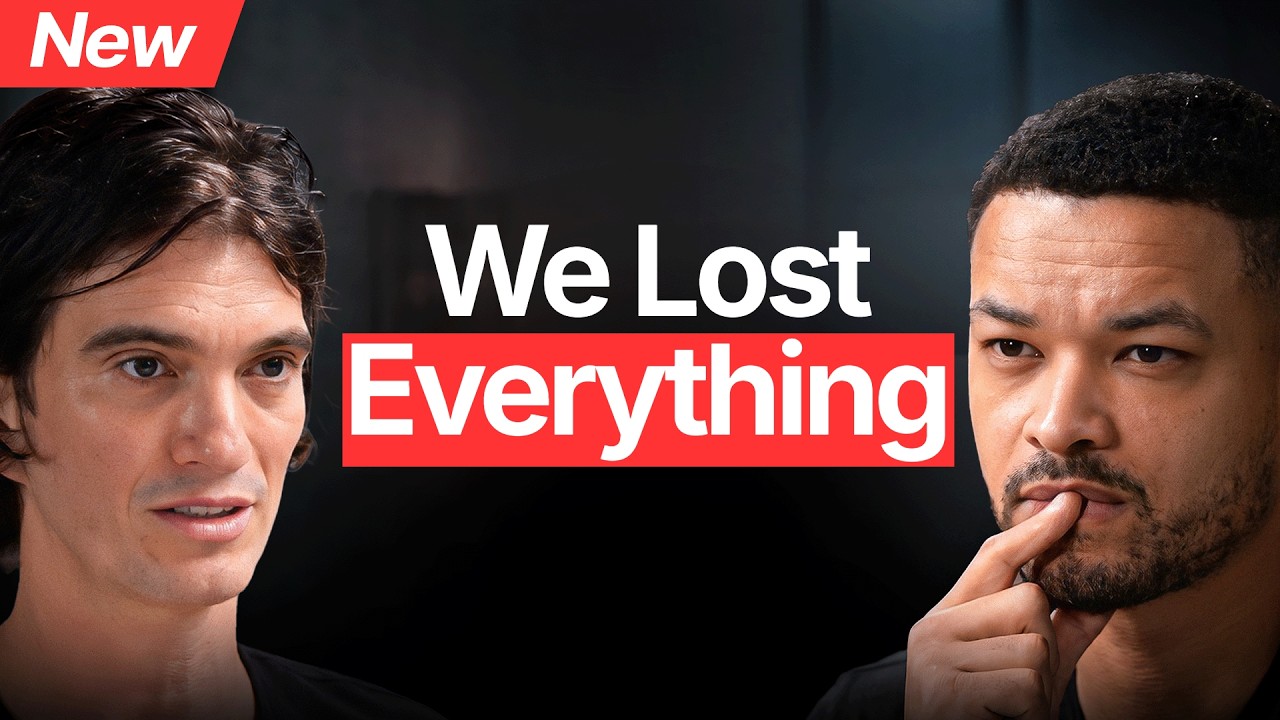
Billionaire's WARNING: His $47 Billion Empire Collapsed! | Adam Neumann
The Diary Of A CEO
206,180 views • 22 hours ago Save 128 min 7 min read
Video Summary
Adam Neumann, the co-founder of WeWork, reflects on the company's meteoric rise and dramatic fall, attributing the collapse to ego and a loss of focus on the core mission. He details his challenging childhood, marked by his mother's bipolar disorder and a sexual assault, which shaped his resilience and spiritual outlook. Neumann recounts how a $3 billion investment from SoftBank's Masayoshi Son, far exceeding his initial fundraising goal, fueled WeWork's rapid expansion but also amplified his ego, leading to critical missteps.
Neumann explains that the company's growth outpaced his ability to manage it, leading to financial losses and systemic issues. He discusses his forced resignation as CEO, the subsequent betrayal by investors, and his personal financial ruin. Despite these setbacks, Neumann emphasizes the importance of learning from failure, surrounding oneself with supportive partners, and maintaining a strong sense of self and mission, lessons he is applying to his new venture, Flow.
Short Highlights
- WeWork's rapid growth and subsequent collapse were driven by ego and a departure from its core mission.
- Neumann's challenging childhood, including his mother's bipolar disorder and a sexual assault, instilled resilience.
- A $3 billion investment from SoftBank's Masayoshi Son inflated Neumann's ego and led to strategic missteps.
- Neumann resigned as CEO after the IPO failed, feeling betrayed by investors.
- Despite personal financial ruin, Neumann learned valuable lessons about partnership, mission, and self-awareness.
- His new venture, Flow, aims to apply these lessons for future success.
Key Details
The Meteoric Rise and Fall of WeWork [0:00]
- WeWork experienced unprecedented global growth, expanding from 13,000 employees to just three in one week.
- The company's rapid expansion led to a public filing with a valuation of $47 billion in 2019.
- However, the S1 filing revealed significant losses, totaling $3 billion over three years.
"WeWork was one of the fastest physical global growths the world's ever seen. But everything went wrong. We lost everything."
The Trademarked Word 'We' [0:00]
- The S1 filing also revealed that Neumann had trademarked the word 'we' and sold it back to the company.
- This detail, among others, raised questions about corporate governance and Neumann's personal dealings.
"Also, the S1 revealed when you were CEO that you'd also trademarked the word we and sold it back to the company."
Misconceptions About Departure [0:00]
- Neumann clarifies that he was not fired, contrary to some media reports.
- He states he chose to step down as CEO after the IPO did not materialize as planned.
"People sometimes think I was fired because the Wall Street Journal said so. Not true."
Ego and Loss of Mission [0:00]
- Neumann admits that the business grew faster than he could personally grow, leading to ego inflation.
- Valuations of billions in different markets shifted his focus from the company's mission to monetary success.
"It suddenly became about the money. I forgot what we were all about."
The Impact of Early Trauma [0:00]
- Neumann's childhood was marked by instability, including his mother's bipolar disorder and divorce.
- The family moved to the US, and he experienced his mother's mood swings and suicide threats.
"And all day she would work with the patients. And at night at 8 p.m. she would come home. And all hell would break loose."
A Defining Childhood Experience [0:00]
- At age 12, Neumann intervened when his mother threatened suicide with a knife.
- He also disclosed a childhood sexual assault by a teenager, which he didn't fully understand as wrong until adulthood.
"I grabbed the knife and we're fighting left and right. And my sister is sitting right there and she's crying and she's crying."
Spiritual Practice and Perspective [0:00]
- Meeting his wife, Rebecca, introduced Neumann to spiritual practices, including Kabbalah.
- He learned the difference between 'meant to be' and 'free choice,' and how to turn setbacks into blessings.
"The way I explain it is you get to a fork in your life and you choose left over right and everything works out. Meant to be."
The Power of Resilience [0:00]
- Neumann's difficult childhood experiences forged a deep resilience, enabling him to cope with WeWork's collapse.
- He emphasizes that challenges, though dark, can lead to growth and strength.
"So if you're listening to this right now and you're going through something really difficult and it feels dark, I encourage you to remember that the darkest moment of the night is a second before dawn."
The $3 Billion SoftBank Investment [0:00]
- In 2016, Neumann met Masayoshi Son of SoftBank, who offered a $4.2 billion investment, far exceeding the $300-400 million Neumann planned to raise.
- Son's vision of WeWork as a "factory of dreams" resonated with Neumann, but the massive influx of cash amplified his ego.
"He goes smells like dreams this is a factory we work is not an office space it's a factory of dreams."
The Shift from Mission to Money [0:00]
- The $4.2 billion investment, and later a $3 billion offer from SoftBank, shifted Neumann's focus from mission to monetary gain.
- This deviation from core values led to poor decisions and mistakes, amplified by the company's rapid growth.
"Every step that I'm taking the ego comes up... and before you know it the guy that sat in the car was a mission driven entrepreneur... I forgot what we were all about."
The 'Paper Walls' and First Principles [0:00]
- Neumann discusses the concept of 'paper walls' – obstacles that seem solid but are easily overcome with questioning.
- This relates to reasoning from first principles, a concept admired in figures like Elon Musk.
"A paper wall is something that looks solid, but reveals itself to be completely made of paper the minute you try it."
The Role of Investors and Partners [0:00]
- Neumann stresses the importance of choosing investors and partners who are truthful and supportive, especially during difficult times.
- He contrasts supportive investors with those who prioritize profit over the founder's well-being.
"If I had to choose one, right investors, right employees, right partners, most important thing."
The SoftBank Buyout Offer and Rejection [0:00]
- In March 2018, SoftBank offered to buy WeWork for $20 billion, with Neumann retaining a significant stake.
- The board, driven by greed, rejected the offer, aiming for a higher valuation, which ultimately led to missed opportunities.
"They say no and negotiate a 20 billion dollar deal from March till October for a company losing two billion."
The IPO and Forced Resignation [0:00]
- After the failed IPO and the rejection of SoftBank's buyout, Neumann was pressured to step down as CEO.
- He chose to resign, believing it would secure funding and protect the company, only to be betrayed by a bank demanding immediate repayment of personal debt.
"And a second after I did it, we got stabbed in the back."
Personal Ruin and Resilience [0:00]
- Neumann faced personal bankruptcy, losing his $460 million debt and realizing his wife, Rebecca, had not signed a personal guarantee.
- This moment of profound loss led to personal growth and a renewed appreciation for his wife and foundational support.
"She looks at me and she goes, hmm okay. This is a surprise... I think that's what I said there said we lost everything."
Lessons Learned and Future Focus [0:00]
- Neumann emphasizes that falling is not failure, but how one gets up is crucial.
- He advocates for knowing oneself, focusing on mission, and surrounding oneself with supportive partners for future endeavors like his new company, Flow.
"Life is not about when we fall down and how many people saw us fall it's genuinely about how we get up."