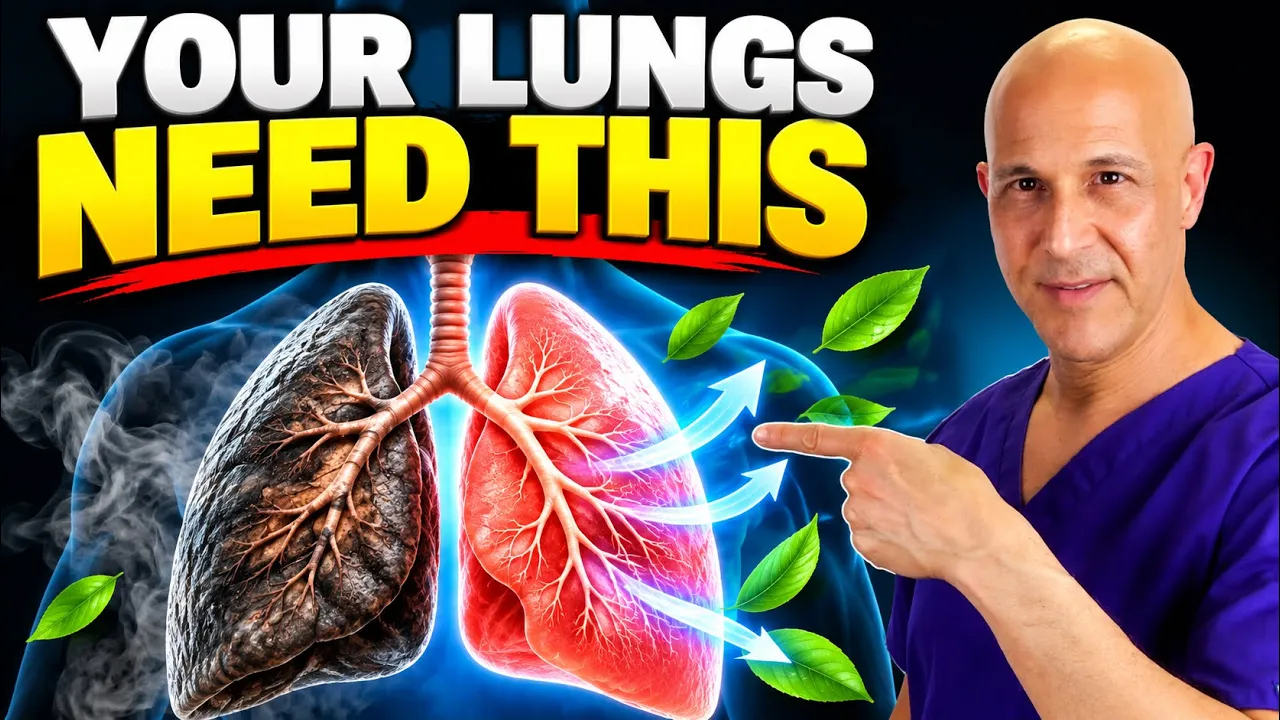
Cleanse, Strengthen & Protect Your Lungs — Do This | Dr. Mandell
motivationaldoc
46,319 views • 2 days ago Save 8 min 3 min read
Video Summary
Most people only utilize 70 to 80 percent of their lung capacity during daily breathing, leaving a significant portion of the lungs stagnant and vulnerable to infection. By failing to fully engage the diaphragm and expand the ribcage, we inadvertently allow stale air to accumulate, which can lead to severe health complications like pneumonia or chronic respiratory issues.
To combat this, Dr. Mandel emphasizes active lung strengthening through targeted breathing exercises. By training the diaphragm and intercostal muscles to reach their full potential, individuals can improve oxygen exchange across the alveoli, ensuring that every cell and organ receives the necessary supply to remain resilient against pathogens.
Short Highlights
- The primary cause of lung weakness is the failure to utilize 100% of lung capacity, leaving 20-30% of alveoli inactive and susceptible to pathogens.
- Diaphragmatic breathing is essential for optimal lung function, as it pulls air into the lungs more effectively than chest-based breathing.
- Stale air trapped in the lungs acts as wasted space, particularly in individuals with conditions like COPD or emphysema.
- Physical movement is critical for lung health; inactivity can lead to fluid buildup and increased risk of pneumonia.
- Targeted exercises can help strengthen the diaphragm and intercostal muscles, allowing for deeper oxygen intake and better lung cleansing.
Key Details
Respiratory Mechanics and Lung Function [00:20]
- The diaphragm is the major muscle responsible for breathing, flattening to pull air into the lungs while ribcage muscles assist in the process.
- Air enters through the nose or mouth, travels through the trachea and bronchi, and reaches 300 million tiny alveoli where oxygen and carbon dioxide exchange occurs.
-
Your lungs is what allows oxygen to supply every cell, tissue, gland, and organ within your body.
The Dangers of Inactive Lung Tissue [02:08]
- Daily breathing typically utilizes only 70 to 80 percent of lung capacity, leaving a 20 to 30 percent gap that can harbor pathogens like viruses or bacteria.
- Shallow breathing prevents the full expansion of the rib cage, which limits the body's ability to fight off respiratory infections.
-
If a pathogen, bacteria or a virus, gets into our lungs and we're only utilizing 70 to 80% of our lungs, that lack of 30% is what can keep us sick.
Diaphragmatic and Ribcage Exercises [03:41]
- Proper breathing should originate from the stomach; if shoulders rise during inhalation, the technique is incorrect.
- Hugging the torso provides resistance to the ribcage, which helps train the intercostal muscles to expand the lungs more effectively.
-
You'll notice after that breathing exercise where you hug yourself and then you let go. Your breathing becomes easier because those ribs, those intercostal muscles, is what helps those lungs get oxygen much easier.
Advanced Techniques for Lung Cleansing [05:14]
- Forcing the abdominal muscles toward the spine while exhaling helps expel stale air from the lungs, while controlled coughing further aids in clearing the airways.
- Consistent movement, such as walking and mobilizing the upper torso, is vital to prevent fluid buildup and complications like pneumonia.
-
One of the most important things that we need to realize is that stale air that sits in our lungs, is wasted space.