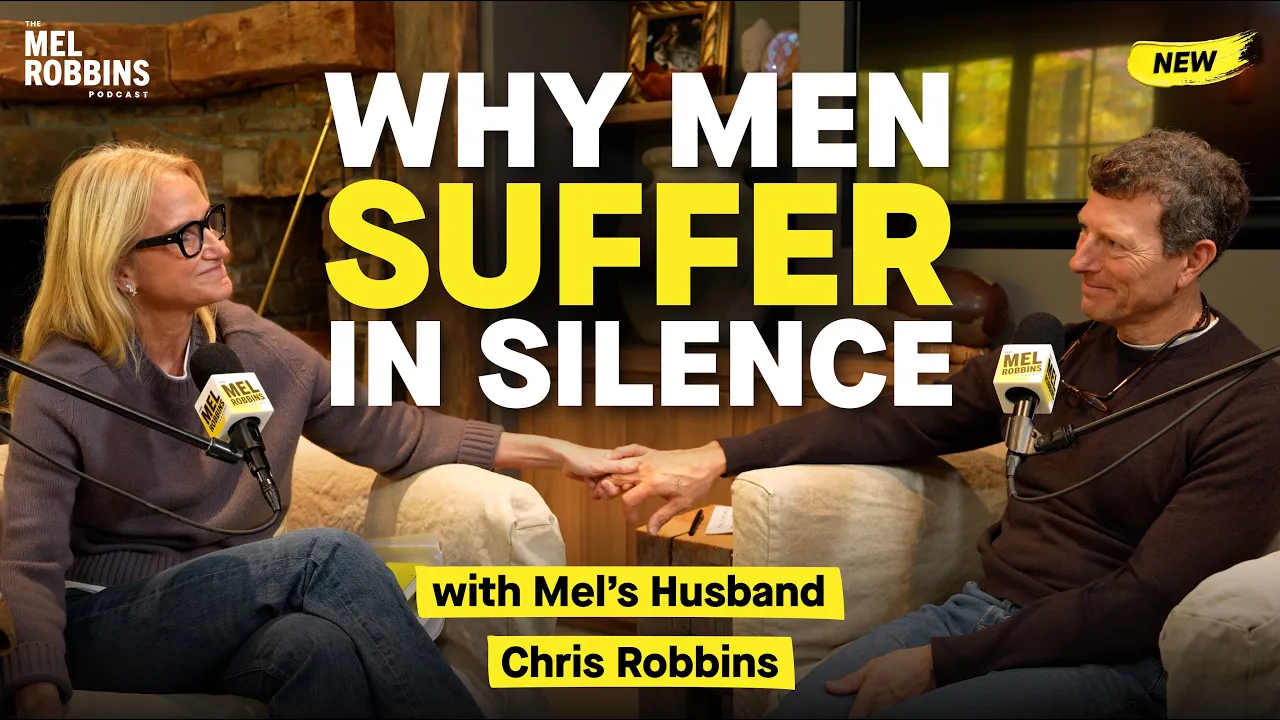
Why Boys and Men Are Quietly Struggling & What They Need To Hear
Mel Robbins
42,895 views • 23 hours ago Save 69 min 6 min read
Video Summary
Men are silently suffering, trapped in a relentless internal war characterized by self-criticism and a perceived failure to meet impossible standards. Despite appearing stoic or successful on the surface, many men struggle with profound feelings of inadequacy and isolation, often lacking the tools or safe environments to express their vulnerabilities or seek genuine connection.
Christopher Robbins, a death doula and facilitator of men's retreats, reveals that the path to healing begins with breaking this cycle of self-hatred. By cultivating intentional brotherhood, learning to receive love rather than just providing it, and embracing stillness, men can move beyond the "do-nothing" performance of their daily lives. The most powerful catalyst for this change, according to Robbins, is the simple, transformative act of writing a heartfelt letter to the men in our lives to acknowledge their character and worth.
Short Highlights
- Men are frequently at war with themselves, driven by an internal narrative of being a "failure" or "not good enough."
- The five core themes identified in men's work over the last decade include:
- The internal battle against self-criticism.
- The fundamental need to be seen and heard without judgment.
- The struggle to feel like they matter most in their relationships.
- The exhaustion caused by constant "doing" and achieving.
- The inability to ask for help due to perceived weakness.
- Men often lack the capacity to receive love, viewing their worth solely through their ability to provide or protect.
- Cultivating brotherhood and male friendships is an essential, often neglected, component of mental well-being.
- Writing a letter of acknowledgment to a man in your life can create a powerful ripple effect of connection and healing.
Key Details
The Internal War of Men [0:00]
- Men often carry an overarching narrative of failure, believing they are bad friends, husbands, or fathers regardless of their achievements.
- This internal strife manifests as a constant, self-critical monologue that makes it difficult to connect with others.
Men are at war with themselves.
The Power of Intentional Letters [3:15]
- The primary goal of sharing these insights is to encourage people to write heartfelt letters to the men in their lives.
- A simple letter acknowledging a man's character can have an "unbelievable impact" on his sense of self-worth.
I really hope that people just take what I have to say and sit down and write a letter to their man, to their father, to their son.
Background and Motivation [5:45]
- Christopher Robbins transitioned from a 25-year corporate career to becoming a death doula, yoga teacher, and student of spiritual psychology.
- The creation of "Soul Degree" retreats was born from his own feelings of being lost and his desire to find a deeper, more authentic way to live.
I knew I was hurting, and I knew I wasn't going to find my way out of my own paper bag alone.
The Impact of Fatherhood and Loss [8:25]
- The death of his father acted as a major catalyst for his own self-discovery after years of chasing his father's approval.
- He realized he had ignored his own grief for eight years, which was a turning point in his personal growth.
I have my father to thank in his death because I came alive after he left.
Creating Safe Spaces [11:30]
- Retreats use a 12-minute "check-in" prompt where men are encouraged to look "under the hood" and speak their truth.
- Active listening without the intent to "solve" the problem is a crucial skill taught to participants.
There is no judgment. There's no, that this is safe and you are free to be vulnerable and say whatever comes to mind.
The Need to be Seen and Heard [14:45]
- The second major theme is the universal human desire to be seen and heard, a muscle many men have never developed.
- Many men are "problem-solving machines" who struggle to just listen to others without trying to fix them.
I think it's human nature. This is what we seek in life. I think all of us is the desire to just feel seen and feel heard.
The Epidemic of Loneliness [16:50]
- Competitive "bro culture" often prevents men from forming deep, meaningful friendships.
- Men are frequently isolated, having prioritized career and family over the maintenance of their own social circles.
There's so many guys that show up who look around and their friends are gone, like they're friendless.
The Desire to Matter [19:15]
- The third theme is a deep, often unexpressed desire for men to feel that they matter most to their partners.
- This is often masked by the busyness of life, including parenting, work, and household responsibilities.
There is such a burning desire to want to feel like you matter most.
Giving vs. Receiving Love [21:05]
- Men are often programmed to give, provide, and protect, but they struggle significantly with receiving love.
- This inability to receive can create a barrier in relationships, even when partners are trying to offer support.
We are programmed to like provide, protect, like give, give, give, give, give.
The Trap of Constant Doing [26:15]
- The fourth theme is the tendency to define personal worth solely through productivity and achievement.
- Learning to slow down, rest, or engage in mindful activities is an act of resistance against societal expectations.
We're just so busy doing. Do, do, do. Complete, complete. Achieve. Accomplish.
The Art of Slowing Down [29:10]
- Walking meditations are used to help men break the "go, go, go" cycle and connect with their surroundings.
- Slowing down is often perceived as "weird" in a fast-paced society, yet it is essential for mental clarity.
I think that may be another way to force us to just be more mindful of each step.
The Inability to Ask for Help [31:00]
- The final theme is that men desperately need help but have no idea how to ask for it, viewing it as a sign of weakness.
- Breaking this cycle requires the humility to admit one's own limitations and reach out to others.
We're hopeless at asking for help. I mean, you know, it's like we go out on a drive, we're looking for direction. We drive around.
Personal Accountability [32:15]
- Robbins shares his own need for help, specifically in committing to daily writing time for his upcoming book.
- He emphasizes that asking for support is a necessary part of personal growth and professional success.
The only way it's going to happen is to sit in the chair and do the work.
Conclusion: The Letter as a Bridge [35:20]
- The letter-writing exercise is meant to help men practice feeling and expressing emotions.
- It is a tool for building deeper, more authentic connections with the people who matter most.
At the end of the day, we're on this planet to, yes, as I said, see, you know, feel seen and heard, but that just means like feel love and feel loved.