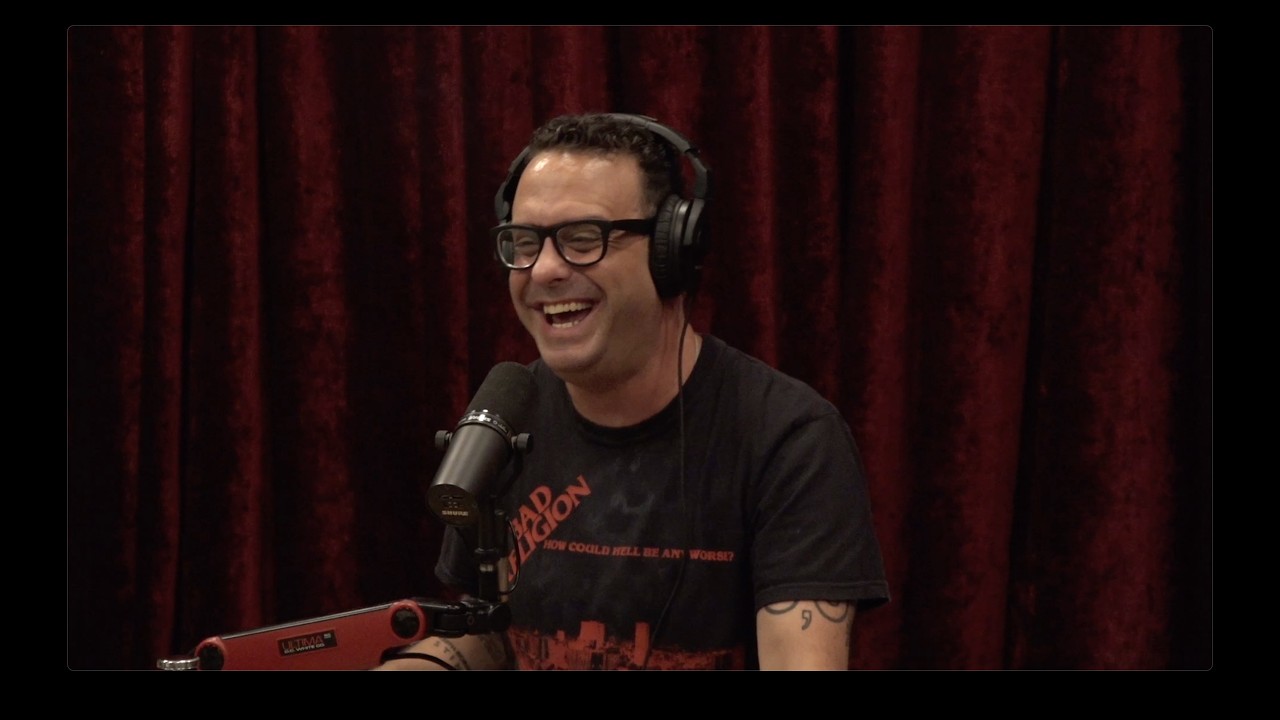
Joe Rogan Experience #2538 - Joe DeRosa
PowerfulJRE
483,270 views • 1 month ago Save 142 min 19 min read
Video Summary
Joe Rogan and comedian Joe DeRosa discuss the nuances of coffee preparation, the challenges of modern living, and the evolution of the entertainment industry. DeRosa shares his preference for the AeroPress due to its simplicity and avoidance of plastic, while Rogan champions the French press for its superior taste and volume. Their conversation then pivots to the difficulties of finding good food in Austin, the complexities of financial stability, and the societal debate around struggle versus guaranteed necessities. They also delve into the impact of upbringing on ambition and the nature of success.
Later, the discussion shifts to the creative process and the film industry, exploring directors like Robert Eggers and Quentin Tarantino, and the concept of "Nepo babies." They touch upon the historical context of television shows like "Hogan's Heroes" and "The Honeymooners," and the business behind residuals. The conversation then moves to the challenges of acting, the importance of physical and mental well-being through exercise, and the resilience required to navigate public criticism. The episode concludes with an exploration of the burgeoning comedy scene in Austin, the impact of streaming services, and the unique ecosystem of stand-up comedy.
Short Highlights
- Coffee brewing methods are debated, with AeroPress and French press highlighted for different reasons.
- The concept of financial stability and its impact on life choices is explored.
- The entertainment industry, from filmmaking to stand-up comedy, is dissected.
- The importance of physical and mental well-being through exercise is emphasized.
- The Austin comedy scene and its unique environment are discussed.
- The role of capitalism and its potential downsides are examined.
- The evolution of media consumption and its effect on creators is noted.
Key Details
Coffee Preferences [00:00]
- DeRosa details his experience with various coffee makers, including a "tea dipper" style press and the AeroPress.
- He explains his preference for the AeroPress due to its simplicity, minimal parts, and the pure taste of the coffee.
- Rogan contrasts this with his desire for volume, mentioning the traditional Mr. Coffee pot for making multiple cups.
"And it makes a cup of coffee real quick. And it's one cup. And so that's what I like."
The French Press Debate [01:35]
- Rogan expresses a desire for volume, reminiscing about waking up to a full pot of coffee.
- DeRosa introduces an all-metal French press as an easy, plastic-free alternative that can make a full pot.
- He argues that the French press provides the best tasting coffee by retaining the bean's oils.
"This is the best tasting coffee you're ever going to get because it's got all the oils from the beans, man."
Food Breakdown and Coffee Freshness [03:20]
- DeRosa shares a lesson learned about food breakdown after cutting, relating it to vegetables being exposed to air.
- He draws a parallel to coffee beans, questioning if grinding them also starts a breakdown process.
- Rogan confirms he grinds his beans right before making coffee, a practice he finds easy with his grinder.
"But it's got to be the same principle with coffee beans, I would think, right? Like, once they're ground."
Kitchen Gadgets and Convenience [05:00]
- Rogan describes his routine with an automatic kettle that has a "French press" setting.
- DeRosa playfully mocks Rogan's perceived laziness regarding boiling water.
- Rogan defends his preference for convenience, citing morning anxiety and the need for immediate coffee.
"You gotta turn the knob on the stove. You gonna be okay? What the fuck is wrong with this guy?"
The Appeal of Volume and Plastic Avoidance [07:30]
- Rogan admits he loves volume and misses the convenience of a traditional drip coffee maker.
- He expresses concern about drinking coffee from machines with hot plastic components.
- DeRosa highlights the benefits of an all-steel French press, emphasizing its lack of plastic and moving parts.
"I'm trying to eliminate as much plastic in my life as I possibly can."
Espresso Machines and Maintenance Woes [08:15]
- Rogan recounts splurging on Italian espresso machines that often malfunction within a year.
- He describes the hassle of getting them repaired, involving long drives to specialized shops.
- He mentions a company called "Simply Good Coffee" that makes all-steel coffee machines.
"And then you're like, I got to get it fixed. And they're like, yeah, there's a shop. It's 90 minutes north of you."
Foamy Eggs and Culinary Exploration [11:10]
- DeRosa mentions Alton Brown's technique of using a foam steamer to cook eggs.
- Rogan questions the process, asking if hot water from the steamer cooks the eggs.
- DeRosa confirms the method and expresses interest in trying it, despite Rogan's skepticism about "foamy eggs."
"So you're lazy when it comes to making coffee, but you go way out of the way for some foamy eggs?"
Austin's Culinary Scene [14:10]
- Rogan asks DeRosa about his favorite Austin restaurants.
- DeRosa finds it impossible to pick just one due to the abundance of great spots.
- He highlights Jeffrey's as a top steakhouse, mentioning its high national ranking.
"Austin is crazy. With the amount of great restaurants, like really high-end restaurants."
Steakhouse Comparisons in Austin [15:00]
- DeRosa praises Jay's Carver and Eddie V's for their steaks.
- He reiterates that Jeffrey's offers something special, potentially due to its preparation.
- He also mentions Red Ash and The Kimberly as phenomenal dining options.
"I've eaten steak at every fucking restaurant in town, and I gotta think the best one is Jeffrey's."
The Value of Struggle and Financial Stability [21:00]
- Rogan reflects on the profound moment of financial stability when he could order anything off a menu without checking the bill.
- Brian Callen's similar sentiment about the freedom of not worrying about the bill is shared.
- The supermarket checkout experience is highlighted as a moment of gratitude for not having to worry about affordability.
"But the weight that's lifted off of you when you don't have to worry about your bills, that's number one."
Capitalism, Socialism, and Motivation [24:00]
- Rogan poses a question about the value of struggle in youth versus a society where necessities are guaranteed.
- DeRosa believes the transition out of struggle builds character but acknowledges the unknown of a guaranteed-necessity society.
- He notes a difference between those who grew up with money and those who didn't, questioning if society enforces greed.
"Or do you think that you have to have that struggle?"
The "All in the Family" House and Economic Realities [26:00]
- Rogan humorously points out the discrepancy between "All in the Family's" portrayal of struggling characters and the value of their house.
- He notes that Archie Bunker's house would be worth millions today.
- DeRosa agrees that the economic realities depicted in older shows are vastly different from today's.
"You look at that fucking house they lived in, you're like, that house would be $10.3 million now."
The Impact of Privilege and Parental Influence [27:30]
- DeRosa suggests that conscientious parents who emphasize hard work are crucial for children's development.
- He observes that wealthy kids with trust funds often appear aimless and insecure.
- Rogan agrees, noting that even those with trust funds who work hard often have supportive parental guidance.
"Those are the people that are the most aimless. The rich kids that I've met that have no, like they've had money their entire life."
Nepo Babies and Earned Success [29:00]
- The conversation touches on "Nepo babies" and the perception of unearned success.
- DeRosa shares an anecdote about Eden Brolin, Josh Brolin's daughter, who worked regular jobs despite her father's fame.
- He emphasizes that Brolin was raised with a strong work ethic and lacked arrogance.
"She always had regular jobs. She plays in a band now. She does some acting, but she is not in a situation where her dad put her wherever."
Notable Actors and Their Personalities [31:00]
- Rogan praises actors like Billy Bob Thornton and Woody Harrelson for their genuine personalities.
- DeRosa recounts a memorable interaction with Woody Harrelson, who remembered the name of his comedy special.
- Matt Damon and Ben Affleck are also mentioned as cool and down-to-earth.
"He's just a good dude. Yeah, what an awesome dude."
"Autofocus" and Bob Crane's Demise [34:30]
- The film "Autofocus" and its subject, Bob Crane, are discussed.
- Both Rogan and DeRosa believe Crane's friend was responsible for his murder.
- The film's portrayal of Crane's lifestyle and his use of television reruns to attract women is noted.
"Do you think the guy killed him, his buddy? Yes. I do. I do. It seems like it."
"Hogan's Heroes" and Societal Sensitivity [36:00]
- The comedic portrayal of a Nazi concentration camp in "Hogan's Heroes" is questioned in the context of modern societal sensitivity.
- Rogan notes that no one died on screen in the show's six seasons.
- DeRosa points out the stark contrast with the historical reality of World War II and Nazi camps.
"How much has society changed and how much more sensitive have people gotten when you think that Hogan's Heroes was a show about a Nazi concentration camp and it was a comedy?"
The Limited Run of "The Honeymooners" [39:00]
- The short, one-season run of "The Honeymooners" is discussed.
- Jackie Gleason's decision to end the show despite its success is attributed to creative control and contract issues.
- Gleason reportedly felt the "excellence of the material could not be maintained."
"The Honeymooners, there's only one season? So I have both Honeymooners box sets, because I love the show."
Jackie Gleason's Pool Skills and Contract Negotiations [41:00]
- Gleason's exceptional pool playing ability, showcased in "The Hustler," is highlighted.
- His reported earnings and the equivalent value of his contract are discussed.
- The disparity in pay between Gleason, Art Carney, and Audrey Meadows is noted, with Meadows receiving significantly less.
"He was like the only guy that's ever been in a movie about a pool player that was a real pool player."
The Rise of Stand-Up Comedy and Early Career [45:00]
- DeRosa explains his transition from fighting to stand-up comedy due to a lack of future and potential for brain damage in fighting.
- He recounts winning state championships in Taekwondo but losing at the Nationals.
- Friends encouraged him to try stand-up, which became his new path.
"And then I was also getting brain damage and I was very aware of that."
Early Success in Acting and Avoiding Pressure [48:00]
- DeRosa describes his rapid success in acting, landing roles in "Hardball" and "NewsRadio" without formal training.
- He attributes this to a lack of pressure, as acting wasn't his primary desire.
- He contrasts this with the rigorous demands of stand-up and kickboxing.
"It was the luckiest streak of all time. No acting class."
The Nature of Acting and DeRosa's Perspective [50:00]
- Rogan praises DeRosa's acting on "NewsRadio," calling him a natural.
- DeRosa dismisses sitcom acting as easy, comparing it to boiling water.
- He emphasizes that the difficulty lies in stand-up comedy in front of a live audience.
"Because acting on a sitcom is easy as fuck. Okay. It's so."
Robert Eggers' Directorial Style and "The Northman" [53:00]
- DeRosa expresses admiration for director Robert Eggers, praising "Nosferatu" and "The Lighthouse."
- He mentions the trailer for Eggers' upcoming werewolf film.
- Rogan admits he didn't love "The Northman," wanting more battles, which DeRosa finds surprising.
"I'm not knocking it. But it's the fourth movie he's released. We're in the trailer. I see black and white footage and a lot of people twitching."
"Neuromancer," "The Matrix," and Inspiration [57:00]
- The upcoming TV show adaptation of William Gibson's "Neuromancer" is discussed.
- The influence of "Neuromancer" on "The Matrix," particularly the concepts of "jacking in" and "cyberspace," is explored.
- The Wachowskis' subsequent films are compared to the original "Matrix" phenomenon.
"The term cyberspace came out of that book, and then like, there you go, a consensual..."
Harlan Ellison and Copyright Disputes [1:00:00]
- The lawsuit filed by Harlan Ellison against James Cameron over "The Terminator" is mentioned.
- Ellison claimed "The Terminator" borrowed heavily from his work, leading to an out-of-court settlement.
- The concept of parallel thinking and subconscious influence in creative work is discussed.
"Harlan Ellison sued James Cameron when The Terminator came out. And he goes, that's my fucking story."
The Impact of Early Fighting and Brain Damage [1:04:00]
- DeRosa reflects on the physical toll of his fighting career, including head throbbing and ringing.
- He believes he stopped before experiencing severe cognitive impairment but acknowledges potential brain damage.
- He speculates this might contribute to his impulsiveness and attraction to challenging activities.
"But I definitely got some brain damage, 100%."
Voluntary Adversity and Mental Well-being [1:06:00]
- Rogan describes engaging in difficult voluntary activities like cold plunges and hypoxia workouts to maintain mental clarity.
- He emphasizes that forcing oneself to do hard things makes everyday challenges seem easier.
- DeRosa agrees, stating that regular exercise significantly reduces his anxiety and irritability.
"The voluntary things that you engage in that are way more difficult than the rest of your life. It makes the rest of your life easier."
Navigating Criticism and Maintaining Composure [1:09:00]
- Rogan discusses his ability to let criticism roll off his back, attributing it to a conscious choice.
- He acknowledges that negative opinions often hold more commodity value in the current market.
- He emphasizes policing himself and not needing external validation.
"It doesn't, you can't stop people from having an opinion."
The Importance of a Trainer and Gradual Progression [1:11:00]
- DeRosa's need for a trainer to maintain a workout routine is discussed.
- The benefits of a trainer who starts slowly and focuses on proper form are highlighted.
- Rogan uses the analogy of a Prius not being suited for a racetrack to explain the need for gradual progression.
"Get a trainer. We talked about this. We have been talking about it."
Jelly Roll's Transformation and Building Momentum [1:14:00]
- Jelly Roll's significant weight loss and fitness journey are presented as an example of gradual progress.
- Rogan recounts witnessing Jelly Roll jump over a railing, a feat unimaginable when he weighed 500 pounds.
- The importance of consistency and building momentum in fitness is stressed.
"He grabbed the railing and hops over it and lands on the other side."
The Role of Momentum and Discipline in Workouts [1:17:00]
- Rogan argues that momentum is more crucial than discipline once a routine is established.
- Writing down goals and tracking progress on a whiteboard is suggested as a method to maintain momentum.
- The availability of workout apps is mentioned, though Rogan finds them confusing.
"Discipline is very important. But really, momentum makes discipline a lot easier."
Strength as a Skill and Pavel Tsatsouline's Philosophy [1:19:00]
- Pavel Tsatsouline's concept of "strength is a skill" is introduced.
- The idea of training in sets with ample rest, rather than to failure, is discussed for skill development.
- This method is suggested to reduce injury risk and maintain proper form.
"He said, strength is a skill. And you should think of strength as a skill."
The "Farmer's Walk" Analogy and Volume Training [1:22:00]
- The analogy of farmers lifting hay bales throughout the day, rather than to failure, is used to illustrate volume training.
- Rogan questions the necessity of always working to failure for strength gains.
- The importance of overall volume and consistent work is emphasized over maximum exertion in every set.
"Farmers don't lift hay to failure, right?"
The "Kill Tony" Podcast and its Impact [1:25:00]
- The discussion shifts to the "Kill Tony" podcast and its role in the comedy scene.
- Rogan describes the show's format: one-minute sets, no room for virtue signaling, and a focus on jokes.
- The show's ability to foster a fun environment where everyone is roasted and roasting others is highlighted.
"And then no one takes in anybody. No one's taking themselves seriously. Everybody's getting cracked on."
The Austin Comedy Scene and Emerging Talent [1:28:00]
- Rogan explains his move to Austin, emphasizing the city's affordability for young comics.
- He contrasts this with the unaffordability of New York and Los Angeles.
- The presence of young, hungry comedians who "swing for the fences" keeps him on his toes.
"The other reason was I was, I was like, I did New York, I did LA, I won a new challenge and there's a new scene now and all that stuff."
The Mothership Comedy Club and its Development System [1:30:00]
- The Mothership comedy club's system for developing talent, including open mic nights and a talent coordinator, is detailed.
- Adam, the talent coordinator, provides advice and helps comics get spots on showcases.
- The abundance of clubs in Austin allows comics to work frequently.
"We have two nights of open mic nights and we have a real talent coordinator. Adam really watches everyone."
The "Kill Tony" MSG Show and its Origins [1:32:00]
- The "Kill Tony" podcast's sell-out shows at Madison Square Garden are discussed.
- Rogan recalls doing the show in the small Belly Room at The Comedy Store with a minimal audience.
- The overwhelming demand for tickets, crashing the ticketing system, is highlighted.
"Dude, I walked into the fucking Vulcan, because it was before Mothership opened. I walked into the Vulcan. It was like fucking Thunderdome, dude."
The COVID-19 Pandemic and Opening The Mothership [1:35:00]
- Rogan recounts the decision to open The Mothership during the COVID-19 pandemic, influenced by Ron White's encouragement.
- Initial shows at Stubbs were outdoor events requiring testing.
- The shift to indoor shows at The Vulcan, with fewer restrictions, marked a turning point.
"He goes, whatever the fuck we have to do, we're going to keep doing this."
Real Estate Market Shifts and Condo Woes [1:39:00]
- Rogan discusses the current tricky real estate market, with too many condos for sale.
- He expresses concern about selling his condo to buy a house.
- The idea of keeping the condo for dating "sketchy women" is humorously suggested.
"I'm worried that I'm going to have to keep the condo. I don't have any need for it."
The Mothership's History and Building Evolution [1:41:00]
- The building housing The Mothership has a rich history, previously being a punk rock club, pool hall, and nudie theater.
- Flyers from bands like Black Flag and the Chili Peppers are displayed in the green room.
- Rogan notes the building's transformation from its bare-bones state to its current setup.
"At one point in time, it was like a punk rock club. Wow."
Louis C.K.'s Design Advice for The Mothership [1:44:00]
- Louis C.K. provided valuable advice on lowering the ceiling and stage height in The Mothership's rooms.
- Brian Simpson suggested monitors, and Tony suggested timers for the lights.
- The collaborative process of designing the club involved input from various comedians.
"And Louis was like, how can you lower it? And I was like, I think we can lower it like and still get some view out of the balcony."
The UFO Projector and Club Atmosphere [1:46:00]
- The UFO structure in the club serves as a projector, displaying upcoming performers.
- Rogan admits he never realized the UFO's function despite seeing it numerous times.
- The club's welcoming atmosphere and the focus on creating a cool environment are emphasized.
"And up on the screen, it projects all the people that are coming soon."
The Business of Comedy Clubs and Fair Compensation [1:48:00]
- Rogan's goal for The Mothership was to break even and ensure comics are paid well.
- He believes comics, as the main draw, should receive the majority of the profits.
- He contrasts this with other clubs that may not prioritize comedian compensation.
"The idea is that everybody gets paid what they're supposed to get paid, particularly the comics get, that's what everybody's here to see."
Hollywood's System and the Rise of Alternative Platforms [1:52:00]
- The difficulty of maintaining morality in the Hollywood system is discussed.
- The contrast between the curated nature of Hollywood and the authenticity of comedy and podcasts is highlighted.
- The power of streamers and YouTube as alternative platforms for talent is acknowledged.
"The beautiful thing about comedy and music is another version of that, but less so, I think, is that you just make what you make."
Brendan Fraser's Comeback and Oscar Campaigns [1:55:00]
- The "campaigns" behind award nominations and wins, like Brendan Fraser's for "The Whale," are critiqued.
- Rogan argues that such wins are often orchestrated and not purely underdog stories.
- The significant cost and effort involved in PR campaigns for awards are noted.
"This costs millions of dollars to get you here. This is not some underdog story."
The "Luigi" Case and Justified Violence Debate [1:57:00]
- The case of Luigi, who killed a healthcare executive, sparks a debate about justified violence.
- Rogan questions the shift to an insanity plea after initial public support for Luigi's actions.
- The systemic issues within healthcare, including claim denials and profit-driven motives, are discussed as potential motivators for such anger.
"And it makes sense because you're paying for this fucking insurance all this time thinking that you're insured if something goes wrong."
Capitalism, Regulation, and Human Nature [2:02:00]
- The discussion touches on the flaws of capitalism, attributing them to human nature.
- Rogan questions whether regulations can mitigate these issues without stifling business.
- The over-regulation and government expansion in places like California are criticized.
"But we're just talking about- Because, yeah, it's got flaws and it's, the flaws are human nature."
The "Charlie Wilson's War" Analogy and Unintended Consequences [2:05:00]
- The film "Charlie Wilson's War" is used as an analogy for how good intentions can lead to unforeseen negative consequences.
- The funding of the Mujahideen against the Soviets ultimately contributed to the rise of Osama bin Laden.
- The complexity of geopolitical actions and their long-term repercussions is highlighted.
"And the end of the movie is Philip Seymour Hoffman telling Tom Hanks that he doesn't say the name, but he says, the fucking loonies are in the hen house."
The Hollywood System and Maintaining Purity [2:08:00]
- Rogan questions whether a genuinely good person can remain pure within the corrupt Hollywood system.
- The pressure to conform to specific political ideologies is noted as a barrier to entry.
- Comedy and music are presented as more accessible avenues for talent due to their less curated nature.
"Is it possible to even remain pure at that point? I don't know."
Joe DeRosa's Special and Podcast [2:10:00]
- Joe DeRosa promotes his Netflix special, "I Never Promised You a Rose Garden."
- He also mentions his podcast, "Violin Horrendous," available on the YMH Network.
- DeRosa Comedy can be found on YouTube.
"Joe DeRosa, I Never Promised You a Rose Garden, available right now on Netflix."