"Michael Douglas"
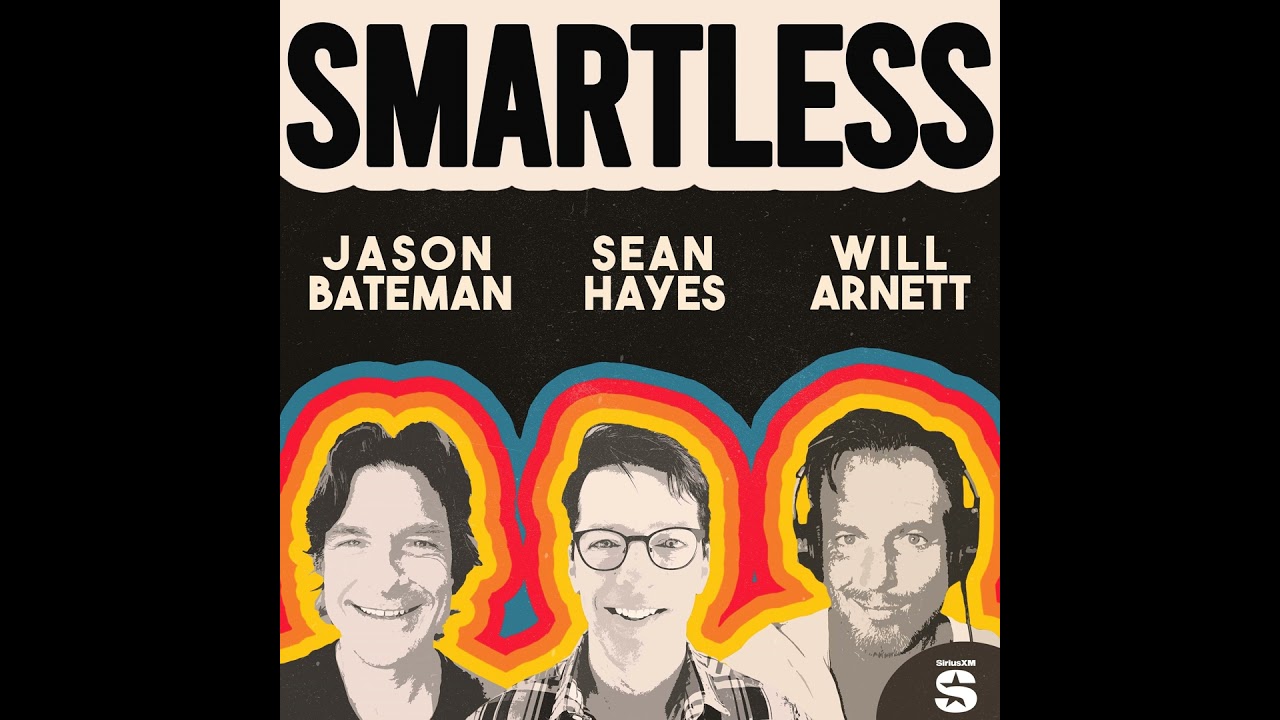
SmartLess
2,350 views • 22 hours ago Save 50 min 11 min read
Video Summary
Michael Douglas reflects on his prolific career, from early struggles with stage fright to becoming a celebrated actor and producer. He discusses the challenges of growing up as the son of Kirk Douglas, his unconventional college choice driven by a desire for beaches and bikinis, and his early career missteps in television. Douglas emphasizes the importance of material quality, a lesson learned from his time at the O'Neill Theater Center, which guided his decisions throughout his career, including producing the Oscar-winning 'One Flew Over the Cuckoo's Nest' against industry skepticism.
Douglas shares insights into his transition from television to film, the impact of his Oscar win for 'Cuckoo's Nest,' and his deliberate choice to focus on the story rather than just his own role. He recounts overcoming stage fright, navigating the complexities of his relationship with his father, and his later career choices, including venturing into green screen, comedy, and period pieces after surviving cancer. The conversation also touches on the challenges faced by second-generation actors and the enduring importance of strong material in filmmaking.
Short Highlights
- Michael Douglas's career spans over 60 years as an actor and producer.
- He discusses the challenges of being a second-generation actor in Hollywood.
- His early career included significant stage fright and early television 'turkeys'.
- He produced the Oscar-winning film 'One Flew Over the Cuckoo's Nest'.
- Douglas emphasizes the importance of strong material in film choices.
- He has explored various genres, including action, drama, comedy, and sci-fi.
- He recently published a memoir detailing his life and career.
Key Details
Early Life and Hollywood Legacy [00:00:00]
- Douglas recounts his childhood, marked by his parents' divorce and his upbringing as a New Yorker.
- He describes the dual experience of private schooling in New York and visiting his father, Kirk Douglas, in Hollywood.
- He notes the inherent difficulties of being the child of a famous actor, facing assumptions and taunts from peers.
"Oh, his kid's a movie star. Oh, he must think he's hot shit, you know, you haven't opened your mouth yet, you know, already, oh, he's hot shit."
College and a Different Path [00:05:15]
- Douglas explains his decision to attend UC Santa Barbara over Yale, influenced by its beach culture and the presence of girls in bikinis.
- He contrasts this with his all-boys private school education on the East Coast.
- He reflects on the cultural shifts of the 1960s, including the Vietnam War and the hippie movement, which influenced his time at UCSB.
"Now this was 1963. Uh huh. I had never seen back East a two piece bathing suit in my life. Better yet on a college brochure."
Mobile Man of the Month [00:10:40]
- After a year off from college, Douglas worked at a Mobil gas station in Westport, Connecticut.
- He reminisces about the full-service era of gas stations, where attendants checked oil and tire pressure.
- The hosts humorously refer to the hose that signals a car's arrival as a "ding hose."
"Those were the days in a gas station. I mean, you guys don't even remember those days in the gas station, when you went to get gas, they had your windshield wipers wiped."
Discovering Theater [00:12:50]
- Upon returning to college, Douglas became involved with the artistic community and declared theater as his major.
- He admits he was not a natural actor and suffered from severe stage fright, often vomiting before performances.
- His primary motivation for continuing was to overcome this stage fright.
"One, I could not walk onto a stage without a wastebasket right off stage, which I would puke into."
The O'Neill Theater Center Influence [00:15:00]
- Douglas's stepfather, William Darin, was on the board of the National Playwrights Conference.
- Douglas participated as an apprentice, learning the importance of material and the collaborative process between directors, playwrights, and actors.
- This experience taught him that the quality of the material was paramount, shifting focus away from his own performance.
"So at a very early age, right at the beginning, I learned that everything was the material."
Early Film Career and Television [00:18:30]
- After college, Douglas performed Off-Broadway and appeared on CBS Playhouse.
- He signed a contract with CBS and made five unsuccessful films, described as "turkeys."
- He humorously recalls one film being shown at Radio City Music Hall with more people on stage than in the audience.
"Michael, let me just say there were more people up on stage with the Rockettes than there were in the audience."
Transition to 'Streets of San Francisco' [00:22:00]
- Douglas found himself sliding into television work after his film failures.
- He landed a role in Quinn Martin's "Streets of San Francisco," a two-hour movie and 26-episode series.
- He spent five years on the show, filming 104 hours with co-star Karl Malden, learning about structure and acting responsibility.
"So those five years, I did 104 hours that I spent with Carl Malden."
Producing 'One Flew Over the Cuckoo's Nest' [00:25:00]
- Douglas's father had developed the project "One Flew Over the Cuckoo's Nest" for Broadway, but it didn't work out.
- At 23, Douglas convinced his father to let him try to get the film set up, initially with his father in the lead role.
- He juggled producing duties with his demanding role on "Streets of San Francisco."
"Dad, please let me try to get this set up. I'll try to get it set up, you know, with you playing the part, with the production company and all this."
Casting and Challenges for 'Cuckoo's Nest' [00:30:00]
- The conversation reveals that Gene Hackman passed on the lead role.
- Douglas had to inform his father that he wouldn't be playing McMurphy, a difficult conversation given his father's age and career changes.
- He offered his father half of his producing deal, which amounted to more money than he had made on any previous film.
"Dad, we got it going, but it's not going to be you playing McMurphy."
The Impact of 'Cuckoo's Nest' [00:35:00]
- Douglas discusses the skepticism surrounding the film, with many asking, "Who wants to see another snake pit?"
- He found director Milos Forman, who was living at the Chelsea Hotel, through a friend.
- The film went on to win all five major Academy Awards, with Douglas being 31 at the time.
"And Milos was in the middle of sort of a breakdown. He was living in the Chelsea Hotel in New York."
Stepping Out of Kirk Douglas's Shadow [00:40:00]
- Douglas reflects on the period of "Fatal Attraction" and "Wall Street" as the time he felt he stepped out of his father's shadow.
- He notes that he watched "Wall Street" for the first time recently and was impressed by it.
- He acknowledges that even as an Oscar-winning producer, he was still perceived as a television actor, a difficult transition at the time.
"For me, finally feeling like I stepped out of the shadow of this amazing guy."
The Actor as a Proxy [00:45:00]
- Douglas explains his philosophy of servicing the film and the story, rather than focusing solely on his own performance.
- He believes audiences buy tickets to see the film, not just the actor, and aims to be a trustworthy proxy for the audience's experience.
- He is complimented on his ability to disappear into his characters and bring the audience along for the ride.
"You've been this great proxy, this great tour guide that have brought me through so many great stories and environments and, and challenges and, and complications and decisions and successes, all through your characters."
Career Choices and Genre Exploration [00:50:00]
- Douglas discusses his later career choices, including "Romancing the Stone" and "The Jewel of the Nile," where he was involved as a producer but not necessarily the lead actor.
- He mentions developing "Starman," which ultimately starred Jeff Bridges.
- He identifies the year 1987, with "Fatal Attraction" and "Wall Street," as a turning point for his box office clout.
"And then it was out and then finally the studio, you know, had met Kathleen Turner was, she'd done, um, a sexy picture she made."
Exploring New Frontiers: Cancer and Green Screen [00:55:00]
- Douglas reveals he was diagnosed with stage four cancer and, after surviving, decided to explore new challenges.
- He hadn't done green screen work before and found "Ant-Man" fascinating.
- He also sought to explore comedy and period pieces, leading to roles in "The Comedian" and the Ben Franklin series.
"And, uh, and, and after I survived and, uh, and got out of it, I was really fortunate enough to have this Liberace project."
The Book and Legacy [01:00:00]
- Douglas discusses the motivation behind writing his memoir, "One Hell of a Ride," for legacy and memory.
- He mentions the challenges of recalling details, relying on his secretary's records and actors with better memories.
- He touches on past struggles with drug abuse and the impact on his life and family.
"And then for me, um, I got, um, I got cancer. I, I got stage four cancer, um, and, uh, things weren't looking great."
Navigating the "Nepo Baby" Discussion [01:05:00]
- Douglas addresses the "nepo baby" criticism, arguing that parents helping their children into their industry is common across professions.
- He believes the entertainment industry is unfairly singled out for this practice.
- He advises young actors to recognize good material and trust themselves to create their own identity.
"Why, why they picked on this because of, of the, of the well known aspect of it."
Enduring Stamina and Rejection [01:10:00]
- Douglas attributes his resilience to his father's incredible stamina and tenacity.
- He views rejection as fuel that makes one tougher and stronger in the film industry.
- He notes the rarity of successful two-generation movie stars, highlighting his own unique achievement.
"It's, it's rejection is the fuel. I think it makes you tougher and, and, and stronger."
Reflections on "Fatal Attraction" [01:15:00]
- The hosts express regret at not having time to discuss "Fatal Attraction" and other films in detail.
- They mention the film's tight construction and a different, darker original ending where the character commits suicide.
- The alternate ending involved her framing Dan before taking her own life.
"And you know that, you know that different ending, right? Is that Adrian Lin?"
Michael Douglas's Remarkable Career [01:18:00]
- The hosts marvel at Michael Douglas's extensive and varied career, suggesting he warrants a second episode.
- They emphasize his success in exceeding his father Kirk Douglas's legacy through diverse roles and longevity.
- His ability to connect with audiences across generations is highlighted as remarkable.
"He not only did it. I mean, he did it. He exceeded his father's legacy."
The Importance of Material [01:20:00]
- Douglas reiterates the crucial role of good material in his career choices, both as an actor and producer.
- He contrasts his approach with actors who might prioritize the size of their role over the quality of the film.
- This focus on story has been a consistent guiding principle throughout his decades in the industry.
"But, but a good piece of material, man. A good piece of material helps the, helps the use, uh, along, uh, well."
A Lifetime of Experience [01:22:00]
- Douglas reflects on his 82 years and the incredible ride his life has been, despite challenges like drug abuse and family issues.
- He expresses satisfaction with his career and life choices, acknowledging the ups and downs.
- He emphasizes the importance of creating one's own identity and trusting oneself.
"Yeah, no, I, I, like I said, what a ride, man. It's been, it's been, it's been unbelievable."
The Modern Acting Landscape [01:24:00]
- Douglas shares his observations on the current state of acting, noting the shift to self-tapes and the disappearance of traditional casting offices.
- He acknowledges the difficulty for young actors today, including his own three children who are actors.
- He expresses concern about the challenges of breaking into the industry without personal connections.
"It's, it's so tough. I've got three kids, all who are actors, they're doing okay. Uh, but it's tough."
The Book as a Memoir and Legacy Project [01:26:00]
- Douglas explains that his book serves as both a personal memoir and a way to preserve his and his father's combined film legacy.
- He highlights the extensive detail in the book, covering the creation and making of 10 significant films.
- The process of writing helped him recall details he had forgotten over the years.
"So just for a legacy, I figured, you know, I would keep it going for a legacy to write the book."
Final Thoughts on a Remarkable Career [01:28:00]
- The hosts express profound gratitude for Douglas's time and insights.
- They acknowledge the depth of his experiences and the impact of his work.
- The conversation concludes with a sense of awe at his enduring contributions to cinema.
"You do a wonderful job. Yeah. So, uh, keep it up. Thanks, Michael."