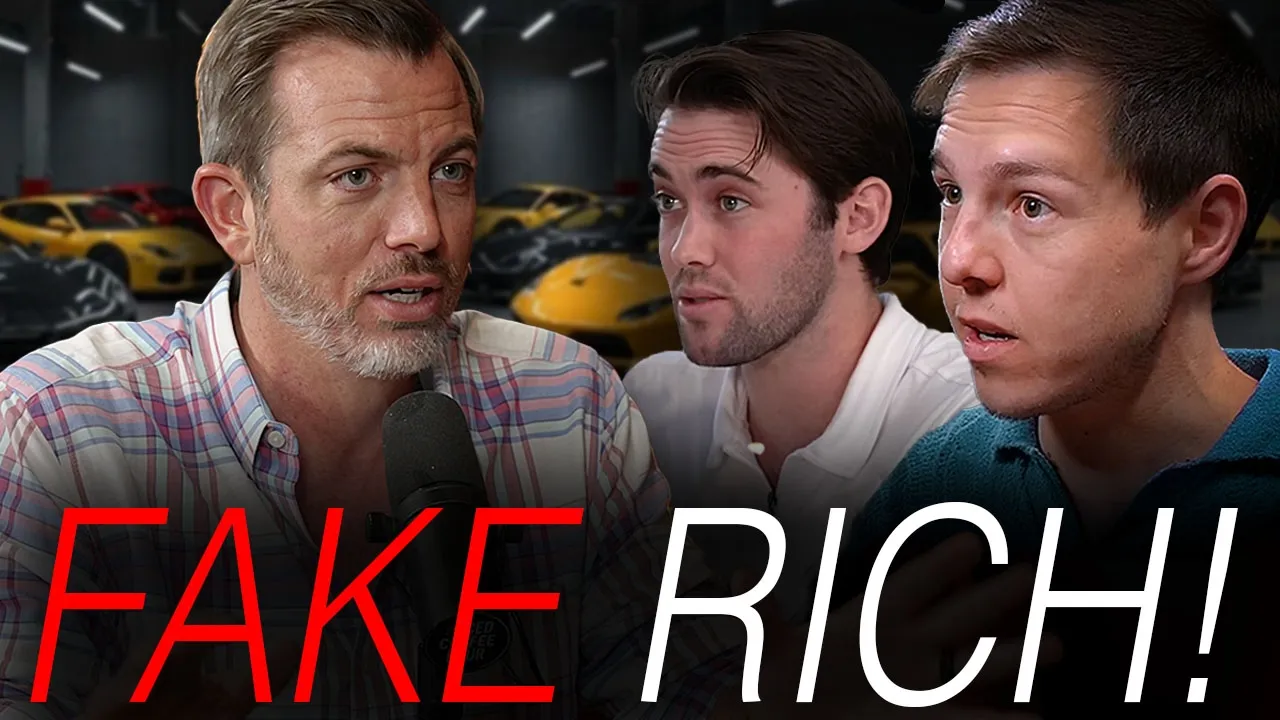
The High School Dropout Who Made $2B & Bought An NBA team
My First Million
1,494 views • 10 months ago Save 40 min 7 min read
Video Summary
Ryan Smith, a high school dropout with a 1.9 GPA, built a $2 billion net worth and achieved remarkable success. His journey began with personal challenges and a lack of direction, leading to a pivotal decision to find a new path. This led him to an unlikely opportunity in South Korea at 17, where he faced extreme hardship, including homelessness and a lack of money, yet persevered by teaching English and marketing his services creatively. This experience ignited a spark of self-reliance and entrepreneurial spirit.
His major breakthrough came with Qualtrics, a company he co-founded with his father, initially built from a basement. Despite early skepticism and significant competition, Smith and his team focused on a niche market, demonstrating relentless dedication. A pivotal moment arrived when they turned down a $500 million acquisition offer, a decision that solidified their commitment to building the company into a $8 billion enterprise and eventually going public. The narrative emphasizes the importance of grit, long-term vision, and the power of focused effort.
2. Description
From high school dropout to billionaire NBA owner: the incredible journey of Ryan Smith and the lessons learned building Qualtrics.
Short Highlights
- Long Keypoints
From Dropout to Entrepreneurial Spark in Korea [00:00]
- Smith’s early life was marked by a low GPA, parental separation, and a feeling of rebellion, leading him to drop out of high school without a clear plan.
- He didn't initially possess strong academic or work ethics, excelling only in sports and poker, which gave him a sense of potential but not direction.
- An uncle offered him a job at a tech company, IMAL, where he worked in the mailroom, sparking an interest in earning money and exploring opportunities abroad, specifically mentioning Alaska and South Korea.
- Against his parents’ minimal expectations (just graduate high school), he obtained a GED at 17 and pursued a fast-tracked university course, realizing his capability when he set his mind to something.
- His trip to Seoul at 17 was a harsh introduction to the realities of entrepreneurship; the promised job and housing fell through, leaving him stranded with limited cash.
- His father's unconventional support, refusing to let him come home and encouraging him to "go do something," was a critical turning point, pushing him to figure things out.
- Stranded and homesick, he found work teaching English for $10/hour and secured a tiny sleeping space in a "Goshiwon" by offering English lessons in return.
- He launched a mass-marketing campaign using flyers and pagers to secure private English tutoring clients, which rapidly became successful, leading to an income of $8,000 a month by age 17.
"I got to find a gear that I've never used before."
The Genesis of Qualtrics and Early Struggles [10:08]
- Qualtrics originated from Smith’s father’s idea to collect research online, a novel concept at a time when companies relied on paper surveys or did nothing at all.
- Smith, having learned go-to-market strategies at Hewlett-Packard, saw the potential to commercialize his father's idea, especially after his father’s recovery from cancer.
- They started Qualtrics as a 50/50 partnership, working from the family basement, with Smith handling sales and his father, initially unable to speak, communicating via a whiteboard.
- Despite initial skepticism from friends and even Smith himself, they secured 10 customers within months, driven by a "Jerry Maguire moment" of finding one person to believe in their vision.
- The early days were characterized by intense focus and resourcefulness, with equipment bought from campus salvage sales and Smith making thousands of sales calls.
- Smith's sales script involved asking about current methods, introducing Qualtrics, and highlighting its use by top researchers, even creating false local affiliations to gain entry.
- He emphasizes that great salesmanship comes from believing in the product's value and its ability to improve the customer's life, reframing sales as a "generous act of letting the right person know you might have a solution."
"We were religious about it, and it was actually an incredible forcing function for me."
Strategic Focus and the Power of Brotherly Dynamics [14:02]
- A crucial strategic decision was to narrow the focus to selling exclusively to universities, a move driven by early traction with institutions like the Kellogg Business School.
- Smith's brother, an early Googler running Google China, became a significant advisor, instilling a discipline of focus and execution.
- The brother’s demanding advice – "stay on script, stay focused, and like actually finish something" – acted as a powerful forcing function for Smith and the Qualtrics team.
- This strict guidance encouraged meticulous planning of calls and progress updates, forcing them to achieve tangible results.
- In 2009, Smith recruited his brother from Google, leading to a synergistic dynamic that accelerated the company's growth.
- Their sibling relationship allowed for pushing each other harder than any other executive could, operating with a shared language and complementary skills (engineer vs. business).
- This relationship also fostered a deep understanding of each other's weaknesses, with the brother initiating discussions about personal shortcomings to drive mutual growth.
"If you're going to call me, stay on script, stay focused, and like actually finish something."
The $500 Million Offer and the Long Game [26:22]
- A major turning point was receiving a $500 million acquisition offer from SurveyMonkey, a substantial sum that would have set up everyone for life.
- Despite pressure from advisors to accept the offer, Smith and his team, guided by a mentor who regretted selling Word Perfect too early, ultimately decided to turn it down.
- This decision was a "burn the boat" moment, signaling a deep commitment to building Qualtrics independently.
- The refusal of the offer was initially met with skepticism, but Smith used it as motivation, particularly a Business Insider headline about him turning down the money.
- Two years later, after raising $70 million and continuing to grow, they raised $1 billion, then later $2.5 billion, with headlines that mirrored the initial story, reinforcing their long-term vision and progress.
- Smith highlights the concept of "playing the long game," citing Mr. Beast's decade of obscurity before success, and emphasizing that true success is built on consistent effort over time.
- The sale of Qualtrics for $8 billion was described as an "underwhelming" day, suggesting the journey and the pursuit were more fulfilling than the financial outcome.
"Every other person I would talk to about this offer was like take it and run."
Impact, Legacy, and Embracing Opportunity [35:45]
- Smith reflects on the stories that will define his career, drawing parallels to how legendary athletes reminisce about their journeys.
- The sale of Qualtrics, while financially significant, was not a "Eureka moment," underscoring his belief that the journey itself is the reward.
- He anticipates working until he's 80, knowing his drive and passion for building will continue.
- Owning an NBA team, specifically the Utah Jazz, was an unexpected but deeply personal aspiration that materialized after his extensive focus on Qualtrics.
- He pursued the opportunity with significant personal sacrifice, including giving up season tickets to the Jazz, a team he grew up with.
- The acquisition of the Jazz for $1.6 billion was a clean deal, with the seller recognizing Smith’s commitment to keeping the team in Utah.
- Smith emphasizes the responsibility and pressure of owning a team that carries the hopes of a community, a different kind of pressure than building a company.
- He advocates for identifying and pursuing opportunities based on core attributes and values, rather than a predefined vision, suggesting that "figuring out what you don't want to do" is as crucial as knowing what you do.
"Don't bling these chants. There's 30 of these things in the world. Just go."