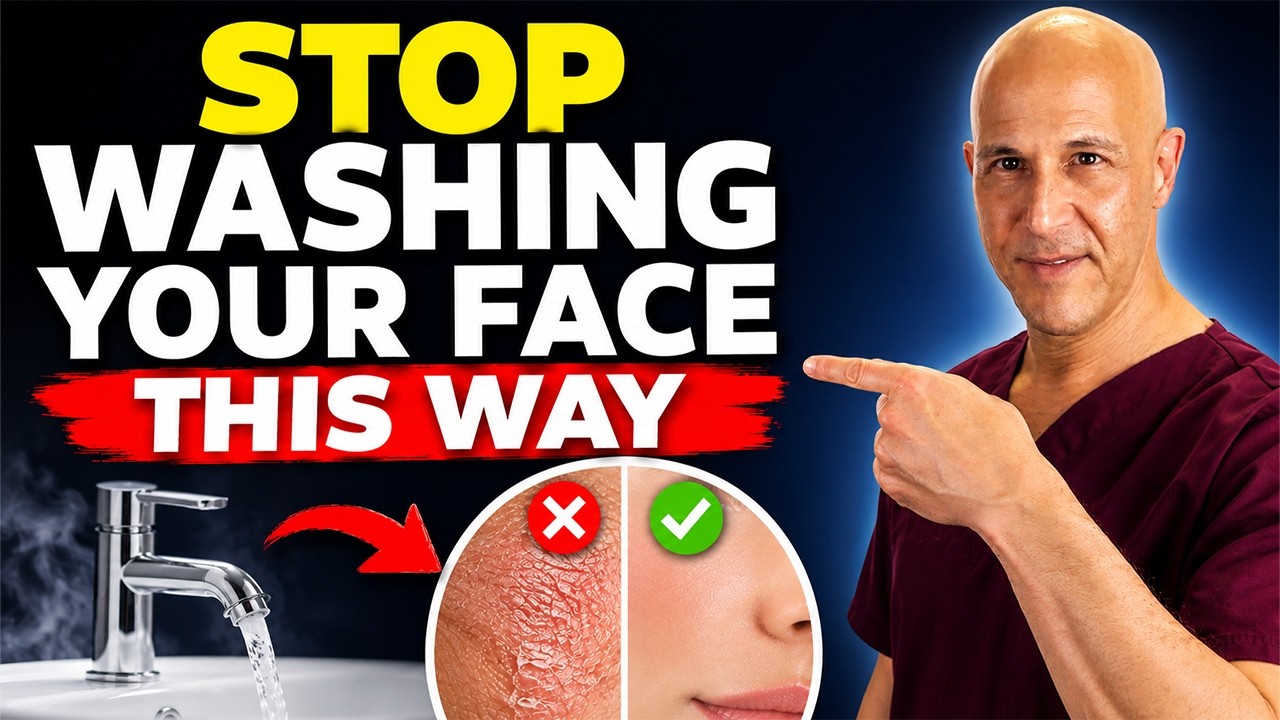
Stop Washing Your Face This Way — It’s Aging Your Skin Faster | Dr. Mandell
motivationaldoc
9,067 views • 1 month ago Save 6 min 3 min read
Video Summary
Washing your face with water that is too hot can damage your skin's protective barrier, leading to dryness, irritation, and premature aging. This seemingly harmless habit, along with over-cleansing and aggressive scrubbing, strips away essential natural oils and lipids, compromising the skin's ability to retain moisture and defend against irritants.
Instead of a "squeaky clean" feeling, which signals barrier damage, aim for a gentle routine with lukewarm water, a mild cleanser, and prompt moisturizing. Protecting this barrier is crucial, especially as skin naturally thins and produces less oil with age, and it can significantly exacerbate conditions like rosacea and eczema. Simple changes, like adjusting water temperature and avoiding harsh treatments, can lead to dramatically healthier-looking skin.
Short Highlights
- Hot water damages skin barrier: It strips natural oils and lipids, leading to dryness, irritation, and premature aging.
- Lukewarm water is best: It cleanses effectively without stripping essential protective elements.
- Over-washing is detrimental: Cleansing too often removes protective oils before the skin can restore them.
- Gentle cleansing is key: Avoid harsh scrubbing, abrasive tools, and overly foamy or fragranced cleansers.
- Moisturize promptly: Apply moisturizer within minutes of washing to seal in hydration.
- Sunscreen is vital: Protect skin from UV radiation to prevent premature aging and collagen breakdown.
Key Details
The Hidden Danger of Hot Water [0:00]
- Millions wash their face daily, unaware that hot water can weaken their skin's protective barrier.
- This barrier is crucial for keeping skin smooth, hydrated, and youthful.
- The belief that hot water opens pores for a deeper clean is a myth; pores do not have muscles to open and close.
"Every single day, millions of people wash their face, believing they are helping their skin, when one small mistake may actually be weakening the very barrier that keeps our skin smooth, hydrated, calm, and youthful looking."
Skin Barrier: The Brick Wall Analogy [1:03]
- The skin's outer layer acts like a brick wall, with cells as bricks and natural fats (lipids) as mortar.
- This barrier prevents moisture loss and blocks irritants, allergens, and pollutants.
- Washing with very hot water, harsh soaps, aggressive scrubbing, or over-washing breaks down this protective mortar.
"Your skin cells are the bricks and the natural fats between them, including ceramides, cholesterol, and fatty acids are the mortar that hold that wall together."
Consequences of Barrier Damage [2:22]
- When the barrier breaks down, moisture escapes easily, leading to transepidermal water loss.
- Damaged skin feels tight, dry, flaky, and itchy.
- The "squeaky clean" sensation is a warning sign of stripped natural protection, making fine lines and wrinkles more noticeable.
"And this loss of water through the skin is called transepidermal water loss. And it's one of the major reasons damaged skin feels tight, dry, flaky, itchy, or even irritated."
The Cycle of Irritation and Repair [5:09]
- As skin ages, it naturally produces less oil and holds moisture less efficiently, making barrier protection even more critical.
- Individuals with rosacea, eczema, psoriasis, acne, or sensitive skin are particularly vulnerable, as heat can worsen redness and irritation.
- A damaging cycle occurs when dry or irritated skin prompts harsher treatments, further weakening the barrier and increasing reactivity.
"But the more they strip the barrier, the more unstable and reactive the skin can become."


![Trump JUST Left the UN *Speechless* [Full Breakdown]](https://i.ytimg.com/vi/6EQqr-ua9FA/hqdefault.jpg)