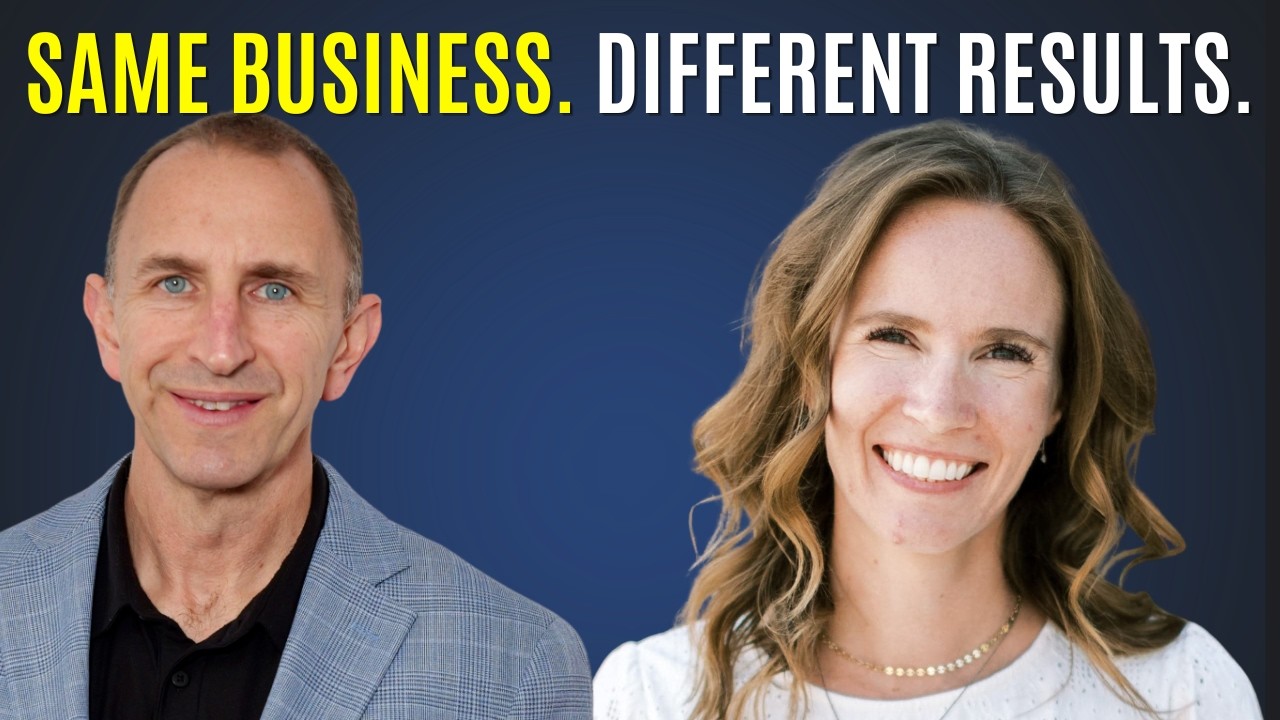
Both Own Liquor Stores. One Struggled. What Went Wrong?
BiggerPockets Money
4,067 views • 9 days ago Save 43 min 10 min read
Video Summary
A liquor store owner who started her business from scratch in 2020 has faced significant financial struggles, losing $40,000 last year. Ashley Kerr, the owner, initially treated the business as a passive investment, similar to her real estate ventures, and hired a manager. However, this hands-off approach led to issues like delayed cash deposits and suspected embezzlement, forcing her to become actively involved.
In contrast, Tim Delaney, who bought an existing, underperforming liquor store, emphasizes a hands-on approach for the first five to seven years. He meticulously built Standard Operating Procedures (SOPs) and gradually transitioned management responsibilities, resulting in a thriving business with projected annual sales of $2.1 million. Both owners highlight the critical importance of active management and customer engagement, especially when dealing with niche products like rare bourbons, to ensure profitability and long-term success.
Short Highlights
- Ashley Kerr's Liquor Store Struggles:
- Opened in November 2020, experienced a decline in sales.
- Lost $40,000 in 2025, requiring owner investment.
- Faced issues with manager's performance, including suspected embezzlement and delayed cash deposits.
- Initially treated as a passive investment, leading to a lack of direct oversight.
- Now actively involved, focusing on improving the bottom line.
- Tim Delaney's Liquor Store Success:
- Bought an existing store and actively managed it for 5-7 years.
- Developed detailed Standard Operating Procedures (SOPs).
- Successfully transitioned to a less hands-on management role.
- Projected annual sales of $2.1 million.
- Focuses on protecting gross margins and customer loyalty.
- Key Differences in Approach:
- Ashley started from scratch in a small town with low population.
- Tim bought an established business in a larger market.
- Ashley's initial mistake was underestimating the hands-on nature of retail.
- Tim's success stemmed from meticulous system building and gradual delegation.
- Niche Products and Customer Engagement:
- Both owners utilize rare bourbons to attract and retain customers.
- Tim develops single-barrel programs and a private label.
- Ashley is exploring rare tequilas and leveraging social media for customer feedback.
- Customer engagement and understanding demand are crucial for profitability.
- Operational Best Practices:
- Importance of Standard Operating Procedures (SOPs) for smooth transitions.
- Securing business-owned email accounts for online platforms.
- Regular cash deposits and diligent bookkeeping are essential.
- Financial Focus:
- Both owners emphasize the bottom line and protecting profit margins.
- Price adjustments and avoiding excessive discounting are key.
- Lessons Learned:
- Retail businesses are not inherently passive.
- Active involvement and understanding customer needs are vital for success.
Key Details
Ashley Kerr's Liquor Store Journey [0:00]
- Opened a liquor store from scratch in November 2020, during the tail end of COVID-19.
- Inspired by seeing a wine and liquor store operate as a "cash cow" for another investor.
- Acquired a commercial building for $20,000 and renovated it to house the store.
- Chose a rural town with a population of 3,500, located on a main road connecting smaller towns.
"And so we renovate the building and we decide to start the liquor store from scratch."
Initial Management and Decline [3:00]
- Initially planned for a hands-off approach, with a business partner's experienced manager overseeing operations.
- The manager, however, lacked liquor store experience, leading to the hiring of a bar manager.
- The first couple of years were successful, but a slow decline began.
- By 2025, the business required a $40,000 investment to stay operational.
"And the first couple of years were great. And then we started to notice a slow decline until last year."
Tim Delaney's Active Involvement [5:00]
- Tim Delaney took a highly active role in his liquor store for the first five to seven years.
- He viewed the store as his day job, focusing on building a sustainable business.
- Transitioned to an assistant manager and then a general manager role, now working about one day a week.
- Still handles all bookkeeping and payroll, maintaining control over finances.
"So my first days, months, years, I was super actively involved in the liquor liquor store."
Store Size and Market Comparison [8:00]
- Ashley's store is about 1,100 square feet, located in a town of 3,500 people, near a larger town of 60,000.
- Tim's store is approximately 2,200 square feet, in a town of under 12,000, with several larger suburbs nearby.
- Ashley's store is the only one in its immediate town but serves a rural area and benefits from traffic on a main road, including corrections officers.
- Tim's town has no other liquor stores, but surrounding towns have multiple.
"So in that town, just in that little town where it is, it's a population of, get this, 3,500 people."
Ashley's Misconception of Passive Income [11:00]
- Ashley initially believed the liquor store would be a passive investment, like her real estate ventures.
- She underestimated the management and operational demands of a retail business.
- Her experience with a previous investor, who had an established, well-managed store, created a false comparison.
"The problem was I was a real estate investor first. I may not have stocked the shelf server at that liquor store, but I installed the tile in the bathroom."
The Credit Card Machine Crisis [14:00]
- In December 2024, Ashley discovered a bounced check to a supplier.
- Investigation revealed an error with the credit card machine, causing a three-week delay in receiving funds.
- The credit card processor had to manually enter transactions and hold approximately $20,000 due to the delay and fear of chargebacks.
"We had not received a credit card deposit in over three weeks."
Managerial Issues and Suspected Theft [17:00]
- After the credit card issue, Ashley's manager was found to be delaying cash deposits for up to three weeks, keeping cash in the safe.
- Charges for Wegmans, Amazon, and Bath & Body Works appeared on business statements, totaling over $800.
- The manager claimed these were accidental or personal, but paid the money back.
- An employee revealed the manager was rarely present, while the employee was handling most operational tasks.
"And when I asked her about it, you know, it was, oh, this is accidental. My card is linked to the Amazon."
Transitioning Management Responsibilities [20:00]
- Tim's transition to a less active role was slow and intentional, with each handed-off responsibility documented via Standard Operating Procedures (SOPs).
- He trained an assistant manager, then promoted him to general manager, ensuring knowledge transfer.
- Ashley has a binder of SOPs created by her manager but acknowledges the need for management-level SOPs.
"Every decision I made was designed to, okay, what does this look like when I'm not here?"
Operational Pitfalls: Digital Ownership [24:00]
- Ashley's former manager retained ownership of business accounts on platforms like Google Maps and Yelp using her personal email.
- She also created the business's Facebook page, making her the owner and Ashley only an admin.
- Changing these required the manager's cooperation, which was delayed.
- The recommendation is to use a dedicated company email for all business accounts.
"She had ownership with her personal email to that. And then like Yelp on Yelp, it was her personal email that was linked to that."
Cash Handling and Deposit Frequency [27:00]
- Ashley's manager was delaying cash deposits for up to three weeks, making them at her convenience.
- Tim deposits cash two to three times a week, depending on the volume.
- The frequency of cash deposits is crucial for security and cash flow management.
"So it would be very random when deposits were made."
The Rare Bourbon Market [29:00]
- Ashley began stocking rare bourbons about two months prior, finding it a grind to acquire them.
- The process involves limited availability releases, requiring quick ordering like buying concert tickets.
- She has attracted bourbon collectors and is receiving special requests.
- Tim has a well-established bourbon program, including single-barrel selections and a private label.
"It basically tells you what's going to be available. And you just have to be ready to submit your order right when they go available before they're actually sold out."
Tim's Bourbon Program and Strategy [32:00]
- Tim's bourbon program has been a stability factor, especially as alcohol sales decline nationally.
- He focuses on refining the bourbon selection and educating himself on the products.
- He implements a fair distribution system for rare bourbons, prioritizing regular customers.
- They purchase entire barrels of exceptionally tasting bourbon, bottling it exclusively for their store.
"We also don't sell it to the random person that just drove a hundred miles and is hitting every single store in the area, trying to get their hands on these bourbons."
Exploring Rare Tequilas and Customer Feedback [35:00]
- Ashley notes a rare tequila release and is considering stocking it, though the collector base is smaller than for bourbon.
- She doesn't drink liquor herself, finding it fascinating that she owns a liquor store.
- Tim suggests using social media to gauge customer interest in specific products.
"There actually is a rare tequila being released this week."
Advice for Turning Around the Store [38:00]
- Tim advises Ashley to focus on getting to know her customers and understanding their preferences.
- This data helps in making informed decisions about inventory and improving profit margins.
- Ashley plans to implement a system for tracking customer wishlists and feedback.
"Like I think one of the big advantages that I had buying an existing store versus starting from scratch is I already had a history... I had the knowledge of what customers were already drinking."
Operational Improvements and Bottlenecks [41:00]
- Ashley is implementing a Monday board for better communication and task tracking with her employee.
- She is working on granting her employee more access to the POS system to reduce bottlenecks.
- Tim shares his early method of using slips of paper at the register and later a Google form to collect customer requests.
"So she'll text me, here's a new UPC code. I need you to enter it into the POS system."
Sales Figures and Financial Goals [44:00]
- Ashley's store had $220,000 in sales last year with a $40,000 loss.
- She aims for $300,000 in sales this year, with a primary focus on profitability.
- Tim's store is projected to reach $2.1 million in annual sales.
- He has introduced a private label bourbon, "Alma Forge," to improve margins.
"So last year we did 220,000 and I'm trying to get us closer to 300,000 this year."
Ashley's Evolving Role and Future Plans [47:00]
- Ashley acknowledges her initial mistake of treating the liquor store as passive.
- She enjoys starting businesses but needs to focus on asset management.
- She is considering buying out her partner and is currently focused on sustaining the business without losses.
"But I think my biggest lesson was that it's not a hands off business. It's not passive."
Tim's Business Philosophy and Networking [50:00]
- Tim emphasizes protecting gross margins and raising prices accordingly when distributors do.
- He views his store as a "cash cow" but stresses the extensive work that went into creating it.
- He promotes his podcast, "Business Buying for Financial Independence," and his website, PowerOfBiz.com.
"It's always, you know, the top line is doesn't matter if you're not making a profit at the end of the day."
Ashley's Podcast and Store Information [53:00]
- Ashley co-hosts the "Real Estate Rookie" podcast with Tony J. Robinson.
- She can be found on BiggerPockets forums and Instagram (@BiggerPocketsRookie).
- Her store is North Collins Wine and Liquor in the South Towns of Buffalo, New York.
"We teach people on how to get started in real estate."
Tim's Store Information and Final Thoughts [55:00]
- Tim's store is Elma Wine and Liquor in central Erie County.
- He highlights the importance of preparation meeting opportunity.
- Mindy Jensen, the host, reflects on her own past entrepreneurial ideas and Ashley's journey.
"If somebody is looking at me now, that's what they might assume about the liquor store as well versus what went into it 13 years ago, 10 years ago."