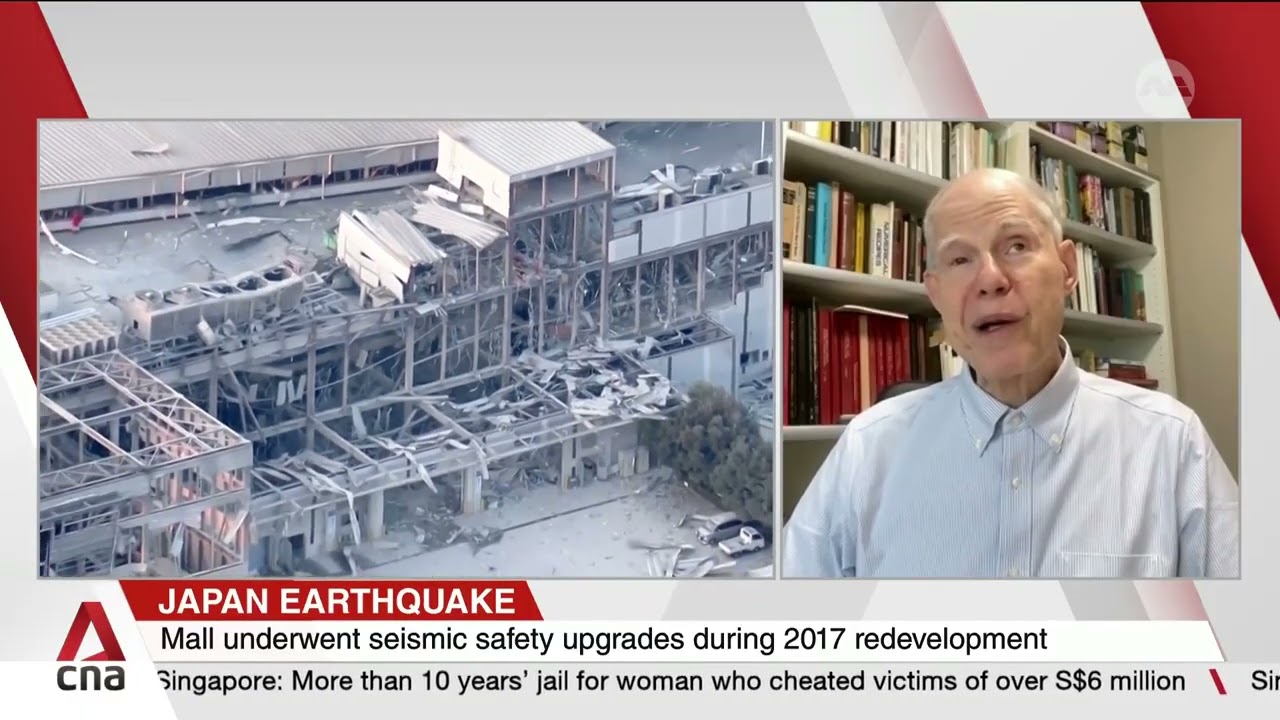
Is the SK Hynix ADR premium the market's latest bubble warning? Economist discusses.
CNBC International Live
2,374 views • 22 hours ago
Video Summary
The discussion centers on the "law of one price" violation concerning SK Hynix's ADRs trading at a significant premium in the US compared to its Korean shares. This discrepancy is viewed as a potential indicator of a market bubble, reminiscent of the dot-com era. While not a direct tragedy for the company, it signals market irrationality, possibly driven by an intense appetite for AI-related stocks.
Experts suggest that while the mispricing might persist, it ultimately resolves as prices revert to fundamentals. Companies could strategically issue more expensive ADRs and repurchase cheaper Korean shares. The limited wave of recent IPOs and the disappointing performance of some recent offerings like SpaceX's IPO are being closely watched as indicators of broader market health and the potential for a larger bubble.
Short Highlights
- SK Hynix ADRs are trading at a significant premium in the US compared to Korean shares, violating the law of one price.
- This mispricing is seen as a potential sign of a market bubble, similar to historical events in 1999-2000.
- High demand for AI stocks is a driving factor, but investors are advised to consider long-term strategies and potentially buy Korean shares directly.
- The resolution of such mispricings typically involves prices reverting to fundamentals, though it can take time.
- Recent IPOs and capital raising activities are being monitored for signs of a broader market bubble.
Key Details
Law of One Price Violation [00:00]
- The significant price difference between SK Hynix ADRs in the US and its Korean shares is a violation of the law of one price.
- This is considered a bad sign and potentially indicative of a market bubble.
- Historically, similar situations with other ADRs occurred in 1999-2000.
"So, the reason I think it's a it's a sign of a bubble is we usually don't see ADRs mispriced in this way and we don't see it for other Korean ADRs in the United States."
Investor Appetite for AI Exposure [01:02]
- Investors may be willing to pay a near 50% premium for SK Hynix ADRs to gain exposure to the AI super cycle.
- While AI is a real and significant trend, the current pricing reflects a short-term focus rather than long-term investment.
- Alternative ways for US investors to gain exposure include trading Korean stocks directly or buying ETFs.
"So, I think it's I think there is a there is a huge appetite for AI stocks and it's a reflection of the of the appetite and there is a method to the madness in the sense that AI is a real thing."
Market Bubble Indicators [02:22]
- The mispricing of SK Hynix ADRs, especially for a large company like it, matters more than for smaller firms.
- If recent market history is a guide, such situations can end with prices reverting to normal, but this can take years.
- The law of one price usually holds for most ADRs and options, with violations being rare exceptions.
"Any any any violation of law of one price is usually a weird little corner of the stock market."
Strategic Financial Moves [03:47]
- Mispricings can impact a firm's ability to raise capital.
- SK Hynix could benefit by issuing more shares in the US where they are expensive and repurchasing cheaper Korean shares.
- Taiwan Semiconductor did something similar in 2000 by issuing more shares when they were expensive.
"So, for example, if I were SK Hynix, I would be issuing more shares in the US cuz those shares are expensive."
Capital Raising and IPO Market [04:50]
- The current global capital raising environment and the performance of recent IPOs are being closely watched.
- The SpaceX IPO and SK Hynix ADR issuance are noted as examples of capital raising, but a huge wave has not materialized.
- Disappointments in recent offerings like SpaceX are setting a negative tone for aspiring companies.
"Well, that's really the the big question. You know, I see issuance as being at the heart of resolving capital market, you know, setting capital market prices correctly."
Assessing Bubble Risk [06:11]
- The lack of a significant wave of IPOs following recent offerings suggests that a full-blown stock market bubble has not yet been confirmed.
- More IPOs and a larger volume of IPOs would be needed to declare a bubble.
"I I wouldn't be ready to call this a stock market bubble until we see many more IPOs or at least many more dollars of IPOs."