Where Global Money Is SECRETLY Moving
Coin Bureau
1,556 views • 22 hours ago Save 6 min 4 min read
Video Summary
Britain experienced its largest ever annual outflow of millionaires in 2025, with a net loss of 16,500 individuals, more than double that of second-place China. This exodus is driven by a global tightening of financial regulations and increasing tax burdens in high-debt countries, prompting wealthy individuals, founders, and businesses to seek more favorable environments.
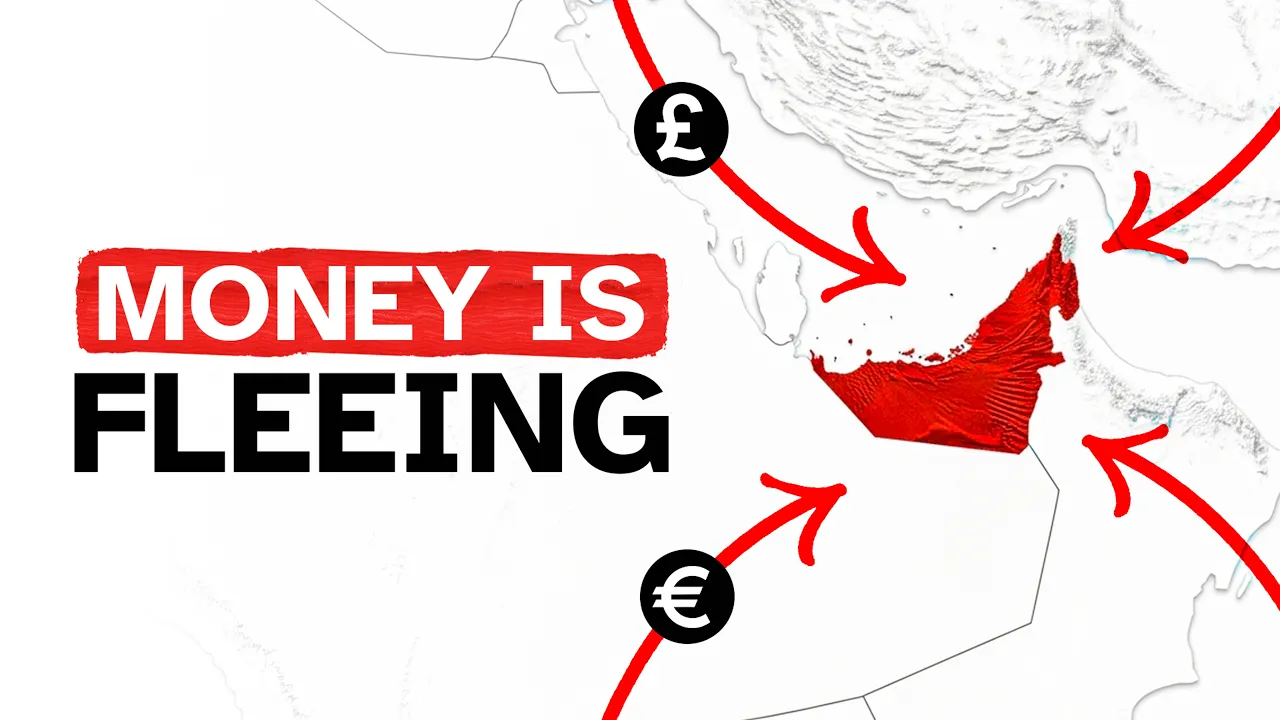
Wealth is migrating from nations like the UK, which abolished its non-domicile tax regime, and Norway, which raised wealth and dividend taxes, to newer hubs such as Singapore and Dubai. These destinations offer attractive incentives like lower taxes and easier residency. The movement is further influenced by the limitations of traditional financial infrastructure, like SWIFT, which can be politically controlled, pushing individuals to explore alternatives like stablecoins, CBDCs, and ultimately, Bitcoin for greater financial sovereignty.
Short Highlights
- Britain lost a record 16,500 millionaires in 2025, more than double China's outflow.
- Wealth is moving from high-debt, high-tax countries to newer financial hubs.
- Key drivers include wealth taxes, capital controls, and currency devaluation.
- Destinations like Singapore and Dubai offer attractive tax and residency incentives.
- Traditional financial infrastructure like SWIFT faces challenges due to political control.
- Alternatives like stablecoins, CBDCs, and Bitcoin are emerging for wealth mobility.
Related Video Summary
Key Details
Record Millionaire Outflow from Britain [0:00]
- In 2025, Britain saw a net loss of 16,500 millionaires, the largest annual outflow ever recorded for a single country.
- This outflow is more than double that of second-place China, with wealthy individuals, dynasties, and businesses relocating.
- The movement is characterized by re-registering family offices and wire transfers leaving traditional financial centers.
"In 2025, Britain lost a net 16,500 millionaires. That's the largest annual outflow ever recorded for a single country and more than double second place China."
Shifting Financial Landscape [3:29]
- Capital is migrating from countries with high debt and taxes to newer hubs actively seeking investment.
- The UK abolished its non-DOM regime in April 2025, taxing foreign income previously outside the taxman's reach and including offshore property trusts in inheritance tax.
- Tech billionaire Herman Narula moved to Dubai, calling the UK's exit taxes "bonkers."
"The UK's debt is at roughly 100% of GDP while France is north of 110%."
Tax Incentives Drive Migration [5:39]
- Italy, through a flat annual tax on foreign income, has attracted wealthy individuals to Milan, with property prices rising 38% in five years.
- Norway, despite a strong economic position, saw significant outflows after raising wealth and dividend taxes.
- Cjell Inge Röcke, Norway's 4th richest person, relocated to Lugano, citing "tax reasons."
"I am leaving for tax reasons, at least pretty direct."
Emerging Financial Hubs and Infrastructure [9:01]
- Singapore has seen a surge in single-family offices, growing from around 400 to over 2,000 by the time of the transcript.
- Three primary forces are pushing wealth out of old capitals: wealth taxes, capital controls, and currency devaluation.
- The UAE offers golden visas with zero personal income and capital gains tax, while Switzerland taxes wealthy foreigners on living expenses.
"And the common feature is that none of those people moved on a whim. They fled their countries because staying had become a riskier choice."
The Future of Cross-Border Wealth Movement [14:07]
- Traditional financial infrastructure like SWIFT is politically vulnerable, as seen with sanctions against Iran and Russia.
- Stablecoins offer faster settlement but can be controlled by entities like Tether and Circle.
- Central Bank Digital Currencies (CBDCs) offer potential for control by issuing institutions.
- Bitcoin provides financial sovereignty, with wealth as mobile as the individual, crossing borders via hardware wallets or memorized seed phrases, outside of bank freezes and network cutoffs.
"Swift was built in the 1970s so banks could talk to each other. Today, it doubles as a tool to administer sanctions."