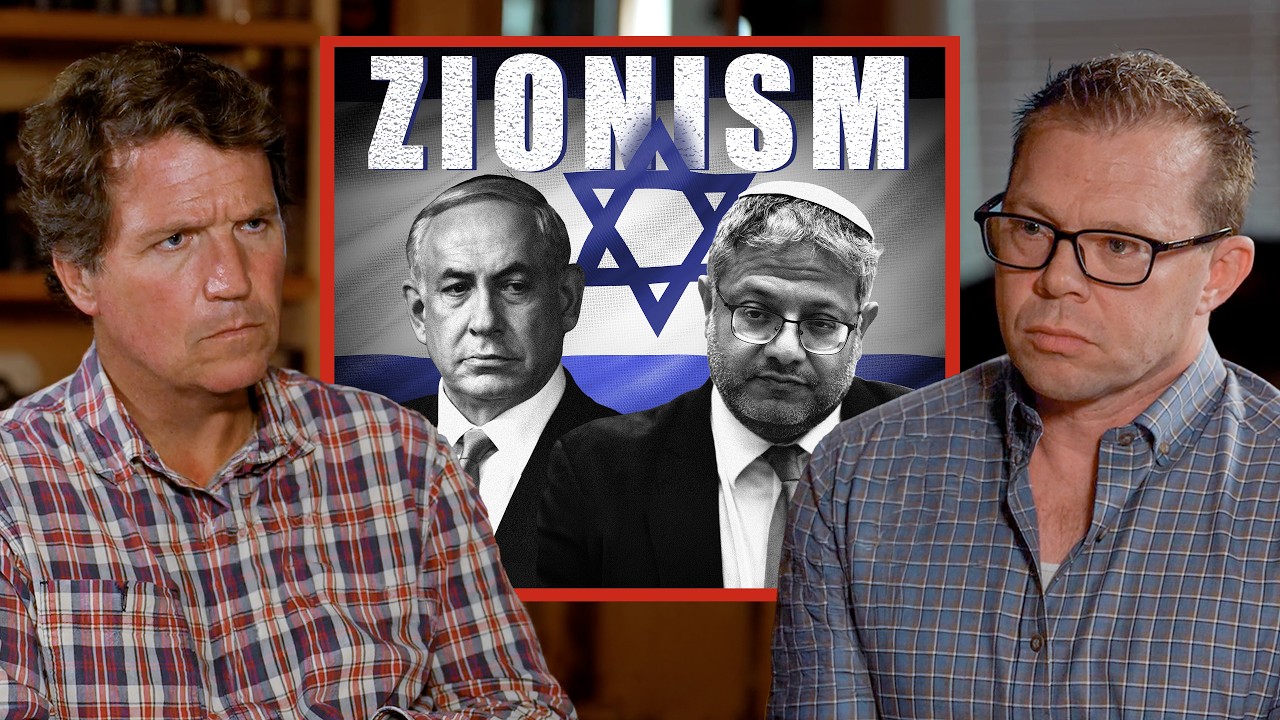
Tucker and Darryl Cooper on the Cult of Zionism
Tucker Carlson Network
106,029 views • 1 month ago Save 8 min 4 min read
Video Summary
The creation of Israel, built on a foundation of conflict, has fostered a persistent mentality of paranoia and hostility that has become integral to the nation's identity. This has led to a collective trauma that, while understandable given historical persecution, negatively impacts Jewish identity and its relationship with the world. The emphasis on remembering past atrocities, rather than on religious or moral values, shapes a worldview where external threats are paramount, potentially leading to a self-fulfilling prophecy of conflict.
This dynamic mirrors patterns seen in nascent nationalist movements and cults, where an "us versus them" mentality, fueled by external threats, creates internal cohesion but guarantees external conflict. The speaker argues that while trauma is real and generational, a pathological paranoia, even when rooted in genuine threats, is detrimental. This has manifested in extreme fear among some Jewish individuals, impacting their daily lives and potentially constituting a form of child abuse when passed down through generations.
Short Highlights
- Zionism's early ideology might not have garnered support if its eventual requirements were known.
- The creation and maintenance of Israel have necessitated a persistent mentality of paranoia and hostility.
- This mentality has become constitutive of the state's identity, impacting Jewish identity globally.
- Remembering the Holocaust, rather than religious values, is the primary aspect of Jewish identity for many.
- A worldview centered on past persecution can lead to a self-fulfilling prophecy of conflict.
- This dynamic mirrors cults and nascent nationalist movements, fostering in-group cohesion through external threat.
- Pathological paranoia, even when rooted in real threats, has detrimental effects on individuals and relationships.
- Generational trauma can manifest as extreme fear, impacting daily life and potentially constituting child abuse.
Key Details
The Unforeseen Cost of Statehood [00:00:00]
- Early Zionism might have faced significant opposition if its full implications, including the required transformation of its adherents, were revealed.
- Gaining global Jewish support for Zionism was a protracted process, with many communities only coming around by the 1930s.
- The idea of building a state that demands a persistent mentality of paranoia and hostility would have deterred many initial supporters.
"If you were to go back to the earliest days of Zionism and tell most of the people who were embracing the ideology back then that you're going to get your state, but here's what it's going to require, and here's what it's going to transform you into, it would have lost a ton of support."
The Corrosive Nature of Paranoia [00:01:20]
- Maintaining a state of conflict requires the population to adopt a persistent mentality of paranoia and hostility.
- This mentality can become oppressive, diminishing the population's interest in defending the state.
- Constant fear and perceived hatred can transform individuals, leading to reciprocal hatred.
"I mean, that becomes oppressive on people and it becomes something that people are not as interested in defending."
Nationalism's Double-Edged Sword [00:02:00]
- Newly formed nations, like Poland or Ukraine, often experience a sense of threat and hostility toward outsiders to solidify national identity.
- This paranoia helps hold the national community together, especially after centuries of imperial rule.
- Unlike many other nations that stabilized, Israel has been in a constant state of conflict, making this mentality integral to its identity.
"And there's this real, real sense of paranoia and hostility toward outsiders that kind of holds the national community together."
Zionism's Impact on Jewish Identity [00:03:30]
- Prominent religious Jews in early Zionism feared that the movement would overshadow Judaism itself, a fear that has largely materialized.
- For many Jews, both in Israel and the diaspora, the primary aspect of Jewish identity has shifted from religious belief or values to remembering the Holocaust.
- Remembering the Holocaust is framed not just as an event perpetrated by the Ottoman Empire, but as a culmination of millennia of persecution against Jews.
"And so when you say remembering the Holocaust, what it really means is remembering what they have done to us."
The Cycle of Trauma and Paranoia [00:06:00]
- While collective trauma from historical atrocities is understandable and persists across generations, it is not necessarily healthy.
- Pathological paranoia can be detrimental, even when there are genuine external threats.
- Stories of extreme fear, like a child afraid to shower due to Holocaust memories or another fearing home invasion, illustrate the profound impact of generational trauma.
"But that also doesn't mean that it's, it's healthy for them or anybody else."