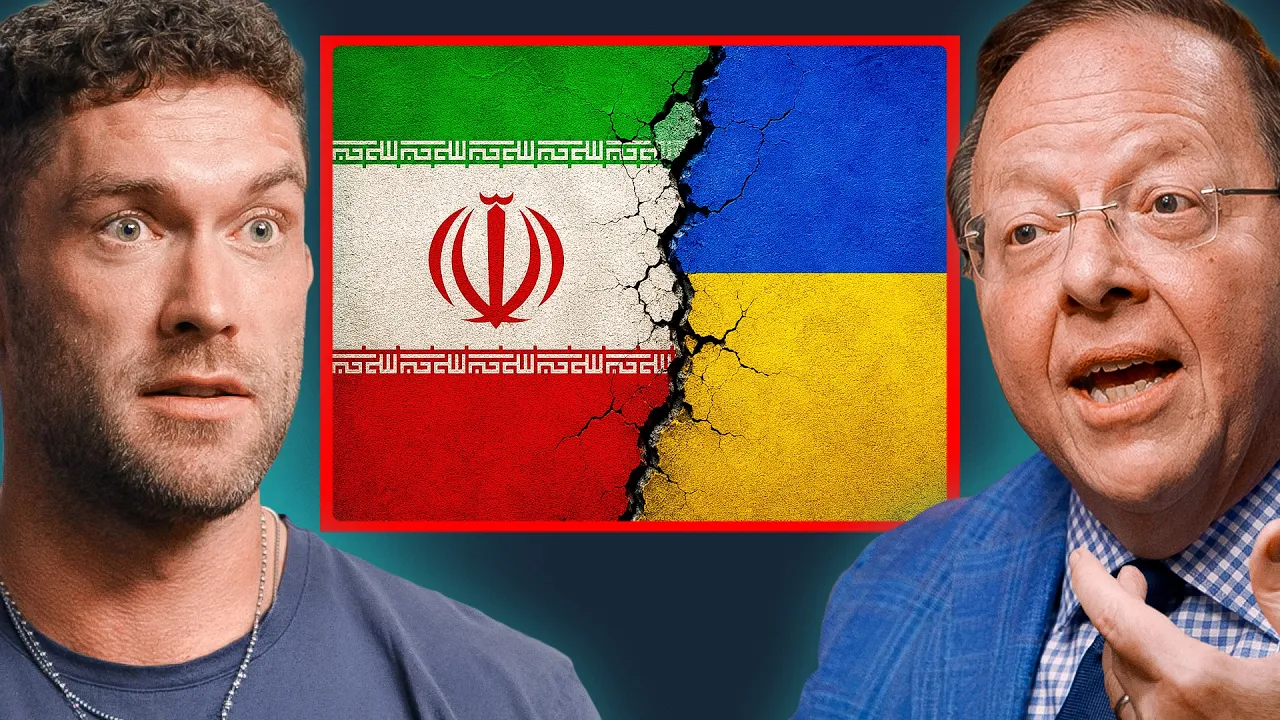
“The Wars in Iran & Ukraine Will Merge Very Soon”
Chris Williamson
57,598 views • 1 month ago Save 9 min 3 min read
Video Summary
The escalating conflict involving Iran, Ukraine, and regional powers threatens to merge into a global crisis, with January 2027 serving as a critical pivot point for international strategy. As military tensions rise—marked by the Houthi closure of the Bab el-Mandeb Strait and Israel’s deepening confrontation with Hezbollah and Turkey—the political landscape in the United States remains a decisive factor. Analysts suggest that the upcoming U.S. midterm results will force a recalibration of foreign policy, potentially pitting the desire to end "forever wars" against the risks of nuclear proliferation and political fallout.
Israel now faces a unique existential dilemma, confronting adversaries like Turkey whose military scale and geographic reach challenge traditional defense doctrines. With both major U.S. political parties facing internal pressure to avoid prolonged conflicts, the trajectory of these wars hinges on whether elected officials will prioritize popular anti-war sentiment or succumb to the political dangers of appearing weak on national security.
Short Highlights
- The Ukraine and Iran wars risk merging into a wider global conflict involving major world powers.
- January 2027 is identified as a critical "focal point" for global actors to reset strategies.
- Israel faces an unprecedented security crisis, struggling against adversaries like Turkey that it cannot militarily defeat.
- The Houthis have escalated regional instability by closing the Bab el-Mandeb Strait and targeting Saudi facilities.
- U.S. midterm election results will dictate whether Congress attempts to constrain executive war powers or continues current military commitments.
- Both U.S. political parties face significant internal pressure to end involvement in "forever wars" due to high public unpopularity.
- The potential for Iran to acquire a nuclear weapon remains a high-stakes political risk for any administration attempting to de-escalate.
Key Details
The Merging of Global Conflicts [0:00]
- The ongoing conflicts in Ukraine and Iran are increasingly linked, with potential for major world powers like China and Russia to be drawn in.
-
What's going to happen is eventually the Ukraine war and the Iran war will merge.
- Recent actions, such as the bombing of an Iranian cargo ship, demonstrate the expanding scope of these hostilities.
The January 2027 Pivot [1:15]
- January 2027 is projected as a moment of reckoning where the United States, China, and Iran will have the opportunity to reset their geopolitical positions.
-
I mean, January, 2027 will be a focal point moment where all the actors, the United States, China, Iran, have a chance to reset.
- This timing aligns with Iran's strategic efforts to influence U.S. political stability.
Israel's Existential Crisis [3:20]
- Israel faces a shifting power dynamic, particularly regarding Turkey, whose military size and capability present an insurmountable challenge.
-
The Turkish army is three times as large as the Israeli army.
- The nation is described as suffering from a "built-in paranoia" regarding its enemies, leading to aggressive military actions in Syria.
The Role of Regional Alliances [4:50]
- New geopolitical structures are emerging in the Middle East, including a potential coalition involving Saudi Arabia, Turkey, and Pakistan.
-
This created a new structure in the Middle East, this alliance. A very different one, with a very powerful country.
- These developments complicate the traditional U.S.-Iran-Israel power balance.
U.S. Political Consequences [7:20]
- If Democrats gain control of Congress, they will face intense pressure to restrict war powers, though they risk political backlash if such moves lead to nuclear proliferation.
-
If it turns out that the Democrats stopped the war and Iran gets a nuclear weapon, think about that for the Democratic Party.
- The ultimate outcome depends on whether politicians prioritize public anti-war sentiment or fear of losing political viability.